

A child’s personality isn’t shaped by one big event. It’s shaped by hundreds of small, repeated moments at home—how a parent reacts to a mistake, a tantrum, a failed exam, or a shy moment at a family gathering. Most mistakes parents make are not born out of neglect; they come from love, worry, or simply not knowing the long-term effect of a short-term reaction.
This article breaks down the most common parenting mistakes that shape personality traits like confidence, emotional regulation, decision-making, and social behavior—along with what child development research and practicing psychologists recommend instead.
1. Comparing Children With Others
The mistake: Comparing a child to siblings, cousins, or classmates—”Why can’t you score like Aryan?”—is one of the most common and most damaging habits in Indian households.
Comparison doesn’t motivate children the way parents hope it will. It usually does the opposite. Children who are frequently compared tend to develop one of two patterns: chronic self-doubt, or a competitive, approval-seeking personality that struggles to feel “enough” even after achieving success.
What to do instead:
- Compare the child to their own past performance, not to another child.
- Acknowledge effort (“You worked hard on this”) rather than only outcomes.
- Praise specific behavior instead of vague statements like “good boy” or “good girl.”
If a child already shows signs of low confidence from repeated comparison, structured personality development classes can help rebuild self-worth in a peer group setting, where a trained facilitator focuses on individual strengths rather than ranking children against each other—something that’s hard to fully replicate at home.
2. Overprotecting or Over-Controlling Children
The mistake: Stepping in too quickly to solve problems, make decisions, or prevent every possible failure.
Overprotective parenting (sometimes called “helicopter parenting”) is well documented in developmental psychology. Diana Baumrind’s classic research on parenting styles, later expanded by researchers like Eleanor Maccoby and John Martin, identified authoritative parenting—high warmth combined with reasonable structure—as more consistently linked to confident, self-regulated children than either permissive or overly controlling styles. Children who are never allowed to struggle often grow into adults who freeze when faced with ordinary decisions.
Signs of overprotection affecting personality:
- Difficulty making independent decisions, even small ones
- Anxiety when facing new or unstructured situations
- Reduced problem-solving confidence
What to do instead: Let children face age-appropriate challenges—a lost school project, a disagreement with a friend, a small failure in a hobby—without immediately rescuing them. Guide, don’t rescue.
3. Inconsistent Discipline
The mistake: Punishing a behavior one day and ignoring or laughing at the same behavior the next, depending on mood or context.
Children build their sense of right and wrong through predictable patterns. Inconsistent discipline confuses that process. It doesn’t just create confusion about rules—it can shape a personality that tests boundaries constantly, or one that becomes anxious because the environment feels unpredictable.
What to do instead:
- Set a small number of clear, non-negotiable rules rather than many vague ones.
- Apply consequences calmly and consistently, regardless of mood or location (home vs. in public).
- Both parents (and caregivers) should align on the same rules where possible.
4. Dismissing or Minimizing Emotions
The mistake: Responses like “Stop crying, it’s not a big deal” or “Boys don’t cry” teach children to suppress emotions rather than understand them.
This is one of the most quietly influential mistakes parents make. Emotional invalidation in childhood is associated in psychological literature with difficulty identifying and expressing emotions later in life—sometimes described as low emotional intelligence or alexithymia in clinical contexts. Children who are consistently told their feelings are wrong or excessive often grow into adults who either bottle up emotions or struggle to read emotional cues in others.
What to do instead:
- Name the emotion: “You seem frustrated that the tower fell down.”
- Validate before correcting: “It’s okay to feel upset. Let’s figure out what to do next.”
- Avoid shaming emotional expression based on gender (“boys don’t cry,” “good girls don’t shout”).
Many parents in India are now turning to structured programs that focus specifically on personality development for kids, since these programs often include emotional vocabulary building, role-play, and guided group activities that are difficult to replicate consistently in a busy household routine.

5. Labeling Children
The mistake: Repeated labels—”he’s the shy one,” “she’s so stubborn,” “he’s the naughty one”—even when said casually or affectionately.
Children internalize labels far more literally than adults intend them. A child called “shy” repeatedly may begin to see shyness as a fixed identity rather than a temporary trait, which reduces their willingness to try social situations that could actually build confidence.
What to do instead: Describe behavior, not identity. Instead of “you’re so lazy,” try “I noticed the homework isn’t done yet—what’s making it hard to start?”
why holistic child development
6. Modeling the Opposite of What You’re Teaching
The mistake: Telling children to control their temper while shouting during conflicts, or asking them to be honest while lying casually in front of them (e.g., “tell them I’m not home”).
Children learn far more from observed behavior than from verbal instruction. This is one of the oldest and most replicated findings in developmental psychology, going back to Albert Bandura’s social learning theory and his well-known “Bobo doll” experiments on observational learning and aggression. Children copy what they consistently see, even when it contradicts what they’re told.
What to do instead: Treat your own behavior as the primary teaching tool. If you want a calm, honest, respectful child, that behavior has to be visibly modeled—especially during conflict, stress, or disagreement.
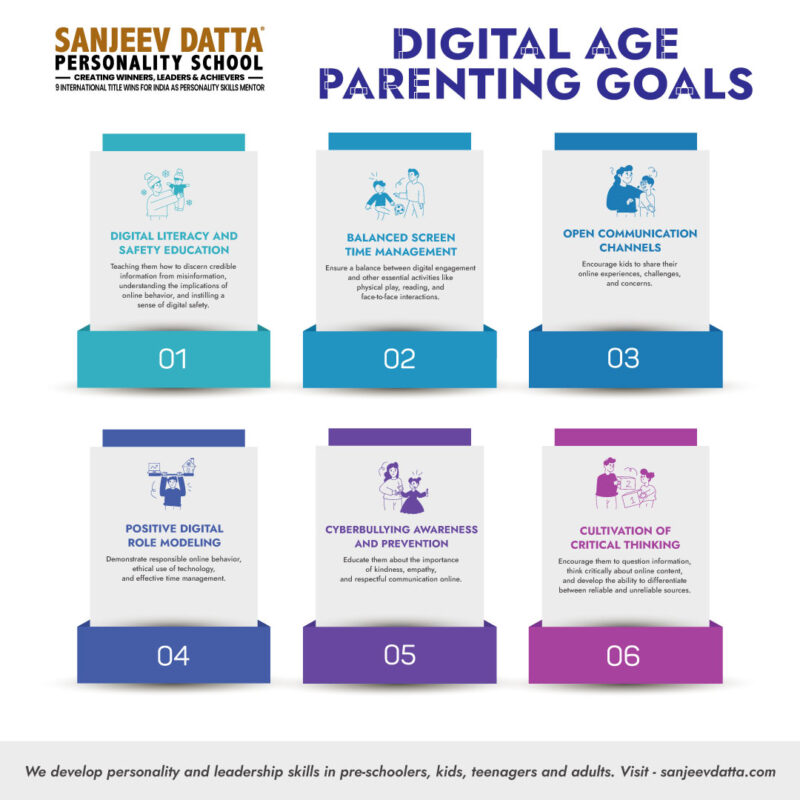
7. Excessive or Unstructured Screen Time
The mistake: Using screens as a default babysitting tool without boundaries around content, duration, or context.
The Indian Academy of Pediatrics (IAP) has issued screen time guidelines recommending no screen exposure for children under 2 years (except video calls), and limited, supervised screen time for children between 2–5 years, with a gradual, balanced approach for older children. Excessive unsupervised screen use has been linked in pediatric guidance to reduced attention span, delayed language development in younger children, and reduced face-to-face social skill development. (Parents should verify current recommendations directly on the IAP or WHO website, as guidelines are periodically updated.)
What to do instead:
- Set clear time limits appropriate to age.
- Prioritize co-viewing or interactive content over passive consumption.
- Balance screen time with unstructured play, which builds creativity and social negotiation skills that screens generally don’t.

8. Not Allowing Children to Fail
The mistake: Removing every obstacle so the child never experiences failure, disappointment, or a lost competition.
Failure, in manageable doses, is where resilience is built. Children who are shielded from every setback often develop a fragile self-image—confident only when winning, and disproportionately distressed when they eventually do fail, which is unavoidable at some point in adolescence or adulthood.
What to do instead: Let children experience proportionate, age-appropriate failure—losing a game, getting a lower grade, not making a team—and focus the conversation on what they learned rather than the outcome itself.
9. Bribing With Rewards Instead of Building Intrinsic Motivation
The mistake: Consistently using money, gadgets, or treats as the only motivator for good behavior or academic performance.
Reward-based motivation isn’t inherently harmful, but overreliance on external rewards can reduce a child’s intrinsic motivation over time—a phenomenon studied in motivation psychology as the “overjustification effect.” Children may start asking “what will I get” before doing anything, including things they previously enjoyed doing for their own sake.
What to do instead: Use rewards sparingly and pair them with recognition of effort and internal satisfaction—”How did it feel to finish that on your own?”
10. Arguing or Criticizing Each Other in Front of Children
The mistake: Frequent conflict, criticism, or tension between parents (or between a parent and grandparent) that children regularly witness.
Children are highly perceptive of household tension, even when adults believe they “don’t notice.” Chronic exposure to conflict at home is associated with increased anxiety, insecurity in relationships, and difficulty regulating emotions later in life.
What to do instead: Disagreements are normal, but resolving them calmly and privately—and modeling repair after conflict—teaches children healthier relationship patterns than either open hostility or forced, fake harmony.

11. Over-Scheduling Without Downtime
The mistake: Filling every hour with tuition, classes, and extracurriculars, leaving little room for unstructured play or rest.
Unstructured free play is where children practice negotiation, imagination, conflict resolution, and self-directed problem-solving—skills that structured activities alone don’t fully build. Over-scheduled children can become highly skilled in specific areas while underdeveloped in independent thinking and self-regulation.
What to do instead: Balance structured learning with genuinely free, unscheduled time—even 30–60 minutes daily makes a measurable difference in a child’s ability to self-direct.
12. Ignoring Early Signs of Social or Emotional Struggle
The mistake: Assuming a child will “grow out of” persistent shyness, aggression, difficulty making friends, or anxiety without addressing it.
Some traits are temperamental and resolve naturally. Others, left unaddressed, become entrenched patterns by adolescence. The difference usually lies in whether the behavior is mild and situational, or persistent and affecting the child’s daily functioning (school, friendships, family life).
What to do instead: If a pattern persists for several months and affects the child’s daily life, consult a child psychologist or counselor rather than waiting it out. Early intervention is consistently more effective than late correction.

How Personality Development Support Can Help (Without Replacing Parenting)
No class or program replaces consistent parenting at home—but structured support can reinforce what’s difficult to build alone, especially in busy dual-income households common across urban India. Good personality development classes typically focus on public speaking, emotional expression, teamwork, and confidence-building in a peer environment, which gives children a space to practice social skills outside the family dynamic.
Similarly, age-specific personality development for kids programs are designed around developmental stages—a 6-year-old and a 13-year-old need very different approaches to confidence-building, communication, and emotional regulation. Parents evaluating such programs should look for age-appropriate curriculum design, qualified facilitators, and a focus on gradual skill-building rather than one-off “confidence workshops” that promise quick results.
Common Misconceptions Parents Have
| Misconception | What’s Actually True |
|---|---|
| “Strict parenting builds discipline” | Excessive strictness without warmth is linked to lower self-esteem and higher anxiety, not better discipline. Authoritative (firm + warm) parenting shows more consistent positive outcomes. |
| “Kids are too young to understand tension” | Children pick up on emotional tone and household stress far earlier than most parents assume, even before they can verbalize it. |
| “Praise always builds confidence” | Vague or excessive praise (“you’re the best!”) can backfire; specific, effort-based praise is more effective. |
| “Personality is fixed by genetics” | Temperament has a genetic component, but personality traits like confidence, empathy, and resilience are significantly shaped by environment and parenting style. |
Who Should Pay Closer Attention to These Patterns
- Parents of children aged 3–12, when core personality traits and emotional habits are most actively forming
- Parents noticing repeated behavioral patterns (withdrawal, aggression, extreme shyness, or people-pleasing)
- Dual-income households where structured screen time and consistent routines need extra planning
- Families going through transitions—new siblings, relocation, school changes—which can amplify the effect of parenting mistakes during that period
how to identify child hidden potential
When These Mistakes Are Less of a Concern
Occasional lapses—one comparison, one raised voice, one unstructured screen-heavy day—are normal and not damaging on their own. Personality is shaped by patterns repeated over months and years, not isolated incidents. Parents shouldn’t aim for perfection; consistency and repair after mistakes matter more than never making them.
Key Takeaways
- Personality is shaped by repeated everyday interactions, not single events—consistency matters more than perfection.
- Comparison, emotional dismissal, and labeling are among the most common and most damaging parenting habits.
- Children learn behavior primarily by observation, so modeling calm, honest behavior matters more than verbal instructions.
- Overprotection and over-scheduling can reduce a child’s independent problem-solving ability over time.
- Structured support—such as personality development classes or age-specific personality development for kids programs—can reinforce healthy habits but should complement, not replace, consistent parenting at home.
- Persistent social or emotional struggles lasting several months warrant professional consultation rather than a wait-and-see approach.
Frequently Asked Questions
1. At what age do parenting mistakes have the most impact on personality?
Early childhood (roughly ages 2–7) is considered a particularly sensitive period for personality and emotional habit formation, though development continues through adolescence. Patterns repeated during these years tend to have a stronger long-term influence than isolated incidents later on.
2. Can personality damage from parenting mistakes be reversed?
Yes, in most cases. Personality traits remain relatively flexible throughout childhood and adolescence. Consistent changes in parenting approach, combined with patience and, where needed, professional guidance, can meaningfully shift a child’s confidence, emotional regulation, and social behavior.
3. Is it normal to make these mistakes as a parent?
Yes. Nearly all parents make some of these mistakes at some point—the goal isn’t perfection but awareness, consistency, and willingness to adjust patterns that repeat over time.
4. How do I know if my child needs a personality development class or professional counseling?
If the issue is mainly confidence, communication, or social skills, a personality development class can help. If a child shows persistent anxiety, aggression, withdrawal, or emotional distress affecting daily functioning for several months, consult a child psychologist first.
5. Does birth order affect personality more than parenting style?
Research on birth order effects is mixed, and most large-scale studies find that parenting style, family environment, and individual temperament have a stronger and more consistent influence on personality than birth order alone.
6. How much screen time is appropriate for young children?
Guidance from pediatric bodies generally recommends avoiding screens for children under 2 (except video calls) and limiting screen time for children 2–5, with balanced, supervised use for older children. Parents should check current guidelines from the Indian Academy of Pediatrics or WHO, as recommendations are periodically updated.
7. What’s the difference between strict parenting and authoritative parenting?
Strict (authoritarian) parenting emphasizes control and obedience with limited warmth or explanation. Authoritative parenting combines clear expectations and structure with warmth, explanation, and responsiveness to the child’s needs—a combination consistently linked to better emotional and behavioral outcomes.