

Workplace etiquette builds leadership because people are given responsibility when they are seen as reliable, respectful and clear. Habits such as punctuality, concise communication, active listening, giving credit and disagreeing politely are small signals. Over months, they tell managers and peers whether you can be trusted with a team, a client or a decision.
This guide explains which etiquette habits matter most, how they connect to leadership, and how young professionals in India can practise them in real situations, from WhatsApp work groups to hybrid meetings.
What Is Workplace Etiquette, and How Does It Relate to Leadership?
Workplace etiquette is the set of unwritten and written norms for how people behave, communicate and treat one another at work. It covers how you write emails, run or join meetings, handle disagreement, use shared tools and respect other people’s time.
Leadership is the ability to influence people and outcomes, with or without a formal title. Etiquette does not replace competence. But it affects whether your competence is noticed and trusted. A technically strong employee who interrupts colleagues, misses deadlines without warning or sends confusing messages will usually find it harder to be given more responsibility.
Think of etiquette as the visible layer of three deeper leadership qualities:
• Reliability: you do what you said you would do.
• Respect: you treat people’s time, ideas and status fairly.
• Clarity: people understand what you want and why.
Why Does Etiquette Matter More Early in Your Career?
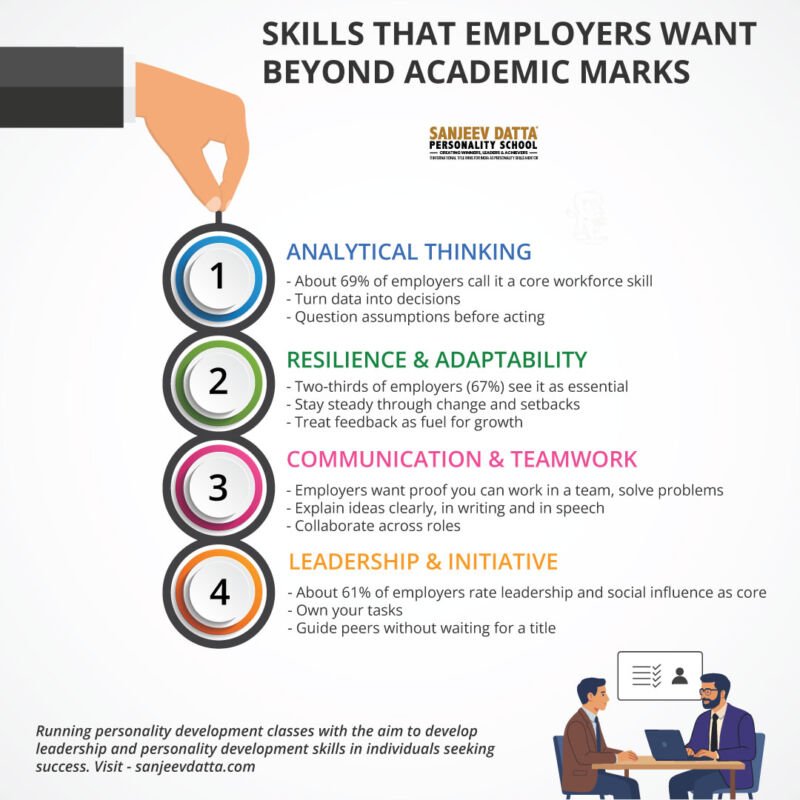
Early in your career, managers have little evidence of your judgement, so they rely on observable behaviour. How you show up, respond and communicate becomes a proxy for how you will handle bigger tasks.
This is a practical observation, not a measured statistic. Research on team effectiveness supports the broader point. Google’s internal Project Aristotle study, reported publicly by the company, found that psychological safety (team members feeling safe to speak up) was the strongest factor in effective teams. Harvard professor Amy Edmondson’s research popularised the concept. Etiquette is one of the day-to-day ways psychological safety is created or destroyed.
In Indian workplaces, young professionals often face two extra pressures: steep hierarchies in some organisations, and blurred boundaries created by WhatsApp groups and remote work. Good etiquette helps you handle both without appearing either passive or pushy.
why executive presence and personal image
9 Workplace Etiquette Habits That Build Leadership
1. Be Punctual and Communicate Early When You Cannot Be
Punctuality signals reliability, and early warning signals maturity. Arriving on time for meetings and delivering by the agreed deadline are baseline expectations. The leadership differentiator is what you do when something goes wrong.
If you will be late or a task will slip, tell the concerned person as soon as you know, say what caused it, and propose a new time. A message such as “I will miss today’s 5 pm deadline because the data is incomplete. I can share a draft by 11 am tomorrow. Is that acceptable?” shows ownership.
2. Write Clear, Short, Action-Oriented Messages
Good written communication states the purpose, the required action and the deadline in the first two lines. Busy managers read quickly, so structure matters.
A simple format to use:
1. Context: one line on why you are writing.
2. Ask or update: what you need or what has happened.
3. Deadline or next step: by when, and who does what.
For emails, write a specific subject line (“Approval needed: Q3 vendor list by Friday”), not “Query”. For chat tools, avoid sending five fragments when one complete message will do.
3. Prepare for Meetings and Respect Their Time
Leaders are remembered for how they use shared time. Before a meeting, read the agenda, note your one or two key points and bring any data you may need. During it, speak concisely, avoid repeating what has been said and stay off your phone.
If you organise the meeting, share an agenda in advance, start on time, end with clear owners and deadlines, and send short minutes afterwards. These small actions are an easy way for junior employees to demonstrate leadership without needing a title.
4. Listen Actively Before You Respond
Active listening means giving full attention, confirming your understanding and asking relevant questions before offering your view. It is one of the most dependable ways to earn trust.
Practical techniques:
• Let the speaker finish before you reply.
• Paraphrase: “So the client’s main concern is delivery time, not price. Is that right?”
• Ask one open question instead of defending yourself immediately.
• Note action points so you do not need to be reminded.
Build these habits faster: Etiquette is easier to practise with feedback than to learn from reading alone. A structured personality development training program gives young professionals role-plays, mock meetings and trainer feedback on communication, body language and confidence, so the habits in this guide become automatic.
5. Disagree Respectfully, Including With Seniors
Respectful disagreement is a leadership skill, not a breach of etiquette. The key is to challenge the idea, not the person, and to choose the right moment.
A useful approach for hierarchical settings:
• Acknowledge the other view first: “I see why that approach is faster.”
• State your concern with a reason or data point: “My worry is the error rate we saw last month.”
• Offer an alternative or ask a question: “Could we pilot it with one client first?”
• Raise sensitive disagreements privately when possible, and accept the final decision gracefully.

6. Give Credit Generously and Own Your Mistakes
People follow those who share credit and take responsibility. Mention colleagues by name when presenting shared work. If you make an error, report it quickly, explain the fix and describe how you will prevent a repeat.
Avoid two common traps: staying silent about a mistake hoping nobody notices, and over-apologising without offering a solution.
7. Follow Digital and Hybrid Work Etiquette
Digital etiquette is now part of core professionalism. Basic norms include:
• Turn your camera on in video calls where the team norm expects it, and mute when not speaking.
• Check that your background and audio are acceptable before joining.
• Reply to messages within a reasonable, team-agreed time.
• Do not forward confidential messages or screenshots without permission.
• Use the right channel: urgent matters by call, routine updates by chat or email.
8. Respect Boundaries and Working Hours
Respecting other people’s time off signals emotional maturity. Constant late-night messages, even if well-intentioned, can pressure colleagues to respond. If you must write after hours, state that no immediate reply is needed, or schedule the message for working hours.
India’s labour and working-hour rules vary by state, sector and employment type, so check your own contract and company policy rather than assuming a universal rule.
9. Receive Feedback Gracefully and Present Yourself Appropriately
How you handle criticism tells leaders how coachable you are. Listen without interrupting, thank the person, clarify examples and agree on next steps. Follow up later to show progress.
Presentation matters too, but it should fit your industry and company culture. Dress codes differ between a bank, a start-up and a creative agency. When unsure, observe what respected colleagues wear and aim for neat, comfortable and appropriate.
Etiquette Habits and the Leadership Signals They Send
| Etiquette habit | What colleagues observe | Leadership quality signalled |
|---|---|---|
| Punctuality and early updates | You are dependable | Accountability |
| Clear written messages | Others understand quickly | Clarity |
| Prepared meeting contribution | You respect shared time | Preparedness |
| Active listening | People feel heard | Empathy and judgement |
| Respectful disagreement | You can challenge ideas safely | Courage with tact |
| Sharing credit, owning errors | You are fair and honest | Integrity |
| Digital courtesy | You adapt to modern workplaces | Professional maturity |
| Respecting boundaries | You value people, not only output | Emotional intelligence |
| Graceful feedback handling | You improve visibly | Coachability |
Common Etiquette Mistakes Young Professionals Make
The most common mistakes are small, repeated behaviours rather than one big error. Watch for these:
• Replying “ok” or “noted” without confirming what you will do or by when.
• Using group chats for sensitive or critical feedback.
• Interrupting to prove you know the answer.
• Joining meetings late and asking for a recap.
• Escalating to a senior before speaking to the colleague involved.
• Copying everyone on emails unnecessarily.
• Speaking negatively about former or current colleagues.
• Treating etiquette as performance for managers only, and being rude to support staff or juniors.

A 30-Day Plan to Practise Leadership-Building Etiquette
Focus on one or two habits a week rather than trying to change everything at once.
1. Week 1: Reliability. Track every commitment you make. Send early updates on anything at risk.
2. Week 2: Communication. Rewrite your next five emails using the context, ask and deadline structure.
3. Week 3: Meetings and listening. Prepare two points for each meeting, paraphrase once per meeting and send minutes for one.
4. Week 4: Feedback and credit. Ask a manager or trusted peer for one specific suggestion. Publicly credit a colleague at least once.
At the end, ask: What changed in how people respond to me? Which habit still feels difficult?
Limitations: What Etiquette Cannot Do
Etiquette supports leadership but cannot replace skill, results or ethics. Polished manners without competence will not sustain a career, and politeness should never be used to hide poor treatment of others.
Norms also vary by company, region and industry. A habit that is welcome in one workplace, such as direct disagreement, may be handled differently in another. Observe your environment, ask a mentor, and adapt without compromising your values.
How to Choose a Personality Development Course
A good personality development course teaches observable, practical behaviours and gives you feedback, not only motivational talks. If you decide structured learning would help, evaluate options using these questions:
• Does the syllabus cover business communication, meeting skills, emotional intelligence, presentation skills and workplace etiquette?
• Are there role-plays, assignments and individual feedback?
• Is the trainer’s background in corporate training, HR or coaching clearly stated?
• Is there a way to measure progress, such as before-and-after presentations?
• Is the format (online, classroom or blended) suitable for your working hours?
• Are the fees, duration and refund terms transparent?
Be cautious about promises of guaranteed promotions or placements, which no course can ethically guarantee.
Ready to put this into practice? If you want guided practice instead of learning alone, our personality development course helps young professionals build communication, confidence and leadership presence step by step, with feedback from experienced trainers.
Key Takeaways
• Workplace etiquette builds leadership by making you reliable, respectful and clear, the qualities that lead to trust and responsibility.
• Early-career professionals are judged largely on observable behaviour, so small habits carry weight.
• Communicate early about delays, write messages with context, ask and deadline, and prepare for meetings.
• Listen actively, disagree with respect, share credit and own mistakes.
• Follow digital etiquette and respect colleagues’ time boundaries.
• Etiquette complements competence; it does not replace it.
• Practise one or two habits at a time, and consider guided training if you want structured feedback.
Frequently Asked Questions
What is workplace etiquette that builds leadership?
It is a set of professional behaviours, such as punctuality, clear communication, active listening, respectful disagreement and accountability, that show you can be trusted with greater responsibility. These habits help others see leadership potential before you hold a formal leadership title.
Can a junior employee show leadership through etiquette?
Yes. Leadership is influence, not only authority. Preparing for meetings, sending clear updates, helping teammates, sharing credit and owning mistakes all demonstrate leadership behaviour at any level.
How do I disagree with my manager politely?
Acknowledge their point, state your concern with a reason or data, and propose an alternative or ask a question. Prefer a private conversation for sensitive issues. After a decision is made, support it professionally even if your view differs.
What is the right way to use WhatsApp for work?
Follow your company’s policy first. Use it for brief, time-sensitive coordination, avoid late-night messages unless urgent, keep tone professional, and move formal approvals, sensitive feedback or detailed instructions to email or an official tool.
Is personality development training useful for young professionals?
It can be, if it offers practical exercises and feedback on communication, presentation and interpersonal skills. Results depend on your effort and workplace application. Check the syllabus, trainer background and fees, and avoid programmes that promise guaranteed career outcomes.
What should I look for in a personality development course?
Look for a clear syllabus, role-plays, individual feedback, an experienced trainer, a measurable progress method, flexible timing and transparent pricing. Courses focused on real workplace scenarios are generally more useful than purely motivational sessions.
How long does it take to build professional etiquette habits?
There is no fixed timeline. Many people notice early improvement within a few weeks of deliberate practice, but consistency matters more than speed. Choose one or two habits at a time and review progress monthly.
Does etiquette differ across Indian companies?
Yes. Multinationals, start-ups, family-run businesses and government organisations can have different norms for hierarchy, forms of address, dress and communication. Observe respected colleagues, ask a mentor and adjust while keeping respect and clarity constant.