

A winning personality in a child isn’t about confidence alone—it’s the combination of self-awareness, communication skills, emotional regulation, and social ease that shows up consistently, not just on a good day. The most reliable way to build it is through small, repeated daily habits rather than one-time lessons or pep talks. Below are 15 habits, grouped by the personality skill they strengthen, along with how parents can practically reinforce each one at home.
These habits draw on widely accepted child development principles from sources such as the American Academy of Pediatrics (AAP) and the U.S. Centers for Disease Control and Prevention (CDC), which both emphasize consistent routines, responsive communication, and modeling behavior as core drivers of a child’s social-emotional development.
What Does “Winning Personality” Actually Mean for a Child?
A winning personality in children generally refers to the visible combination of self-confidence, clear communication, empathy, adaptability, and respectful social behavior. It is not the same as being extroverted or the loudest in the room—a quiet, thoughtful child can have an equally strong personality if these traits are present.
Child psychologists typically break this down into four measurable components:
- Self-regulation—managing emotions and impulses appropriately for age
- Communication—expressing needs, ideas, and feelings clearly
- Social competence—cooperating, sharing, and reading social cues
- Self-concept—a realistic, positive sense of one’s own abilities
Habits that build a winning personality work because they train these four components through repetition, not instruction. A child told to “be confident” rarely becomes confident; a child who practices speaking up daily, in low-stakes situations, usually does.
Foundation Habits (Ages 3–7)
1. Daily Eye Contact and Greeting Practice
Teaching a child to make eye contact and greet people by name—a neighbor, a relative, a delivery person—builds comfort with social initiation early. Start with family members at home before extending it to strangers, since forcing eye contact with unfamiliar adults can feel unsafe for young children.
2. A Consistent Morning and Bedtime Routine
Routine predictability reduces anxiety and gives children a sense of control, which is a documented precursor to self-regulation. The CDC’s guidance on positive parenting specifically notes that predictable routines help children feel secure and behave better. A simple wake-up, meal, and wind-down sequence—repeated daily—does more for emotional stability than most standalone activities.
3. Five Minutes of Unstructured “Listening Time”
Set aside five minutes daily where the child talks and the parent only listens—no correcting, no advice, no interrupting. This habit directly builds a child’s sense that their voice matters, which is foundational to later assertiveness and public speaking comfort.
4. Saying “Please,” “Thank You,” and “Sorry” Without Prompting
Politeness habits, when practiced daily rather than only when reminded, become internalized social scripts. Children who don’t have to think about basic courtesy have more mental bandwidth to focus on the actual content of a conversation—which is part of what makes a personality feel “polished.”
5. One Small Independent Task Per Day
Letting a child pack their own bag, choose their outfit, or pour their own water builds decision-making confidence. Age-appropriate independence, introduced gradually, is one of the most consistent predictors of self-esteem in early childhood development literature.
Communication and Confidence Habits (Ages 6–12)
6. Daily “Show and Tell” at Home
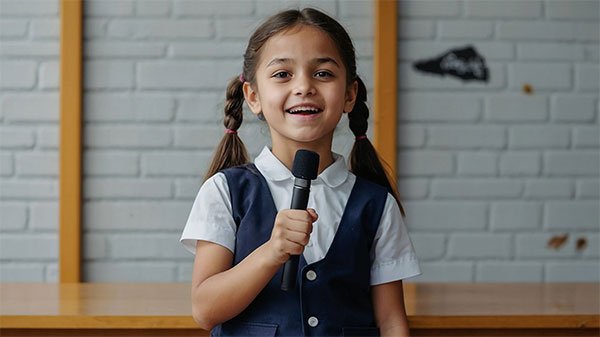
Having your child describe one thing from their day—a story, a drawing, an idea—to the family every evening builds structured verbal expression. This is essentially informal public speaking practice, done in the safest possible audience: the family.
7. Reading Aloud for 10–15 Minutes
Reading aloud improves vocabulary, tone modulation, and comfort with spoken language—all of which directly affect how articulate and self-assured a child sounds later. It also expands the child’s frame of reference, giving them more to talk about in social settings.
8. Asking “What Do You Think?” Before Giving Answers
When a child asks a question, resist the urge to answer immediately. Ask what they think first. This habit trains independent thinking and reduces the tendency to seek constant external validation—a trait closely tied to confident, self-assured personalities.
9. Practicing Introductions and Handshakes
Role-playing simple introductions (“Hi, I’m [name], nice to meet you”) a few times a week removes the awkwardness of first impressions. Many classes for personality development for kids use exactly this kind of structured role-play, and it’s genuinely one of the highest-leverage exercises because first impressions get repeated in nearly every social and academic setting a child will encounter.
10. Encouraging Eye-Level Conversations With Adults
When appropriate and safe, let your child answer questions adults ask them directly (a teacher, a doctor, a family friend) instead of answering on their behalf. This single habit, repeated over months, is one of the fastest ways to build a child’s comfort speaking to authority figures without losing their own voice.
Emotional Intelligence Habits (All Ages)
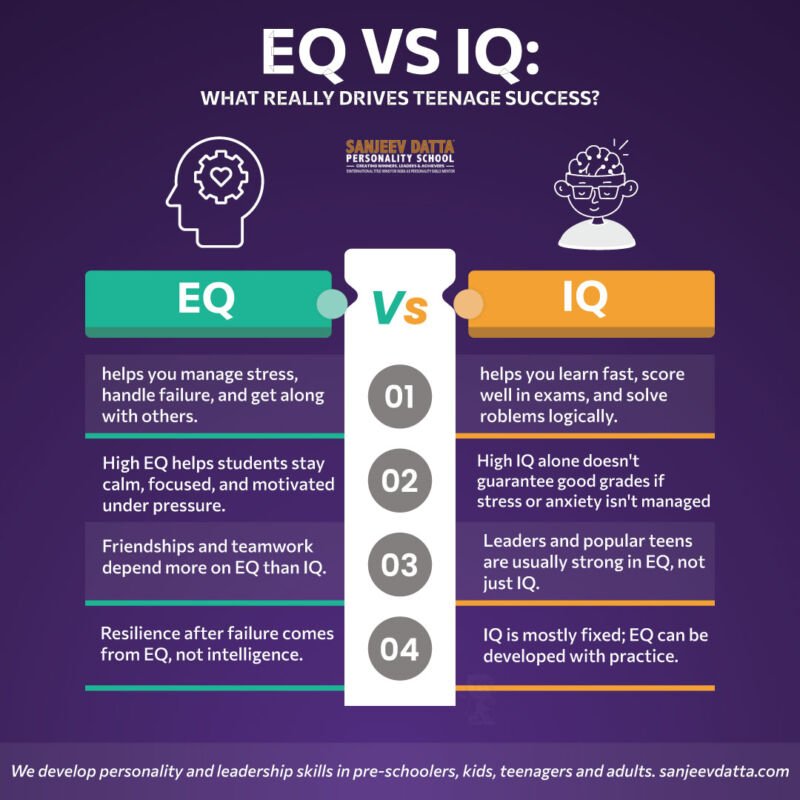
11. Naming Emotions Out Loud
Instead of saying “stop crying,” ask “are you feeling frustrated or disappointed right now?” Naming emotions builds emotional vocabulary, and children with a wider emotional vocabulary generally show better self-regulation, according to social-emotional learning frameworks used in most school counseling programs.
12. A Daily Gratitude or “Best Part of the Day” Question
Asking “what was the best part of your day?” at dinner trains a habit of positive reflection. Over time, this shapes a child’s default explanatory style—how they interpret setbacks and successes—which is a core part of long-term personality and resilience.
13. Modeling Calm Conflict Resolution
Children copy how parents handle disagreements far more than they follow verbal instructions about conflict. If a child regularly sees a parent stay calm, listen, and resolve disagreements without yelling, they adopt the same pattern by default. This is one of the areas where enrolling a child in structured personality development classes can help reinforce what’s modeled at home—a trained facilitator can create real-time social scenarios, give the child neutral feedback, and practice conflict resolution in a peer group setting that parents can’t fully replicate one-on-one.

Social and Growth-Mindset Habits (Ages 8+)
14. Daily Reflection on “One Thing I Tried”
Instead of praising only results (“you got an A”), ask about effort (“what’s one thing you tried today?”). This reinforces a growth mindset—the belief that ability improves with effort—which research by psychologist Carol Dweck has linked to greater resilience and willingness to take on challenges.
15. Structured Peer Interaction Outside Screens
Daily or near-daily unstructured play with peers—even 20–30 minutes—builds negotiation, turn-taking, and empathy skills that can’t be taught through instruction alone. If your child’s schedule doesn’t naturally allow for this, a good personality development class for kids can partially fill the gap, since it puts children in a peer group specifically designed for supervised social practice rather than academic learning, which is a different (and complementary) kind of skill-building than school provides.

Do Personality Development Classes Actually Help?
Structured classes can meaningfully speed up personality development, but they work best as a supplement to daily habits at home, not a replacement for them. A weekly class gives a child structured practice—public speaking drills, group activities, guided feedback—that’s harder to recreate consistently at home. But the daily habits above are what make that practice stick, because personality traits are built through repetition, and one class a week isn’t enough repetition on its own.
Who benefits most from personality development classes:
- Children who are shy or hesitant in group settings and need low-pressure practice
- Children who show strong personality traits at home but “shut down” socially outside it
- Children whose parents want structured, expert-guided reinforcement of habits they’re already building at home
Common Mistakes Parents Make
- Treating personality development as a one-time lesson instead of a daily practice—a single “confidence talk” rarely changes behavior.
- Comparing the child to more extroverted siblings or peers, which usually damages self-concept rather than building it.
- Praising outcomes only, which can make children risk-averse instead of resilient.
- Forcing eye contact or social interaction with strangers too early, which can increase anxiety instead of reducing it.
- Expecting instant results—most of these habits show visible change only after 8–12 weeks of consistency, not days.
How to Start: A Realistic Weekly Plan for Parents
| Day | Focus Habit | Time Needed |
|---|---|---|
| Monday | Listening time + naming emotions | 10 min |
| Tuesday | Reading aloud + gratitude question | 15 min |
| Wednesday | Independent task + introductions practice | 10 min |
| Thursday | Show and tell + “what do you think?” | 10 min |
| Friday | Reflection on effort (“one thing I tried”) | 5 min |
| Weekend | Peer play/social time (unstructured) | 30+ min |
This isn’t a rigid schedule—the goal is consistency across a few habits, not perfection across all fifteen at once. Most child development specialists recommend introducing 2–3 new habits at a time rather than all fifteen simultaneously, since children (and parents) need time to make a habit automatic before adding the next one.
Key Takeaways
- A winning personality in children is built through daily, repeated habits—not one-time lessons or pep talks.
- The four core components are self-regulation, communication, social competence, and self-concept.
- Modeling behavior (especially conflict resolution) matters more than verbal instruction.
- Praise effort and process, not just results, to build a resilient growth mindset.
- Personality development classes for kids work best as a structured supplement to home habits, especially for shy children or those needing guided peer practice.
- Visible change typically takes 8–12 weeks of consistency, not days.
- Start with 2–3 habits at a time rather than attempting all fifteen simultaneously.
mistakes parents make that affect child personality
Frequently Asked Questions
1. At what age should personality development start for a child?
Personality development begins informally from infancy through daily interaction, routine, and modeling. Structured habit-building, like the ones listed above, is generally most effective from age 3 onward, since that’s when children can start following simple routines and basic social scripts independently.
2. Are personality development classes worth it for young children?
They can be worth it, particularly for shy children or those who need structured peer practice outside the home. However, they work best when paired with consistent daily habits at home—a once-a-week class alone is unlikely to create lasting change without home reinforcement.
3. How long does it take to see a change in a child’s personality?
Most parents and educators report noticeable changes after 8–12 weeks of consistent habit practice. Personality change is gradual and cumulative, not immediate, so short-term inconsistency (a few missed days) won’t undo progress as long as the habits resume.
4. Is a shy child’s personality a problem that needs fixing?
No. Shyness is a temperament trait, not a flaw, and many shy children have strong, well-liked personalities. The goal of these habits isn’t to make every child extroverted—it’s to build comfort, communication, and confidence within whatever temperament the child naturally has.
5. What’s the difference between confidence and a “winning personality”?
Confidence is one component of a winning personality, but it also includes empathy, communication clarity, adaptability, and social awareness. A child can be confident but still lack empathy or communication skills, so personality development typically targets all of these areas together, not confidence alone.
6. Can screen time interfere with these habits?
Excessive screen time can reduce opportunities for the face-to-face interaction, unstructured play, and conversation that these habits rely on. The AAP recommends age-appropriate screen time limits partly for this reason—not because screens are inherently harmful, but because they can crowd out the social practice time children need.
7. Should personality development classes replace school extracurriculars?
Not necessarily. They serve a different purpose—most extracurriculars build a specific skill (sport, art, music), while personality development classes for kids typically focus directly on communication, confidence, and social skills through structured group activities. Many parents use both, depending on the child’s needs and schedule.