

Students who get hired faster usually don’t have better marksheets than their peers—they communicate more clearly, read the room better, and answer questions with structure instead of rambling. The interview skills that help students most are: clear verbal communication, confident body language, structured answers (like the STAR method), pre-interview research, and the ability to handle unexpected questions calmly. None of these depend on your degree or CGPA—they are learnable, practical skills.
This matters more in India right now than it did five years ago. According to the India Skills Report 2026 (released by ETS in collaboration with CII, AICTE, AIU, and Taggd), national graduate employability has risen to 56.35% in 2026, up from 54.81% the previous year. That’s encouraging, but it also means employers are now comparing a larger, more skilled applicant pool—so the interview itself has become the deciding factor between two similarly qualified candidates.
This guide breaks down the specific interview skills that move the needle, how to build them systematically, the mistakes that quietly cost students job offers, and why personality development—starting even before college—plays a bigger role in interview outcomes than most students realize.
Why Interview Skills Matter More Than Ever for Indian Students?
Interview skills matter because employability data shows a persistent gap between academic qualification and job-readiness—and interviews are where that gap becomes visible to recruiters.
The India Skills Report 2026 found that Computer Science and IT engineering graduates remain the most employable, with employability at 80% and 78% respectively, while employability for ITI and polytechnic graduates remains comparatively low at 45.95% and 32.92%. The report also noted a notable shift: women’s employability rose to 54%, overtaking men at 51.5%, for the first time in five years.
What this tells students is simple: a technical degree alone no longer guarantees a job offer. Recruiters increasingly use the interview round to test what a resume cannot show—communication under pressure, problem-solving on the spot, and cultural fit with the team. A student with an average academic record but strong interview skills routinely outperforms a topper who freezes up or gives generic answers.

What Are the Core Interview Skills Every Student Needs?
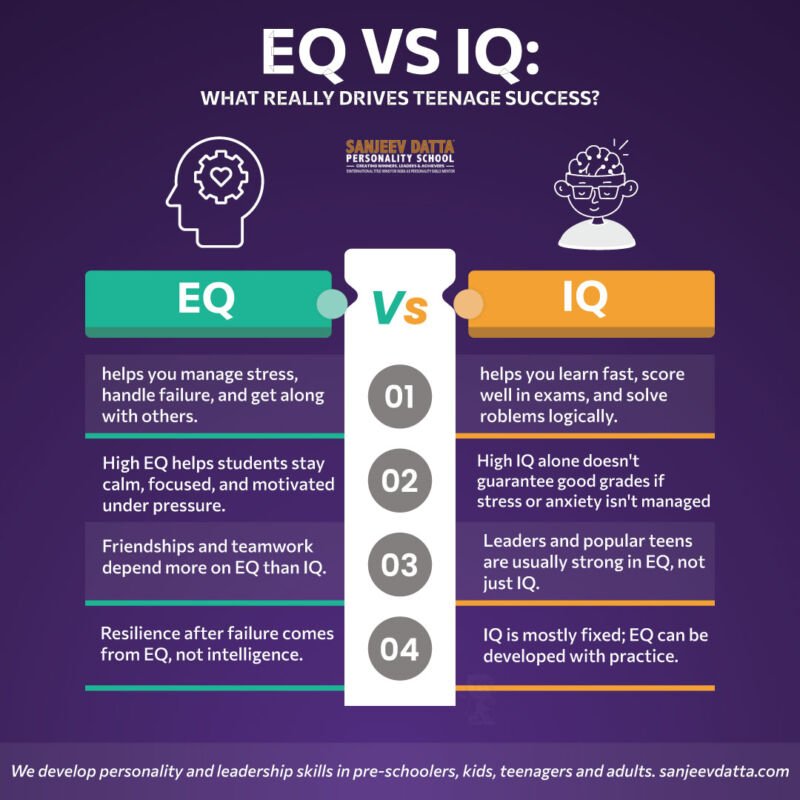
The core interview skills every student needs fall into five categories: communication, body language, preparation, structured answering, and emotional composure.
1. Clear Verbal Communication
This is not about vocabulary or accent—recruiters in India hire candidates who speak in complete thoughts, avoid filler words (“umm,” “like,” “you know”), and pace their answers so the interviewer can follow the logic. Practice explaining a project or internship in under 90 seconds without notes; if you can’t, your explanation is too long or too vague.
2. Confident Body Language
Eye contact, an upright posture, a firm handshake (in-person) or steady eye-level camera positioning (virtual), and controlled hand movements signal confidence before you say a single word. Interviewers form an initial impression within the first few minutes, and body language does most of that work.
3. Pre-Interview Research
Knowing the company’s products, recent news, and the specific role you’re applying for lets you tailor answers instead of giving generic ones. A student who says “I want to work here because it’s a good company” loses out to one who references a specific product line or recent initiative and connects it to their own skills.
4. Structured Answers (STAR Method)
The STAR method—Situation, Task, Action, Result—is one of the most widely taught interview frameworks globally and is used to answer behavioral questions like “Tell me about a time you faced a challenge.”
- Situation: Briefly set the context.
- Task: State what you were responsible for.
- Action: Explain exactly what you did.
- Result: Share the measurable outcome, with numbers if possible.
Students who use STAR sound organized even under pressure because the structure thinks of them.
5. Emotional Composure Under Pressure
Recruiters sometimes ask deliberately difficult or unexpected questions to see how a candidate reacts, not just what they answer. Staying calm, pausing to think rather than rushing an answer, and admitting “I don’t know, but here’s how I’d find out” is far more effective than guessing confidently and getting it wrong.
How to Prepare for a Job Interview: A Step-by-Step Process
Effective interview preparation follows a sequence: research the role, prepare structured answers to common questions, rehearse aloud, prepare questions to ask the interviewer, and do a final logistics check.
1. Research the company and role. Read the job description line by line and match each requirement to your own experience.
2. Prepare 8–10 likely questions and answers. Include “Tell me about yourself,” “Why this company,” “Your biggest strength/weakness,” and one technical question specific to your field.
3. Draft STAR-format answers for 3–4 behavioral questions. Cover teamwork, conflict, failure, and leadership scenarios from your academic or internship experience.
4. Rehearse out loud, not just in your head. Reading answers mentally feels smoother than it sounds when spoken—practice with a friend, mirror, or record yourself.
5. Prepare 2–3 thoughtful questions for the interviewer. Asking about team structure, growth path, or current projects shows genuine interest.
6. Do a logistics check the night before. Confirm the interview link/venue, test your camera and internet for virtual rounds, and lay out formal clothing in advance.
Common Interview Mistakes Students Make
The most common mistakes are memorized answers that sound scripted, exaggerating skills that get exposed by follow-up questions, poor body language, and failing to ask any questions at the end.
- Reciting a memorized script. Interviewers can tell when an answer is memorized rather than understood—it sounds flat and falls apart under a follow-up question.
- Overstating skills on the resume. If you list “advanced Python” and can’t answer a basic follow-up, it damages credibility more than not listing it at all.
- Fidgeting or avoiding eye contact. This reads as nervousness or dishonesty even when neither is true.
- Not asking any questions. Saying “No, I think you covered everything” at the end signals low genuine interest in the role.
- Badmouthing a previous college, professor, or team. This is one of the fastest ways to lose credibility, regardless of how justified the complaint feels.

The Role of Personality Development in Interview Success
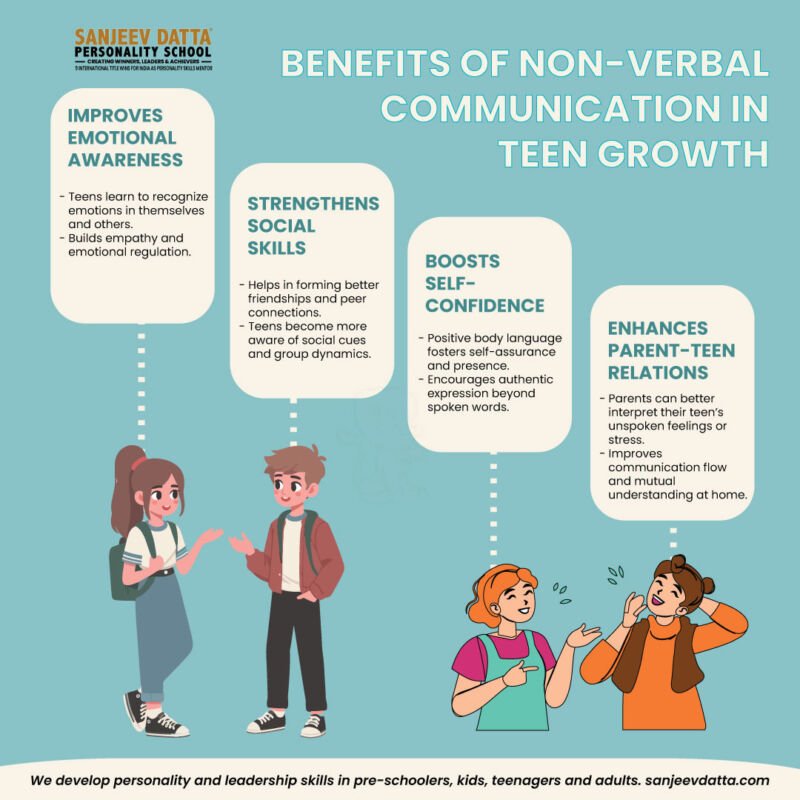
Interview skills don’t exist in isolation—they are an output of a student’s broader personality development: how they handle stress, express themselves, and project confidence in unfamiliar situations. Structured personality development training helps close this gap faster than trial-and-error alone, because it works on the underlying habits (posture, tone, listening, articulation) rather than just interview-specific scripts.
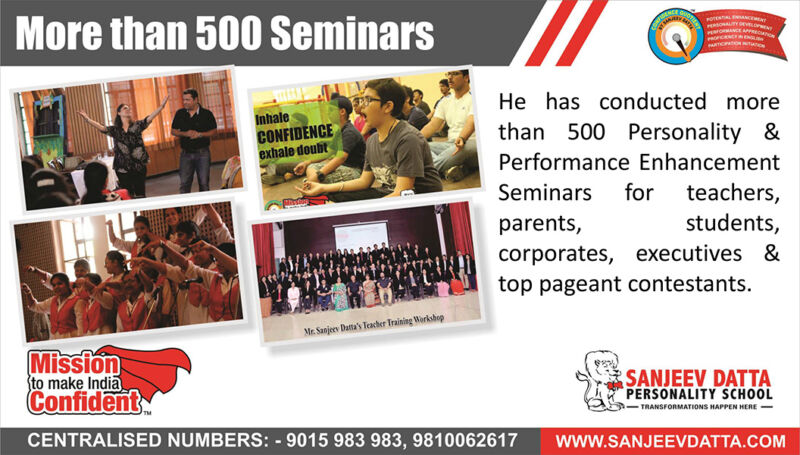
This is exactly where dedicated personality development classes add measurable value. A good program doesn’t just coach you on interview answers—it works on real-time communication, group discussion skills, mock interviews with feedback, and confidence-building exercises that carry over into every professional interaction, not just the one interview. Most students don’t realize how stiff their answers sound or how much their body language gives away until someone else points it out—which is exactly the gap a structured personality development class is built to close, with live practice instead of theory. If your preparation has plateaued despite reading every “top interview questions” list online, that’s usually a sign the missing piece isn’t information—it’s practice with feedback.
Interview Skills for Different Formats
Interview skills need slight adjustments depending on format: campus placements, virtual interviews, and walk-in interviews each test candidates differently.
| Interview Format | Key Skill to Prioritize | Common Pitfall |
|---|---|---|
| Campus placement (in-person, panel) | Group discussion clarity + STAR answers | Being talked over during group rounds |
| Virtual/video interview | Camera presence + stable connection | Poor lighting, looking at the screen instead of the camera |
| Walk-in/off-campus interview | Quick rapport-building + adaptability | Under-preparing because the process feels informal |
| Technical + HR combined round | Balancing technical depth with communication | Over-explaining technical answers, losing the interviewer |
Who This Guide Is For—and Who May Need More Than Self-Study
This guide is most useful for college students actively preparing for campus placements, internships, or their first job interview, and for students who already have decent technical or academic knowledge but underperform in interviews specifically. It’s a strong starting point for self-directed preparation.
However, students who experience significant interview anxiety, have never practiced public speaking, or consistently receive feedback about being “too quiet” or “unclear” in interviews often benefit more from structured, guided personality development classes than self-study alone—because habitual behaviors like poor eye contact or rushed speech are difficult to self-correct without external feedback and repeated practice.
Why the Best Interview-Ready Students Started Long Before College
The confidence a student shows in a campus placement interview is rarely built in the weeks leading up to it—it’s usually the result of communication habits formed years earlier. Most students who freeze up, avoid eye contact, or answer in one-word sentences aren’t lacking intelligence; they simply never got structured practice in expressing themselves out loud, in front of others, from a young age.
This is where personality development for kids makes a measurable, long-term difference. Children who go through school-age programs covering public speaking, group activities, and social confidence typically arrive at their first real interview years ahead of peers who are trying to build these habits from scratch at 20, under placement-season pressure. For parents wondering whether it’s “too early” to invest in this—it’s almost never too early, and it’s frequently too late by the time college placements begin. A child who’s comfortable speaking up in a classroom today becomes the student who walks into a job interview without the nervous energy that trips up so many otherwise capable candidates.
Key Takeaways
- Interview skills that help students most are communication, body language, structured (STAR) answers, preparation, and composure under pressure—all learnable through practice.
- India’s graduate employability reached 56.35% in 2026, meaning interviews increasingly decide outcomes between similarly qualified candidates.
- The STAR method (Situation, Task, Action, Result) is the most reliable framework for answering behavioral interview questions clearly.
- Common mistakes—memorized answers, poor body language, exaggerated skills, and not asking questions—quietly cost students job offers.
- Structured personality development classes accelerate interview readiness by fixing habits (posture, tone, articulation) that are hard to self-diagnose.
- Personality development for kids builds the communication foundation early, so confidence in interviews feels natural rather than newly learned under pressure.
- Different interview formats (campus, virtual, walk-in) require slightly different skill priorities—one-size-fits-all preparation isn’t enough.
habits that build winning personality
Frequently Asked Questions
1. What are the most important interview skills for freshers in India?
The most important skills are clear communication, confident body language, structured answers using the STAR method, company-specific research, and staying composed when asked unexpected or difficult questions. Technical knowledge matters, but how it’s communicated often decides the outcome.
2. How can students improve their communication skills before an interview?
Practice explaining projects or internships out loud within a fixed time limit, record yourself to spot filler words, and do mock interviews with friends, mentors, or a structured personality development program that gives real-time feedback on speech clarity and pacing.
3. What is the STAR method and why does it help in interviews?
STAR stands for Situation, Task, Action, Result. It’s a framework for answering behavioral questions (“Tell me about a time when…”) in a structured, easy-to-follow way. It helps students avoid rambling and gives interviewers a clear, measurable outcome to evaluate.
4. Do personality development classes actually help with job interviews?
Yes, when they include practical components like mock interviews, group discussions, and individual feedback—not just theory. They help identify and correct habits like weak eye contact, rushed speech, or nervous body language that are hard to notice without outside observation.
5. At what age should personality development training start for the best results?
There’s no fixed age, but many educators recommend starting personality development for kids during school years, when habits around public speaking, listening, and social confidence are still forming. Early training generally means less anxiety and stronger communication instincts by the time a student reaches college placement interviews.
6. How is a virtual interview different from an in-person interview?
Virtual interviews depend heavily on camera presence, stable internet, and looking at the camera (not the screen) to simulate eye contact. In-person interviews rely more on posture, handshake, and reading the room. Both still require the same core communication and STAR-based answering skills.
7. What should students avoid saying in an interview?
Avoid badmouthing a previous college, team, or professor; avoid vague answers like “I’m a hard worker” without evidence; and avoid saying “I don’t have any questions” at the end, which can signal low genuine interest in the role.
8. Can interview skills really be learned, or are some people just naturally better at it?
Interview skills can absolutely be learned. While some students are naturally more extroverted, structured practice—mock interviews, feedback loops, and repetition—closes most of the gap between naturally confident speakers and those who initially struggle.