

The leadership skills that grow businesses are strategic thinking, clear communication, emotional intelligence, decision-making, delegation, adaptability, accountability, coaching, and customer focus. Leaders who build these skills improve team performance, retention, and execution, and these are the conditions under which revenue and market share tend to grow.
This guide explains each skill, shows how it affects business outcomes, and gives practical steps for professionals in India who want to move from managing tasks to leading growth. It is written for individual contributors preparing for management, new team leads, and experienced managers who want to formalise their approach.
What Are Leadership Skills That Grow Businesses?
Leadership skills that grow businesses are the behaviours and abilities that help a leader align people, decisions and resources toward measurable business outcomes such as revenue, retention, productivity and market expansion.
They differ from technical skills. A chartered accountant’s expertise in taxation is a technical skill. Turning a team of accountants into a trusted advisory practice that wins larger clients is a leadership skill.
Leadership skills fall into three groups:
- Thinking skills: strategic thinking, decision-making, customer focus.
- People skills: communication, emotional intelligence, coaching, delegation.
- Execution skills: accountability, adaptability, prioritisation.
Growth rarely comes from one skill alone. A leader with a sharp strategy but poor communication will struggle to get the strategy executed.
Why Leadership Matters for Business Growth
Leadership affects growth mainly through its effect on employee engagement, execution speed and talent retention. The strongest public evidence concerns managers specifically.
Gallup, in its research on managers published in 2015, reported that managers account for at least 70% of the variance in employee engagement scores across business units. Engagement is not the same as revenue, but Gallup has separately linked high engagement with better profitability and lower turnover in its workplace studies. Verify the latest figures on Gallup’s website before quoting them, since its reports are updated periodically.
The World Economic Forum’s “Future of Jobs Report 2025” lists leadership and social influence, resilience, flexibility and agility among the skills employers expect to grow in importance through 2030. This indicates demand for these skills across industries, not only in senior roles.
Neither source proves that leadership training alone causes growth. Business results also depend on market conditions, capital, product quality, and competition. Leadership is best understood as a multiplier of those factors.
The 9 Leadership Skills That Grow Businesses
1. Strategic Thinking
Strategic thinking is the ability to see where the business should go, understand what it must stop doing, and connect daily work to long-term goals. It matters because teams without direction spend effort on activity that does not move the business forward.
Practical habits include:
- Writing a one-page view of your team’s three priorities for the next 12 months.
- Asking “what will we deliberately not do?” in every planning cycle.
- Reviewing competitor and customer shifts quarterly, not annually.
Example: A regional retail manager who notices that 40% of footfall now arrives through online discovery might shift budget to local search and WhatsApp-based ordering instead of adding another store. The insight comes from reading data, not from authority.
2. Clear Communication
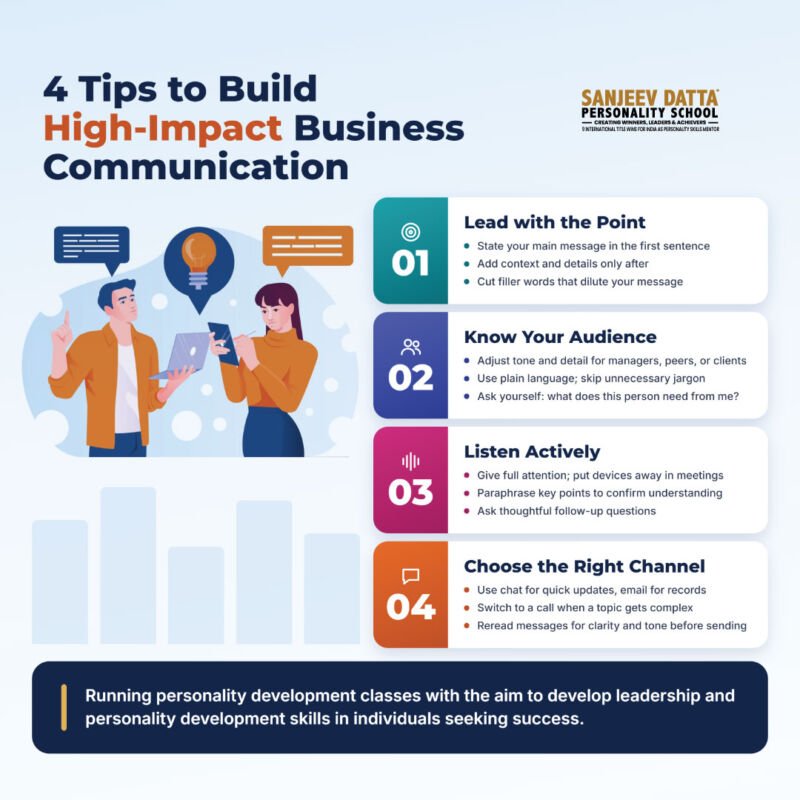
Clear communication means giving instructions, feedback, and context so that others can act without repeated clarification. Poor communication creates rework, missed deadlines, and low trust.
Strong leaders typically do four things:
1. State the outcome before the task.
2. Explain why it matters.
3. Define who owns what and by when.
4. Check understanding by asking the listener to restate the next step.
Communication also includes listening. Leaders who only broadcast miss early warnings from customers and front-line staff.
3. Emotional Intelligence
Emotional intelligence is the ability to recognise and manage your own emotions and respond constructively to the emotions of others. The concept was popularised for business audiences by psychologist Daniel Goleman, who argued that self-awareness, self-regulation, empathy and social skill separate effective leaders from merely technically competent ones.
In practice, emotional intelligence shows up in how a leader handles a missed target. One leader publicly blames the team. Another asks what blocked progress, fixes the process, and keeps trust intact. Over time, the second approach produces more honest reporting, and honest reporting prevents small problems from becoming expensive ones.
4. Decision-Making Under Uncertainty
Good decision-making means choosing a course of action with incomplete information, within a reasonable time, and learning from the result. Growth often depends on decisions that cannot wait for perfect data, such as entering a new city or hiring ahead of demand.
A simple framework:
- Reversible, low-cost decisions: decide quickly, then adjust.
- Irreversible, high-cost decisions: gather more data, consult widely, then commit.
Many leaders slow down every decision equally, which costs the business speed. Sorting decisions by reversibility is a practical fix.
5. Delegation and Empowerment
Delegation is assigning responsibility for an outcome, not just a task, along with the authority to achieve it. Leaders who cannot delegate become bottlenecks, and the business cannot grow beyond their personal capacity.
Common delegation mistakes:
– Handing off tasks but retaining all decisions.
– Delegating only work they dislike.
– Checking in so often that the delegate stops thinking independently.
A useful test: if you are away for two weeks and the team cannot make routine decisions, you have not yet built a delegating culture. Communication is a learnable skill, not a personality trait. Our personality development training helps professionals practise speaking, listening and presenting with confidence.

6. Adaptability and Resilience
Adaptability is the ability to change plans when conditions change without losing sight of the objective. Resilience is the capacity to recover from setbacks and keep the team functioning.
India’s business environment illustrates why this matters. Changes in regulation, digital payments, supply chains, and customer behaviour have repeatedly forced companies to revise models within a few years. Leaders who treat change as a recurring condition rather than a one-time disruption adapt faster.
Practical steps include running small experiments before large rollouts and holding short retrospectives after every major project.
7. Accountability
Accountability means taking ownership of outcomes and holding others to agreed standards fairly. Teams with a clear owner for every goal tend to resolve problems faster because no one assumes someone else is handling them.
Effective accountability combines high standards with support. Leaders set measurable expectations, review progress regularly, and treat missed targets as problems to diagnose, not only as failures to punish.
A related concept is psychological safety, the belief that one can speak up without being penalised. Harvard professor Amy Edmondson’s research on teams made this concept widely known, and Google’s internal Project Aristotle study reported it as the most important factor among those it examined in team effectiveness. Teams that feel safe report errors early, which protects customers and reduces costs.
8. Coaching and Talent Development
Coaching is helping team members improve through questions, feedback, and stretch assignments rather than direct instruction alone. It grows the business by increasing the number of capable people who can handle larger responsibilities.
A basic coaching conversation uses four questions:
1. What is the goal?
2. What is happening now?
3. What options do you see?
4. What will you do next?
Replacing a skilled employee typically costs time in hiring, onboarding, and lost productivity. Leaders who develop talent reduce that cost and build a succession pipeline.

CLICK FOR MORE
9. Customer Focus
Customer focus is the habit of using customer needs, complaints, and behaviour as inputs for internal decisions. Even leaders in non-customer-facing roles benefit from it, because every internal function ultimately serves an external buyer.
Simple practices include sitting in on sales or support calls monthly, reading raw customer feedback instead of only summaries, and asking each team how its work changes the customer’s experience.
The personality development skills that make leaders effective, such as confidence, empathy, and presence, can be built with deliberate practice. We offer structured, practical learning designed for working professionals.

How Do Personality Development Skills Connect to Leadership?
Personality development skills support leadership because many leadership behaviours depend on personal habits: self-awareness, confidence, composure, empathy, and the ability to build rapport. Strong personality development skills do not replace business knowledge, but they determine how effectively that knowledge is communicated and applied.
The connection looks like this:
| Personality development skill | Leadership behaviour it supports | Business effect |
|---|---|---|
| Self-awareness | Seeking and using feedback | Fewer repeated mistakes |
| Confidence | Speaking up, making decisions | Faster execution |
| Empathy | Listening, coaching | Better retention |
| Composure | Handling pressure | Stable teams in a crisis |
| Presentation skills | Persuading stakeholders | Better buy-in for plans |
This table is the author’s conceptual framework, not a finding from a specific study. It is offered to clarify how everyday traits map to leadership outcomes.
Is Personality Development Training Worth It for Professionals?
Personality development training is worth considering when a professional has a specific gap, such as presenting to senior stakeholders, giving feedback, or managing conflict, and when the training includes practice and feedback rather than only lectures.
It is less useful when:
- The real issue is a lack of technical knowledge or role clarity.
- The programme is purely theoretical, with no role-play or follow-up.
- The learner does not apply the skills at work afterwards.
Questions to ask before enrolling:
- What specific behaviours will I be able to demonstrate afterwards?
- Is there live practice and individual feedback?
- Who are the trainers and what is their practical background?
- How is progress measured?
Evidence on training effectiveness varies widely by programme quality. Treat claims of guaranteed promotions or pay rises with caution.
Common Mistakes That Limit Leadership Growth
- Confusing seniority with leadership. A title grants authority but not influence.
- Skipping feedback. Leaders who rarely hear honest criticism develop blind spots.
- Doing instead of leading. Promoted specialists often keep doing their old jobs and neglect people management.
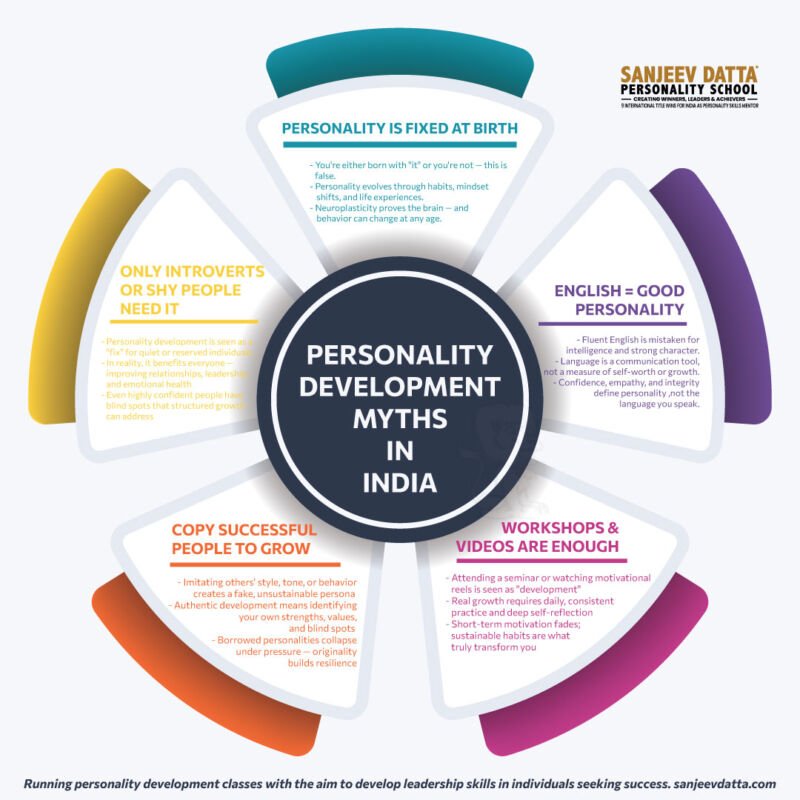
- Copying another leader’s style. Skills transfer, but personality does not. Adapt the principles to your own strengths.
- Treating development as an event. Skills improve through repeated practice over months.
How to Build These Skills: A 90-Day Plan
1. Days 1 to 15: Gather feedback from your manager, peers, and team. Choose two skills to improve.
2. Days 16 to 45: Practise one behaviour per skill daily, such as summarising instructions or asking one coaching question per one-to-one.
3. Days 46 to 75: Take on a stretch responsibility, such as leading a cross-functional project.
4. Days 76 to 90: Collect feedback again, compare it with the baseline, and set the next goals.
This plan is a practical suggestion drawn from standard learning-and-development practice and has not been validated in a specific study.
Who Should Focus on Leadership Skills?
Leadership skills are relevant to first-time managers, high-performing individual contributors, founders, and senior executives. They are less immediately relevant for early-career professionals still mastering core technical work, though foundations such as communication and accountability help at any stage.
Key Takeaways
- Leadership skills that grow businesses combine thinking, people, and execution abilities.
- Managers heavily influence team engagement, according to Gallup research, which makes manager capability a growth lever.
- Communication, emotional intelligence, and delegation are among the most practical skills to improve first.
- Personality development skills such as self-awareness and confidence underpin many leadership behaviours.
- Personality development training is most valuable when it includes practice, feedback and a clear link to workplace goals.
- Skill growth is gradual. Measure behaviour change over months, not days.
If you are ready to turn these ideas into habits, We offer personality development training built around real workplace situations.
Frequently Asked Questions
What are the most important leadership skills for business growth?
Strategic thinking, communication, emotional intelligence, decision-making, and delegation are usually the most influential. They help leaders set direction, align teams, and execute reliably. The right priority depends on your role and current gaps, so start with feedback to identify your weakest area.
Can leadership skills be learned, or are they natural?
They can be learned. Natural temperament may make some behaviours easier, but communication, decision-making and coaching improve through practice, feedback and reflection. Most professionals build these skills over several years of deliberate effort.
How does leadership affect business growth?
Leadership shapes growth through team engagement, execution quality, customer experience and retention. Gallup research suggests managers strongly influence engagement. However, growth also depends on market conditions, product quality and capital, so leadership is one factor among several.
What is the difference between management and leadership?
Management focuses on planning, organising and controlling work to deliver results. Leadership focuses on setting direction, inspiring commitment and developing people. Effective professionals need both, particularly as they take on larger teams.
What are personality development skills?
Personality development skills are personal and interpersonal abilities such as communication, self-confidence, empathy, emotional regulation, time management, and professional etiquette. They shape how professionals present themselves and work with others, and they support leadership effectiveness.
Does personality development training help with career growth?
It can, when it targets specific behaviours and includes practice. Better communication and confidence can improve visibility and collaboration, which often support promotions. It does not replace technical competence, and outcomes vary by programme and learner effort.
How long does it take to develop leadership skills?
Visible improvement in specific behaviours can appear within 8 to 12 weeks of consistent practice. Broader leadership maturity usually takes years and benefits from varied experience, mentoring and feedback.
How can small business owners apply these skills?
Owners can start with delegation, clear communication, and customer focus. Writing down priorities, assigning clear ownership, and regularly speaking with customers are low-cost steps that reduce dependence on the owner alone.