

Managers account for 70% of the variance in team engagement—meaning the single most powerful variable determining whether your team is productive, motivated, and committed is not your organization’s strategy, its technology stack, or its compensation structure. It is the emotional intelligence of the manager leading the team. That is a significant and specific finding—and it explains why organizations that invest in emotional intelligence training for their management population consistently outperform those that invest in technical skills development alone.
The World Economic Forum’s Future of Jobs Report 2025 identifies emotional intelligence as a top leadership power skill that will shape the next five years—not as a nice-to-have add-on to management capability but as the foundational competence that determines whether a technically qualified manager can actually lead people through complexity, uncertainty, and change. Leaders with high EQ are 4.7 times more likely to be high-performing overall and 5.2 times more likely to retain top talent—and organizations with high-EQ leadership report up to 20% more productivity and 30% better customer satisfaction.
These are not motivational statistics. They are the documented business case for treating emotional intelligence training as a core management development investment rather than a supplementary wellness initiative. This article explains precisely what that investment develops, why it produces these outcomes, and how corporate employees at every career stage can build the EQ capabilities that make the difference between a manager who holds a title and a leader who produces genuine results.
What Emotional Intelligence Actually Is—Defined With Precision?
Emotional intelligence (EQ) is the ability to recognize, understand, manage, and effectively apply emotions—both your own and those of the people around you—in the service of better thinking, better decisions, and better relationships.
Harvard Business School defines EQ in terms of four foundational capabilities: self-awareness, self-management, social awareness, and relationship management. Each is distinct, each is developable through structured training, and each contributes to management effectiveness through a different mechanism.
- Self-awareness is the ability to accurately perceive your own emotional states in real time—to know when you are frustrated before that frustration shapes your tone in a team meeting, to recognize when you are anxious before that anxiety produces overcautious decision-making, and to understand how your emotional patterns affect the people you lead. Without self-awareness, every other EQ capability is built on an unstable foundation—because you cannot manage what you cannot accurately perceive.
- Self-management is the ability to regulate emotional responses—to prevent frustration from becoming aggression, anxiety from becoming avoidance, and overconfidence from becoming dismissiveness. In management contexts, self-management is the capability that determines whether a difficult performance conversation, a tense client meeting, or an organizational crisis brings out the best or worst of a manager’s leadership.
- Social awareness—primarily expressed as empathy—is the ability to accurately read others’ emotional states, to understand what team members are experiencing, and to recognize the interpersonal dynamics at play in teams and organizations. Empathy is not sentimentality. It is an organizational intelligence capability—the ability to gather the human data that numbers and metrics cannot capture.
- Relationship management is the integration of the first three capabilities in the service of leading people effectively—”influencing, coaching, inspiring, managing conflict, and building the trust that high-performance teams require. It is where EQ becomes visible in leadership behavior and measurable in team and organizational outcomes.
The Business Case: What the Research Actually Shows
The return on emotional intelligence training investment is documented across multiple research methodologies—and the consistency of the findings across different organizational contexts makes the case unusually robust.
Team engagement and productivity—
managers account for 70% of the variance in team engagement, and team engagement is one of the strongest predictors of organizational productivity, customer satisfaction, and profitability. The mechanism is direct: emotionally intelligent managers create the psychological safety, trust, and communicative openness that engagement requires; managers without EQ create the anxiety, political defensiveness, and communicative caution that engagement cannot survive.
Conflict resolution—
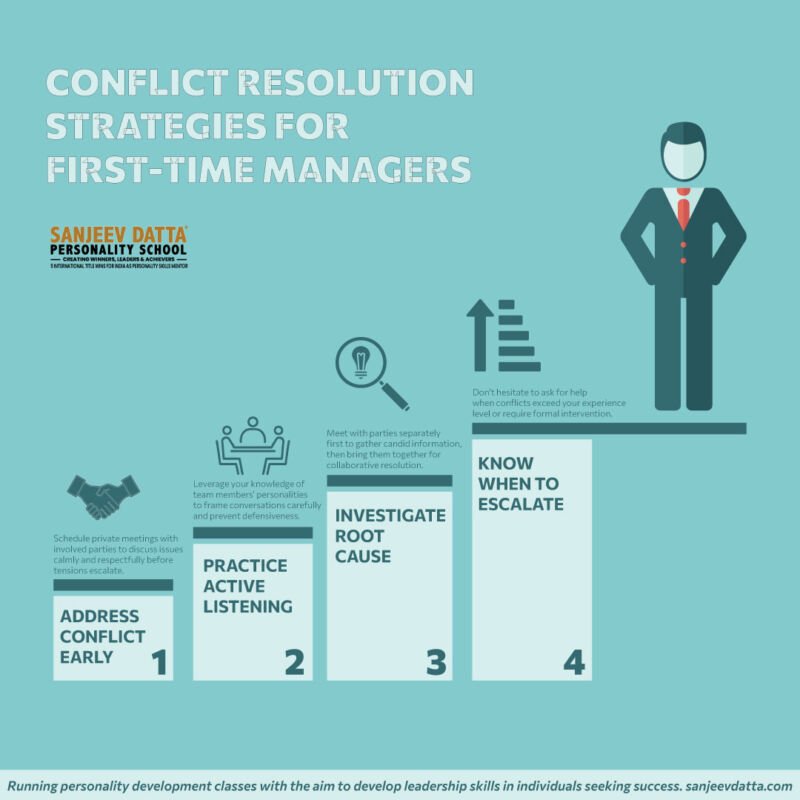
Columbia University research found that leaders with high emotional intelligence resolve workplace conflicts more effectively, with 74% of high-EQ managers successfully de-escalating potentially serious conflicts before they damage team performance. In organizations where unresolved conflict is a primary driver of turnover and productivity loss, this capability has direct financial value that quantifies clearly.
Employee retention—
leaders with high EQ are 5.2 times more likely to retain top talent. In the current talent market, where the cost of replacing an experienced professional is estimated at 50–200% of annual salary, the retention impact of emotionally intelligent management translates directly and significantly to organizational financial performance.
Decision quality under pressure—
research published in the Journal of Management Science Research confirms that emotionally intelligent managers make better decisions in high-pressure conditions—because they can access the cognitive clarity that effective self-management provides and the interpersonal information that social awareness gathers, rather than making pressure-distorted decisions from a position of unmanaged emotional reactivity.
Customer outcomes—
organizations with high-EQ leadership report 30% better customer satisfaction—a finding that reflects the cascading effect of emotionally intelligent management on frontline behavior. Teams led by high-EQ managers treat customers with greater empathy, patience, and service quality because they work in an environment that models and rewards those behaviors.
Google’s Project Aristotle—
the landmark research study on what makes teams effective—found that psychological safety (the direct product of emotionally intelligent leadership) is the single most important determinant of team performance. Teams with psychologically safe environments take the collaborative risks, share the honest feedback, and maintain the constructive challenge that produces superior outcomes. Psychological safety does not emerge from organizational policy—it is created, daily and specifically, by emotionally intelligent managers.
What Emotional Intelligence Training Specifically Develops?
Understanding the specific capabilities that structured EQ training builds—rather than treating emotional intelligence as a vague personal quality that either exists or does not—is the foundation for making training investment decisions that produce measurable managerial improvement.
Self-Awareness Through Assessment and Reflection
The entry point for emotional intelligence training is a structured self-assessment that provides accurate, evidence-based data on an individual’s current EQ profile—specifically their relative strengths and development areas across the four EQ domains.
Assessment tools including the EQ-i 2.0, MSCEIT, and Roche Martin’s Emotional Capital Report provide the specific, comparative self-awareness data that personal reflection alone rarely produces—because individuals’ self-assessment of their own emotional intelligence is systematically distorted by the blind spots that EQ development specifically addresses. Research consistently shows that low-EQ individuals overestimate their EQ and high-EQ individuals are more accurately calibrated—which means that structured assessment is the most reliable starting point for development that self-report cannot provide.
Training that develops self-awareness specifically builds: emotional vocabulary (the ability to identify and name specific emotional states rather than operating in the undifferentiated experience of “good” or “stressed”), pattern recognition (identifying the specific triggers, contexts, and interpersonal dynamics that consistently produce counterproductive emotional responses), and values-behavior alignment auditing (recognizing when emotional reactivity is producing management behavior inconsistent with stated values and leadership intentions).
Emotional Regulation Through Practice
Self-management capability—the ability to regulate emotional responses under real management pressure—is not developed through understanding its importance. It is developed through the practiced application of specific regulation techniques across progressively more challenging emotional contexts.
EQ training that builds genuine emotional regulation capability includes: physiological self-regulation techniques (controlled breathing, attentional redirection, physical state management) that provide immediate regulation tools for acute emotional responses; cognitive reappraisal practices (reframing interpretations of emotionally charged situations to produce less reactive assessments); and behavioral pattern interruption (identifying the specific management behaviors that unmanaged emotional states produce and building the habitual pause that prevents automatic reactive behavior).
The research on self-management training outcomes is specific: managers who develop effective emotional regulation show measurable improvement in the quality of difficult conversations, in their composure during organizational stress periods, and in the consistency of their leadership behavior across varying emotional conditions—which is the management consistency that team trust requires.
Empathy Through Structured Practice
Social awareness—the empathy capability that allows managers to accurately read others’ emotional states and the dynamics operating in their teams—is developed through specific observation and perspective-taking practices that most managers have never been explicitly trained in.
EQ training that builds empathy capability includes: active listening depth training (developing the ability to listen for emotional content and interpersonal meaning rather than only informational content), nonverbal recognition practice (developing sensitivity to the emotional signals communicated through body language, tone, and micro-expressions), perspective-taking exercises (deliberately inhabiting other people’s professional and personal contexts to develop accurate models of their experience), and team dynamics observation practice (learning to read the interpersonal patterns operating in team settings that determine collaboration quality and collective emotional climate).
The O.C. Tanner 2025 Global Culture Report confirms that when managers practice applied emotional intelligence—specifically the empathy and social awareness components—it creates measurably more caring workplace cultures with direct impacts on employee wellbeing, retention, and engagement.
why soft skills over hard skills
Relationship Management Through Application
Relationship management—the integration of self-awareness, self-management, and social awareness into effective leadership behavior—is the capability that is most directly visible in management outcomes and most directly addressed by structured training that provides feedback on real leadership behavior.
The specific relationship management capabilities that EQ training develops for managers include:
- Feedback delivery—the ability to deliver performance feedback that is honest, specific, and motivating rather than avoided (to preserve the relationship), delivered in anger (when emotional regulation breaks down), or framed in ways that produce defensiveness rather than development. Research on feedback quality and its impact on employee performance confirms that emotionally intelligent feedback delivery is the primary determinant of whether feedback produces the behavioral change it is intended to generate.
- Difficult conversations—the ability to initiate and navigate the conversations that management requires but emotionally avoidant managers consistently defer: underperformance conversations, role change discussions, conflict mediation, and organizational change communication. High-EQ managers initiate these conversations from a position of composed, empathetic clarity that produces resolution; low-EQ managers avoid them until the accumulated tension produces crisis.
- Coaching orientation—the shift from directive management (telling people what to do) to coaching management (developing people’s own problem-solving and decision-making capability). This shift requires the empathy to understand where each team member is developmentally, the self-management to resist the efficiency instinct to simply provide answers, and the relationship management capability to ask the questions that develop thinking rather than substitute for it.
- Conflict navigation—managing the interpersonal conflicts that team dynamics inevitably produce, with the composed, empathetic, resolution-oriented approach that high-EQ managers bring to conflict and low-EQ managers either avoid or inflame.
Why Emotional Intelligence Training Works When Other Training Doesn’t?
Most management training produces knowledge without behavioral change—participants learn frameworks, complete assessments, and leave with a certificate and good intentions that three weeks of real management pressure erodes back to baseline. Emotional intelligence training, when designed correctly, produces behavioral change that persists because it operates at a different level than cognitive content delivery.
- The reason is neurological: emotional responses are generated by neural pathways that were formed long before the management competency frameworks being trained. A manager who intellectually understands the importance of emotional regulation but has practiced reactive responses for fifteen years does not change their behavior by learning about the importance of pausing. They change their behavior by repeatedly practicing the pause under emotional pressure until the new neural pathway is more available than the old one.
- Effective EQ training is therefore designed around behavioral rehearsal under realistic emotional pressure—not conceptual content delivery. This means: role-play scenarios that replicate the emotional complexity of real management situations, video self-observation that provides feedback on the gap between intended and actual leadership behavior, structured peer feedback that provides the external perspective on emotional patterns that self-assessment cannot generate, and between-session application assignments that practice specific EQ techniques in real workplace situations.
This behavioral architecture is what separates EQ training that produces lasting management improvement from the kind that produces two good days of heightened self-awareness followed by a return to pre-training patterns.

The EQ Development Pathway: From Awareness to Integrated Leadership Capability
The emotional intelligence development journey for managers follows a consistent and predictable pathway—and understanding that pathway helps corporate employees at every stage identify where they currently are and what the next development investment should address.
Stage 1—Blind Spot Mapping (Weeks 1–4)
Structured EQ assessment combined with 360-degree feedback from peers, direct reports, and senior leaders that provides accurate data on the gap between self-perceived EQ and observed EQ. This stage is the most challenging—because it frequently reveals patterns of reactive management behavior that the manager genuinely did not recognize—and the most productive, because it provides the precise development targets that generic EQ content cannot identify.
Stage 2—Skill-by-Skill Development (Months 2–4)
Targeted development of the specific EQ capabilities identified as development priorities in the assessment stage. This stage works most effectively with expert facilitation—an experienced EQ coach or trainer who can design practice scenarios calibrated to the individual’s specific development targets, provide real-time behavioral feedback, and help the manager connect EQ concepts to the specific management situations they encounter daily.
Stage 3—Behavioral Integration (Months 4–8)
The stage in which trained EQ capabilities are consolidated into reliable behavioral habits through consistent real-world application, ongoing reflection, and periodic recalibration of the development plan based on emerging management challenges. The behavioral integration stage is where the most durable EQ improvement occurs—because it is where practiced capability becomes habitual rather than effortful.
Stage 4—Leadership Culture Building (Ongoing)
The stage at which individual EQ development begins generating organizational returns—as emotionally intelligent managers build teams whose collective emotional intelligence is higher than the sum of individual members, create the psychological safety that high-performance collaboration requires, and model the EQ behaviors that their direct reports progressively develop through exposure.
This development pathway is where investing in a quality personality development course alongside targeted EQ training creates compounding returns that neither investment produces alone. A structured personality development course builds the integrated personal foundation—communication authority, professional confidence, interpersonal effectiveness, and the self-presentation that leadership requires—that provides the platform on which EQ training produces its maximum organizational impact. For corporate employees who want their emotional intelligence development to translate into visible leadership presence and career advancement rather than internal capability growth that remains invisible to the organizational decision-makers who determine promotion and leadership opportunity, a personality development course is where the external professional expression of internal EQ development is most deliberately built.

Applying EQ Training to the Specific Challenges Managers Face Daily
Emotional intelligence training produces its most direct return when its application is anchored to the specific management challenges that corporate contexts generate daily. Understanding the EQ application for each challenge clarifies the practical value of the investment.
Managing High-Pressure Performance Reviews
Performance reviews are among the most emotionally complex management responsibilities—requiring the self-management to deliver honest assessments without defensive reactivity, the empathy to understand how the feedback lands for each individual, and the relationship management to deliver improvement expectations in ways that motivate rather than demoralize.
Managers without EQ training consistently report three failure modes in performance conversations: avoiding honest negative feedback to preserve relationship harmony (protecting their own emotional comfort at the cost of the employee’s development), delivering feedback in ways that produce defensiveness rather than openness (triggering the employee’s threat response rather than their development orientation), and losing composure when the employee responds with emotion (reacting to the employee’s emotional reaction rather than staying with the feedback conversation’s purpose). EQ training directly addresses all three failure modes.
Leading Teams Through Organizational Change
Change management is the management context in which EQ capability produces its most significant organizational impact—and its absence produces its most costly failures. Research on why organizational change initiatives fail consistently identifies manager communication quality, team trust, and psychological safety as primary determinants of change adoption—all of which are direct functions of the manager’s EQ.
Emotionally intelligent change leadership communicates the honest reality of the change with the emotional composure that allows teams to process it without panic, acknowledges the genuine difficulty of the transition with the empathy that makes people feel understood rather than managed, and maintains the relationship trust that allows people to raise concerns without fear of career consequence.
Retaining High-Performing Direct Reports
The primary reason high-performing employees leave organizations is their direct manager—specifically, the experience of feeling unseen, undervalued, or unable to bring their full capability to work in an environment managed without emotional intelligence. Research from Gallup confirms that 50% of employees leave their job “to get away from their manager.”
EQ training for managers builds the specific capabilities that retention requires: the social awareness to recognize when high performers are disengaging before they decide to leave, the empathy to understand the development and recognition needs that each individual’s performance is built on, and the relationship management capability to have the direct, caring conversations that make high performers feel seen, challenged, and valued.
why offline leadership workshops
Building Your EQ: The Development Investment That Changes Everything
Emotional intelligence is not a fixed trait. It is a developable capability—and the research on EQ training effectiveness consistently documents that structured, well-designed training produces significant, measurable, and durable improvement in EQ capabilities across all four domains.
The development investments that produce the strongest EQ improvement outcomes:
- Structured EQ coaching—one-to-one coaching from an EQ-certified coach who uses assessment data to design a personalized development plan and provides session-by-session feedback on real leadership situations. The most targeted and personalized EQ development pathway, and the one with the highest return for senior managers whose leadership behavior has the greatest organizational impact.
- Group EQ training programs—facilitated workshops that combine EQ assessment, group learning, peer feedback, and behavioral practice scenarios in a cohort setting. The group format adds the social complexity of real interpersonal dynamics to the learning environment—making the practice more realistic than individual coaching alone and producing the peer network of mutual accountability that sustains EQ development between sessions.
- 360-degree feedback processes—structured multi-rater feedback that provides managers with accurate data on how their leadership behavior is experienced by the people they lead, the peers they collaborate with, and the senior leaders who observe them. The gap between self-perceived and observed EQ is the most productive development input available—and 360-degree feedback is the most direct mechanism for generating it.
This is precisely where dedicated personality development training programs designed for corporate professionals create the most powerful complement to formal EQ development. Quality personality development training for corporate employees builds the communication confidence, professional presence, and interpersonal effectiveness that allow developed EQ to be fully expressed in the high-stakes leadership situations where it matters most—closing the gap between what emotionally intelligent managers understand and how compellingly, confidently, and effectively they communicate and lead in front of the teams and stakeholders where career advancement decisions are made. For corporate employees who are serious about building both the internal EQ capability and the external professional presence that genuine leadership effectiveness requires, personality development training is where those two dimensions of development are integrated into the complete, visible leadership identity that organizational advancement rewards.
FAQ: Emotional Intelligence Training for Corporate Employees and Managers
1. Can emotional intelligence actually be trained, or is it a fixed personality trait?
The research consensus is unambiguous: emotional intelligence is developable through structured training. Multiple longitudinal studies confirm that EQ-focused training programs produce significant, lasting improvements in self-awareness, emotional regulation, empathy, and relationship management capabilities—with the improvement maintained at follow-up assessments six to twelve months post-training. The key distinction is between general awareness-raising programs (which may produce temporary behavior change) and behaviorally-focused training programs that build new neural pathways through repeated practice (which produce durable capability improvement). EQ is not fixed—but it requires deliberate, structured development to change significantly. Reading about emotional intelligence does not develop it; practicing it under realistic conditions, with feedback, does.
2. How long does it take to see measurable improvement from EQ training?
Structural behavioral improvement in emotional regulation and self-awareness is typically observable within four to eight weeks of consistent, well-designed training—with team members and peers often noticing changes in management behavior before the manager is fully aware of them. Deeper capability development in empathy, relationship management, and conflict navigation—which require more behavioral rehearsal and real-world application—typically consolidates over three to six months. The managers who develop fastest are those who combine formal training with deliberate between-session application: specific commitments to practice identified EQ techniques in real management situations and structured reflection on what those applications produced. Passive training attendance without between-session application produces awareness improvement but limited behavioral change.
3. How does EQ training differ from general management skills training?
General management skills training addresses the tools and processes of management: goal setting, delegation frameworks, performance review structures, project management methodologies. EQ training addresses the human foundation on which those tools are deployed: the emotional intelligence that determines whether a goal-setting conversation produces genuine commitment or grudging compliance, whether a delegation framework produces empowered team members or anxious ones, and whether a performance review produces development or defensiveness. Both are necessary—but EQ training addresses the more fundamental layer, because management tools in the hands of a low-EQ manager consistently produce worse outcomes than imperfect tools in the hands of a high-EQ one.
4. What is the best way for individual contributors (non-managers) to develop EQ for future leadership readiness?
Individual contributors who want to build EQ in preparation for leadership roles should focus primarily on self-awareness and self-management development—the two EQ domains that produce the most immediate observable improvement and that provide the foundation for the social awareness and relationship management capabilities that formal management roles require. Specific development actions: complete a structured EQ assessment (the EQ-i 2.0 provides individual-level feedback without requiring an organizational assessment program), request 360-degree feedback from trusted colleagues, begin a daily emotional observation practice (journaling specific emotional responses and their professional behavior outcomes), and seek out progressively challenging interpersonal situations—project leadership, conflict mediation, presentation opportunities—that build EQ capability through deliberate practice rather than waiting for a formal management role to develop it.
5. How should organizations measure the ROI of EQ training investment for their management population?
The most credible ROI measurement framework for organizational EQ training combines four metrics tracked before and after training implementation: team engagement scores (measured through pulse surveys or annual engagement instruments, with management-level attribution), voluntary turnover rate among high performers (reflecting retention impact of EQ-improved management), 360-degree leadership feedback score improvement (direct measurement of observed management behavior change), and team productivity metrics (output, quality, and initiative measures that reflect the engagement improvement that higher-EQ management produces). Organizations that measure only pre/post-training knowledge scores capture the least relevant EQ development data. Those that measure behavioral change in real management contexts—through 360 feedback, engagement data, and retention metrics—capture the organizational impact that justifies continued investment.
6. Is EQ training relevant for senior executives, or is it primarily for middle management?
The organizational return on EQ investment increases with seniority—because the leadership behavior of senior executives shapes organizational culture, not just individual team dynamics. Research published in the Journal of Emotional Intelligence and Leader Outcomes confirms that EQ’s impact on leadership effectiveness increases at higher organizational levels, where the complexity of stakeholder relationships, the political sensitivity of organizational decisions, and the visibility of leadership behavior to the full organization make emotional intelligence increasingly consequential. The finding that high-EQ CEOs and senior executives produce stronger organizational cultures, better shareholder returns, and stronger talent retention than their low-EQ equivalents in comparable roles is among the most consistent findings in executive leadership research—making EQ training a particularly high-return investment at the most senior organizational levels.