

Here is a distinction most course comparison guides never make: there is a significant difference between an online soft skills course that teaches you about communication, emotional intelligence, and leadership—and one that actually changes how you communicate, how emotionally intelligent you are, and how you lead. The first kind gives you a certificate and a vocabulary. The second kind changes your professional behavior. The first kind is far more common.
The global soft skills training market was valued at USD 43.15 billion in 2026, growing at 9.65% annually—evidence of extraordinary demand from both individuals and organizations for the interpersonal capabilities that technical skills alone cannot provide. The World Economic Forum’s Future of Jobs Report 2025 places communication, analytical thinking, resilience, and leadership among the top skills that employers will prioritize through 2030. And MIT-published research found that soft skills training programs can raise individual productivity by 7.4%, with firms receiving a 256% ROI eight months post-training.
But the returns documented in the research accrue to training that produces genuine behavioral change—not training that produces awareness without practice. Finding the best online soft skills course for real-world application means knowing how to distinguish between the two, which platforms and programs build the capabilities that survive contact with actual professional situations, and what complementary development investments make online learning most practically productive.
Why Most Online Soft Skills Courses Fail to Transfer?
Before the course guide, the honest diagnosis: the majority of online soft skills courses fail to produce lasting behavioral change because they are designed around content delivery rather than behavioral practice.
Soft skills—communication, emotional intelligence, conflict navigation, leadership presence, active listening, and adaptability—are not informational competencies. You cannot develop them by watching videos about them, the same way you cannot develop the ability to swim by watching videos about swimming. They are practiced capabilities that require repeated behavioral rehearsal, real-time feedback, and the graduated social pressure of actual human interaction to build from conceptual understanding into reliable professional behavior.
The online courses that produce genuine real-world application share a specific structural profile: they incorporate active practice exercises rather than passive video consumption, they include social or peer interaction components that provide human feedback on behavioral outputs, they are designed around spaced repetition that builds habits rather than single-session knowledge transfer, and they connect directly to real-world professional contexts rather than abstract skill descriptions.
The courses that do not produce real-world application—regardless of platform prestige or certification value—are those designed as content delivery systems: watch these videos, complete this quiz, receive this badge. They may produce genuine learning. They rarely produce genuine behavioral change.
The Seven Soft Skills With the Highest Real-World Career Return
Before evaluating specific courses, understanding which soft skills produce the highest career return for most professionals focuses the investment on the capabilities worth prioritizing.
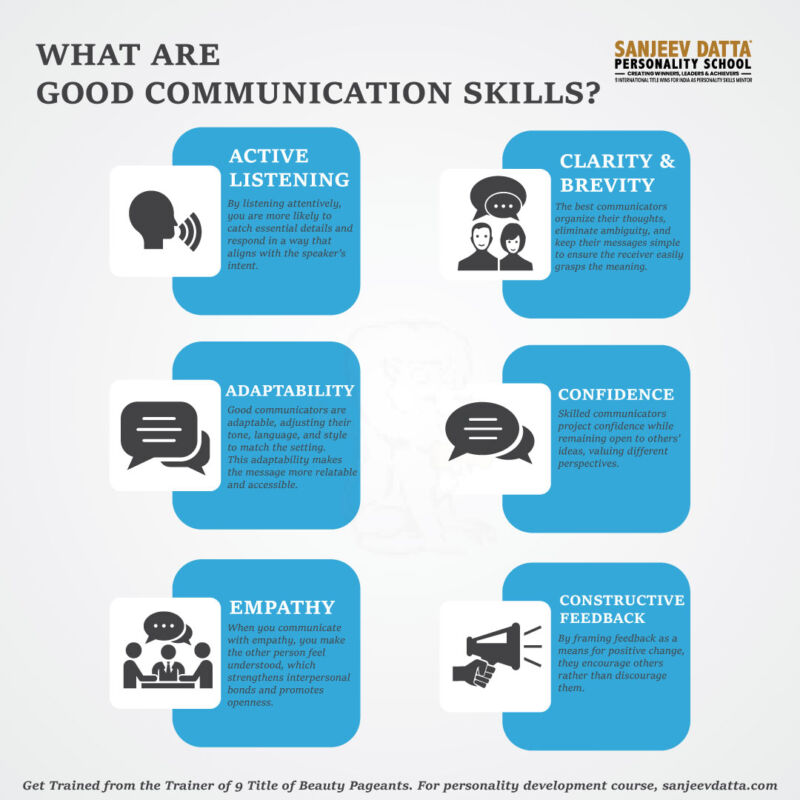
Communication clarity and confidence remain the single most consistently cited skill gap by employers globally and the single most career-consequential capability for professionals across every industry and role. The ability to express ideas clearly, to present with composure under pressure, and to adapt communication style to different audiences and contexts is the foundation on which almost every other professional capability is deployed.
Emotional intelligence (EQ)—the ability to understand and manage your own emotional responses and to read and respond to others effectively—is identified by TalentLMS’s 2026 skills research as one of the top soft skills employers look for. Research consistently shows that EQ predicts professional performance more reliably than IQ at every level above basic competence, with particularly strong effects in leadership, client-facing, and collaborative roles. [talentlms](https://www.talentlms.com/blog/top-soft-skills-training-for-employees/)
Active listening is the most underestimated and most commonly underdeveloped communication capability—and the one that most directly determines the quality of professional relationships, mentorship value, and collaborative effectiveness. Professionals who listen actively—who understand before responding, who ask clarifying questions rather than making assumptions, and who make the person speaking feel genuinely heard—build trust faster and navigate professional relationships more effectively than almost any other skill enables.
Adaptability and resilience are identified by the WEF Future of Jobs Report 2025 as critical future-of-work capabilities—the ability to update approaches without ego, to function effectively under uncertainty, and to sustain performance through organizational change and professional setbacks.
Leadership and influence—not as a management role title but as a behavioral capability: the ability to move people toward a direction through communication, relationships, and shared purpose rather than positional authority.
Conflict navigation and productive disagreement—the specific interpersonal capability to engage disagreement constructively, to challenge ideas without damaging relationships, and to find resolutions that serve collective rather than individual interests.
Time management and professional effectiveness—the self-management capabilities that determine whether developed skills are actually deployed in the professional environment rather than crowded out by reactive, unmanaged workloads.
why soft skills over hard skills
How to Evaluate Any Online Soft Skills Course Before Enrolling?
The evaluation criteria that distinguish courses producing genuine real-world application from those producing passive knowledge:
- Practice-to-content ratio—what percentage of the course is active practice versus passive consumption? Any course with less than 30% active exercise content is primarily a knowledge delivery program. The best real-world application courses have practice ratios of 50% or higher.
- Social or peer interaction component—Does the course provide structured interaction with other learners, mentors, or coaches? Human feedback on communication, emotional intelligence, and interpersonal behavior is irreplaceable—and courses without it cannot fully develop the interpersonal capabilities they teach.
- Spaced repetition and habit-building architecture—Is the course designed to be completed progressively over weeks or months, with exercises that revisit and build on earlier capabilities? Or is it a self-paced library that most learners complete in a single intensive session? Behavioral change requires time and repetition—single-session learning produces knowledge retention but rarely behavioral change.
- Real-world context application—Do the exercises require application in the learner’s actual professional context, or only in simulated course scenarios? The most effective courses assign real-world application tasks—practice conversations with colleagues, real meetings where a specific technique is applied, genuine professional situations where the new capability is deployed and reflected on.
- Expert facilitation versus AI-only delivery—expert-facilitated courses that provide nuanced, contextual feedback on behavioral practice produce substantially stronger real-world application than entirely self-directed or AI-graded programs.

The Application Gap: Why Online Learning Alone Is Not Enough
Even the best-designed online soft skills course has a structural limitation that is worth acknowledging directly: the professional environment in which soft skills must be applied is inherently social, unpredictable, and emotionally complex in ways that even the most carefully designed online learning environment cannot fully replicate.
Communication under the social pressure of a real boardroom presentation is a different challenge than communication in a structured course exercise. Emotional intelligence in a genuinely tense client conversation requires capabilities that watching emotional intelligence content, however insightful, cannot build in isolation. The research on soft skills training transfer consistently identifies the gap between the learning environment and the application environment as the primary determinant of how much course learning actually converts into professional behavioral change.
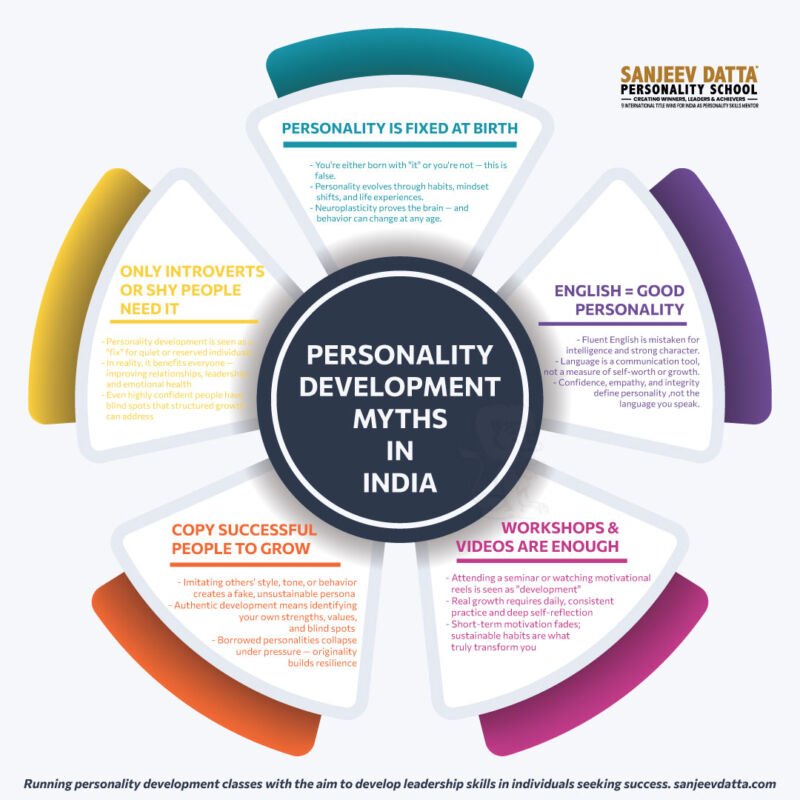
This is precisely where investing in a quality personality development course alongside online soft skills training creates the compounding development return that neither alone can achieve. A structured personality development course provides the expert-facilitated, socially interactive, progressively challenging practice environment that transforms course-acquired knowledge into genuine behavioral capability—working specifically on the communication presence, emotional intelligence, interpersonal confidence, and professional self-expression that online courses teach conceptually but cannot fully develop through digital-only delivery. For learners who are serious about developing soft skills that survive contact with real professional pressure—not just soft skills that show up on a resume—a personality development course is where the application gap is closed most systematically and most permanently.

Building a Soft Skills Development Stack That Actually Works
The most productive approach to soft skills development in 2026 is not a single course but a deliberate development stack—a combination of resources and environments that address the full spectrum of soft skills learning: conceptual understanding, structured practice, expert feedback, and real-world application.
Layer 1—Conceptual Foundation:
An online course from Sanjeev Datta provides research-based frameworks and expert instruction on the specific capabilities you are prioritizing. This layer builds the vocabulary, models, and structured understanding that practice requires.
Layer 2—Structured Practice Environment:
A facilitated program—whether a personality development course, a professional development workshop series, or a peer learning cohort—that provides human interaction, expert feedback on behavioral practice, and the social pressure that builds real-world application confidence.
Layer 3—Real-World Application Protocol:
A deliberate personal commitment to applying one specific capability from your development work in your actual professional environment every week—a specific conversation where you practice active listening, a presentation where you apply a communication framework, a conflict situation where you deploy an emotional intelligence technique. The research is detailed: behavioral change happens through application, not through accumulation of knowledge.
Layer 4—Reflection and Iteration:
A weekly or fortnightly review of what you attempted, what worked, what did not, and what you will adjust. This reflection loop is the mechanism through which application experience converts into genuine capability rather than one-off performance.

What to Look for in a Personality Development Skills Program Specifically?
For learners whose primary development goal is the complete professional presence that personality development encompasses—communication authority, executive presence, emotional intelligence, self-confidence, and interpersonal effectiveness as an integrated whole rather than a collection of separate skills—the selection criteria for a personality development skills program are distinct from those for individual soft skills courses.
A quality personality development skills program specifically designed for professional real-world application should:
- Work on integrated capability, not isolated skills—developing communication confidence, emotional intelligence, and professional presence as interconnected capabilities rather than addressing them as separate modules
- Include regular, expert-facilitated live sessions—not recorded content alone, but real-time practice with expert observation and feedback
- Incorporate video self-observation—recorded practice reviewed with expert guidance, which provides the specific self-awareness feedback that behavioral development requires
- Progress in difficulty over time—moving from foundational awareness exercises to increasingly complex, pressure-replicating practice scenarios
- Connect development to the learner’s actual professional context—with exercises and assignments that require application in the learner’s real working environment rather than only in program-internal scenarios
For professionals who recognize that the career gap between where they are and where they want to be is fundamentally a personal capability gap—that the missing ingredient is not more technical knowledge but the communication confidence, professional presence, and interpersonal effectiveness that personality development skills programs specifically build—this is the investment category that produces the most direct, most durable, and most visible career return available through any form of professional development.
The Soft Skill That Accelerates All Others
There is one soft skill that the research on career advancement consistently identifies as the primary accelerant of all others: communication confidence—specifically, the ability to express your knowledge, perspective, and capability clearly and compellingly in the professional situations that matter most.
A professional who has developed emotional intelligence but cannot communicate their empathetic understanding effectively leaves the relationship value of that intelligence largely unrealized. A professional who has developed strong analytical thinking but cannot present their conclusions with composure and conviction leaves the career value of that thinking largely unclaimed. Communication confidence is the deployment mechanism for every other soft skill—and it is the single capability most worth prioritizing in any soft skills development investment.
Every online soft skills course recommended in this guide addresses communication in some form. The courses that produce the strongest real-world application treat communication not as a module but as the thread that runs through every other capability they develop—because in real professional environments, soft skills are not deployed in isolation. They are deployed through every conversation, presentation, negotiation, and interaction that professional life consists of.
mastering adaptability and soft skills
FAQ: Best Online Soft Skills Course
1. Are online soft skills certifications recognized by employers?
The recognition value of online soft skills certifications varies significantly by institution and employer context. The most experienced hiring managers universally report evaluating demonstrated soft skills capability—observable in interview, conversation, and portfolio—far more heavily than the credential that certifies them. The certificate opens the conversation; the demonstrated capability wins the opportunity.
2. How long does it take to develop genuinely applicable soft skills through online courses?
Foundational conceptual learning for most soft skills topics can be completed in 10 to 40 hours of structured online course content. Genuine behavioral change—the point at which a soft skill is reliably deployable in real professional pressure situations—typically requires three to six months of consistent practice, combining course learning with real-world application. The learners who develop fastest are those who combine online course learning with a structured practice environment (peer learning cohort, personality development program, or coaching engagement) that provides human feedback on behavioral practice—compressing the behavioral change timeline significantly compared to self-directed application alone.
3. Can I develop soft skills through online courses without a mentor or coach?
Yes—with the important caveat that self-directed online learning produces knowledge retention and awareness improvement more reliably than it produces behavioral change. The specific soft skills most amenable to self-directed online development are those with clear, repeatable practice exercises that do not require external human feedback: time management, written communication, problem-solving frameworks, and certain emotional intelligence self-awareness practices. The soft skills that most benefit from expert facilitation and peer interaction—spoken communication confidence, interpersonal effectiveness under pressure, conflict navigation, and executive presence—develop most reliably with some form of human feedback environment alongside online course learning.
4. How do I know when I have actually developed a soft skill, versus just having learned about it?
The test is professional behavior under real conditions. You have genuinely developed a soft skill when you deploy it reliably in the professional situations that matter—not in controlled practice scenarios but in the actual conversations, presentations, negotiations, and interactions of your working life. Practical indicators include: receiving specific positive feedback from colleagues or managers that references the capability (not “you were great” but “the way you handled that client pushback was impressive”), experiencing a specific situation that would previously have been difficult becoming noticeably more manageable, and finding that you apply the capability automatically rather than consciously. If you are still consciously reminding yourself to apply a technique during a real interaction, the skill is learned but not yet fully developed. When it operates without conscious deployment, it has genuinely been internalized.
5. Is a personality development course different from a soft skills course?
They are related but distinct in scope and depth. A soft skills course typically addresses specific, definable capabilities—communication, time management, and active listening—as discrete learning modules. A personality development course addresses the complete professional person—the integrated combination of self-awareness, communication presence, emotional intelligence, confidence, interpersonal effectiveness, and professional identity that determines how all individual soft skills are deployed in the real world. A soft skills course teaches you the notes. A personality development course teaches you to play the instrument. The most complete professional development investment combines both specific soft skills training for targeted capability building and personality development for the integrated personal foundation that makes every specific capability reach its maximum professional impact.
Key Takeaways
- The global soft skills training market is valued at USD 43.15 billion in 2026—reflecting documented employer demand for communication, emotional intelligence, adaptability, and leadership capabilities that technical skills alone cannot provide.
- MIT-published research found that soft skills training raises individual productivity by 7.4% and produces a 256% ROI for firms eight months post-training—making it one of the highest-return professional development investments available.
- The distinction between a soft skills course that teaches about capabilities and one that actually develops them is structural: courses with high practice-to-content ratios, social interaction components, spaced repetition architecture, and real-world application assignments produce behavioral change; passive content delivery programs primarily produce awareness.
- The seven soft skills with the highest real-world career return are: communication, clarity and confidence, emotional intelligence, active listening, adaptability and resilience, leadership and influence, conflict navigation, and time management.
- The application gap—the difference between learning soft skills in a course environment and deploying them under real professional pressure—is the primary determinant of course ROI and is best closed through a deliberate development stack: online course learning plus a structured practice environment plus a real-world application protocol plus regular reflection.
- Communication confidence is the single soft skill that accelerates all others—because it is the deployment mechanism through which every other interpersonal capability reaches its professional impact.
- Online soft skills certifications have variable employer recognition; demonstrated capability consistently carries more professional weight than the certificate that certifies it.
- A personality development course provides the integrated personal foundation—communication authority, professional presence, and emotional intelligence as a whole—that individual soft skills courses build toward but cannot fully develop in isolation.
- The most productive soft skills development investment in 2026 is not the single best course but the best-designed development stack: targeted online learning, expert-facilitated practice, real-world application commitment, and the reflective iteration that converts experience into genuine, reliable capability.