

A hiring manager at a Fortune 500 company once described her most expensive recruitment mistake this way: “He had the most technically brilliant CV I had ever reviewed. Six months later, we let him go—he couldn’t hold a team together for thirty minutes without someone walking out.” The candidate had every hard skill the role demanded. What he lacked was everything that made those skills useful in a real organization with real people, real pressures, and real stakes.
That story is not an outlier. According to a LinkedIn Global Talent Trends report, 92% of hiring professionals now rate soft skills over hard skills as equally or more critical in the hiring process—and 89% of bad hires are attributed not to technical deficiency but to the absence of these human capabilities. Meanwhile, Harvard Business Review research confirms that 85% of long-term job success is determined by soft skills, with technical expertise accounting for only 15%.
This is not a trend. It is a structural shift in what professional competence means—and for professionals who are still investing disproportionately in certifications and technical credentials while underinvesting in their communication, emotional intelligence, and interpersonal capability, it represents a significant and widening career risk.
What Soft Skills Actually Are—and Are Not?
Before examining why recruiters consistently prioritize soft skills over hard skills, it is worth being precise about what soft skills actually encompass—because the term is frequently reduced to vague adjectives that undersell the real professional capability it describes.
Soft skills are the behavioural and interpersonal competencies that determine how effectively a professional applies their technical knowledge in real organizational contexts. They are not personality traits you are born with or without. They are developed, practiced capabilities—as learnable and as refinable as any technical skill, and significantly more transferable across roles, industries, and career stages.
The soft skills that hiring managers consistently rank as most critical for 2026 include:
- Communication—the ability to convey ideas clearly, adjust delivery to different audiences, and listen as effectively as you speak
- Adaptability—the capacity to perform effectively under changing conditions, absorb new information quickly, and update approach without defensiveness
- Emotional intelligence—self-awareness, emotional regulation, empathy, and the ability to read and respond to others’ emotional states productively
- Problem-solving—the ability to approach novel challenges systematically, think through implications, and generate workable solutions under pressure
- Collaboration—genuine effectiveness in team environments, including conflict navigation, role flexibility, and consistent follow-through on shared commitments
- Accountability—owning outcomes rather than processes, and responding to failure with analysis rather than blame
Each of these is a developed competency. None of them appears on a degree certificate or a technical certification. All of them are visible to every recruiter and hiring manager who interacts with a candidate—regardless of the candidate’s awareness of being observed.
Why the 92% Figure Reflects a Structural Shift, Not a Preference?
The dominance of soft skills in hiring decisions is not a cultural preference that varies by organization or industry. It reflects three structural forces that are simultaneously reshaping every professional environment.
The AI Displacement of Routine Technical Work
The World Economic Forum’s Future of Jobs Report 2025 projects that 39% of workers’ core skills will need to change by 2030—driven primarily by AI and automation absorbing the routine, rule-based, and process-dependent components of most professional roles. The technical skills most at risk of displacement are precisely those that are most narrowly defined and most easily codified—the skills that credentialing systems measure most reliably and that early-career professionals invest most heavily in acquiring.
What AI cannot displace—and what OpenAI researchers have specifically acknowledged as beyond current and foreseeable AI capability—is the human capacity for empathy, creative judgment, interpersonal influence, and the nuanced contextual communication that makes professional relationships function. Soft skills are not merely valued because organizations currently prefer them. They are valued because they are what remains irreplaceably human as automation absorbs everything else.
The Hidden Cost of Soft Skill Deficiency
Soft skill gaps are not merely a missed opportunity for professional advancement. They are an active organizational cost that businesses are becoming increasingly sophisticated at attributing to specific individuals and roles. Research indicates that 58% of managers believe their company’s success is actively held back by poor soft skills—not by technical gaps, resource constraints, or strategic failures, but by the interpersonal and communication deficiencies of the people they manage.
The financial consequence of this is significant: bad hires attributed to soft skill deficiency typically cost between 50–150% of annual salary in replacement, lost productivity, and team disruption costs. For hiring managers who are accountable for these outcomes, the calculation of prioritizing soft skills over hard skills in the hiring process is not philosophical—it is financial self-protection.
The Remote and Hybrid Work Amplification Effect
The shift toward hybrid and remote work environments has amplified the professional consequences of soft skill gaps in ways that were less visible in fully co-located settings. In a remote environment, communication clarity, emotional regulation, accountability, and the ability to build trust without physical presence become the primary mechanisms through which professional relationships function and professional influence is exercised. Technical competence is assumed. The differentiation between professionals who thrive in hybrid environments and those who struggle is almost entirely determined by soft skill capability.
A TestGorilla report found that 60% of hiring managers now rate soft skills as more important than they were five years ago—and the primary driver cited was the shift to hybrid and remote work structures that made interpersonal capability the central professional competency.
The Soft Skills That Separate Professionals Who Advance From Those Who Plateau
Understanding why recruiters prioritize soft skills over hard skills is useful context. Understanding which specific soft skills produce the most significant career advancement outcomes is the more practically valuable question for professionals who want to act on this knowledge.
1. Communication: The Compounding Career Asset
Communication is ranked as the single most important soft skill for 2026 by hiring managers across industries—and the gap between professionals who communicate effectively and those who do not is both more significant and more visible than most professionals realize.
Effective professional communication is not fluency or articulateness in isolation. It is the ability to calibrate delivery to audience and context—to be clear and direct in a one-on-one feedback conversation, compelling and structured in a group presentation, precise and concise in written professional communications, and appropriately diplomatic in organizational negotiations. Each of these is a distinct capability that requires deliberate development, not natural aptitude.
The career compounding effect of strong communication is among the most reliably documented in professional development research. Professionals who communicate with above-average effectiveness are consistently promoted faster, earn higher compensation, lead larger teams, and report higher job satisfaction—across industries, organizational sizes, and career levels.
2. Emotional Intelligence: The Leadership Differentiator
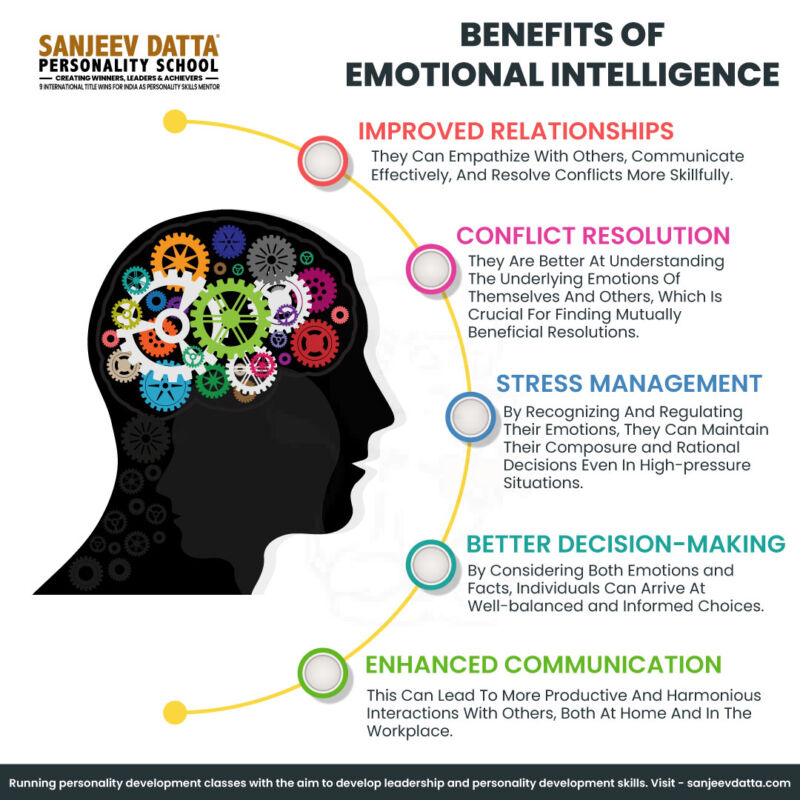
Research consistently demonstrates that teams led by professionals with high emotional intelligence outperform comparable teams by up to 25% in productivity and innovation metrics. EQ—the capacity to understand and manage your own emotional responses and to accurately read and respond to others’—is the primary differentiator between professionals who remain strong individual contributors and those who develop genuine leadership capability.
Emotional intelligence is particularly consequential in the current workplace because it is the soft skill most directly connected to the interpersonal trust that organizational effectiveness requires. A technically excellent professional with low EQ who creates friction in every interaction they have is an organizational net cost. A technically solid professional with high EQ who generates trust, navigates conflict constructively, and makes others more effective is an organizational multiplier—and is recognized and compensated accordingly.
3. Adaptability: The Career Protection Skill
In a labor market where the World Economic Forum projects that nearly 40% of core professional skills will change by 2030, adaptability is not merely a valued quality—it is a survival capability. Employers are specifically prioritizing hiring for adaptability and learning agility because they are building organizations that will need to pivot—in technology, in strategy, in structure—at a pace that makes static expertise a liability rather than an asset.
The professionals who will navigate the next decade of workplace disruption most successfully are not those with the deepest current technical expertise but those who learn fastest, update their approaches most readily, and maintain effectiveness across changing conditions. Adaptability, like all soft skills, is a developed capability—built through deliberate practice in environments that challenge comfort and require genuine behavioral flexibility.
The Development Gap That Is Costing Professionals Career Advancement
The data on recruiter prioritization of soft skills is widely reported. The action gap—the distance between professionals who understand that soft skills matter and those who are actively, systematically developing them—is where career advancement is actually won or lost.
A LinkedIn Learning survey found that while 91% of employers rate soft skills as equal to or more important than technical ability, 57% believe that universities and formal education do not adequately prepare graduates in communication, teamwork, and problem-solving. This is the soft skills development gap: widespread awareness of their importance, combined with insufficient structured investment in actually developing them.
This is precisely where a structured personality development course creates its most significant professional return. A quality personality development course provides the structured curriculum, expert facilitation, and deliberate practice environment that soft skills development requires—developing communication confidence, emotional intelligence, professional presence, and interpersonal effectiveness through progressive, feedback-rich practice that self-directed effort cannot replicate. For professionals who are serious about closing the development gap between understanding that soft skills matter and actually possessing them at a level that hiring managers, clients, and senior leaders recognize and respond to, a personality development course is the most direct, structured, and verifiably effective path available.

Why Soft Skills Are Durable in a Way Hard Skills Are Not?
One of the most strategically important qualities of soft skills—and one that professionals evaluating career development investments frequently underweigh—is their durability across technological and market disruption.
Hard skills depreciate. The technical competencies that were premium professional assets five years ago—specific programming languages, platform-specific tools, proprietary software expertise—are frequently commoditized, automated, or superseded by the current cycle. Professionals who have invested disproportionately in technical specialization without developing their soft skill foundation find themselves repeatedly returning to the beginning of the learning curve as the technical landscape shifts beneath them.
Soft skills compound. The communication capability developed over years of deliberate practice makes every subsequent professional interaction more effective. The emotional intelligence built through structured development makes every team more productive, every negotiation more successful, and every leadership challenge more navigable. The adaptability cultivated through progressive challenge makes every new technical skill faster to acquire and every organizational transition faster to navigate. Soft skills do not depreciate with technological change—they make technological change an advantage rather than a threat.
why offline leadership workshops
From Awareness to Action: Building Soft Skills Deliberately
The professionals who benefit most from understanding the recruiter priority data on soft skills are those who translate that understanding into a specific, structured development commitment—not vague intentions to “communicate better” or “be more adaptable” but deliberate investment in the frameworks, feedback, and practice environments that produce measurable capability change.
The most practically effective approaches to structured soft skill development for working professionals:
- Seek roles and projects that stretch your interpersonal capability—deliberately pursuing assignments that require you to present to unfamiliar audiences, navigate cross-functional team conflict, manage upward communication, or build relationships in new professional contexts produces the experiential basis for soft skill development.
- Request specific behavioral feedback regularly—the most accelerating feedback for soft skill development is behavioral and specific: not “your communication could be better” but “when you delivered the Q3 update, you lost the senior leadership audience at slide three because your framing assumed context they did not have.” This level of feedback requires a deliberate feedback practice, not passive reception of annual review commentary.
- Invest in structured, facilitated development environments—self-directed soft skill improvement through reading, reflection, and observation produces incremental change. Structured development in facilitated environments—where new behaviors are practiced under expert observation, with immediate specific feedback and progressive challenge—produces substantially faster and more durable capability change.
This is where investing in dedicated personality development skills training creates returns that isolated self-improvement cannot replicate. Structured personality development skills programs provide the expert coaching, the consistent peer practice environment, the video-based self-observation, and the progressive behavioral challenges that turn soft skill development from a slow, uncertain process into a systematic, measurable one. For professionals who want their soft skills to reach the level that senior hiring managers, promotion committees, and high-value clients recognize and trust—rather than remaining at the level of “good enough not to be a problem”—personality development skills training is where that transformation is built deliberately, not hoped for accidentally.

The Soft Skills Hiring Advantage: Practical and Immediate
For professionals currently in a job search, the recruiter’s priority data on soft skills translates into a set of specific, immediately actionable insights for how to position and present yourself in the hiring process.
Recruiters and hiring managers evaluate soft skills continuously throughout every interaction—from the first email’s tone to the structure of a phone screen to the body language and listening behavior in a face-to-face interview. The professional who understands this presents a coherent, consistent soft skill signal at every touchpoint rather than reserving their interpersonal best for the formal interview moment. Strong communication, genuine curiosity, appropriate confidence, and authentic engagement are evaluated from the first point of contact—and the hiring decisions they influence are frequently made before the formal assessment stage has even begun.

FAQ: Soft Skills Over Hard Skills
1. Does prioritizing soft skills over hard skills mean technical skills are no longer important?
Technical skills remain the baseline qualification for most professional roles—they establish that a candidate can do the job. Soft skills determine whether a candidate will do the job effectively, sustainably, and in ways that make the people around them more productive. The relationship is not either/or but foundational: technical capability gets you to the interview; soft skill capability determines whether you get the offer and whether you advance once hired.
2. Are soft skills genuinely developable, or are some people just naturally better at them?
Soft skills are fully developable—the neurological basis for communication, emotional regulation, and interpersonal effectiveness is plastic and responsive to deliberate practice throughout adult life. Natural aptitude creates different starting points, not fixed ceilings. The professionals with the strongest soft skills in any given organization are rarely those who were born with them—they are those who invested most deliberately in developing them.
3. Which soft skill produces the highest career return on development investment?
Communication is the most consistently high-return soft skill development investment across research, industries, and career levels—because it is the medium through which all other capabilities are perceived, evaluated, and rewarded. A professional with strong emotional intelligence, sound judgment, and genuine expertise who communicates poorly will be systematically undervalued. A professional with the same capabilities who communicates with clarity, confidence, and appropriate adaptability will be systematically recognized and advanced.
4. How do I demonstrate soft skills in a job application or interview?
The most effective demonstration of soft skills in an application is through specific behavioral evidence—not claims (“I am an excellent communicator”) but concrete examples of the behavior in action (“I redesigned our team’s weekly update format from a 45-minute status meeting to a 10-minute structured async brief, which reduced meeting overhead by 60% without any loss of alignment”). In interviews, the behavioral evidence method—specific situations, your specific actions, specific measurable outcomes—is the format that communicates soft skill capability most credibly to experienced hiring managers.
5. How long does it take to meaningfully improve soft skills?
Meaningful, observable improvement in specific soft skills—particularly communication confidence, structured presentation delivery, and professional interaction quality—is achievable within 8 to 12 weeks of consistent, structured practice with expert feedback. Deep capability change across the full soft skill range—emotional intelligence depth, advanced conflict navigation, genuine leadership presence—develops over longer sustained investment. The critical variable is not time but the quality and consistency of the practice environment.
The Career Decision That the 92% Figure Is Actually Pointing To
The headline statistic—92% of recruiters prioritizing soft skills over hard skills—is striking. The more important fact behind it is this: soft skills are now the primary competitive differentiator in professional hiring, promotion, and long-term career trajectory at every level and in every industry.
Professionals who invest in developing these capabilities deliberately—through structured programs, expert feedback, and consistent practice—are not simply becoming more hireable. They are building the compounding human capabilities that make every role they occupy more impactful, every team they are part of more effective, and every stage of their career more resilient to the disruptions that will continue to reshape the professional landscape.
The professionals who recognize that signal in the 92% figure and act on it are the ones whose careers will reflect it—in the opportunities they are offered, the compensation they command, and the professional reputation they build over time.