
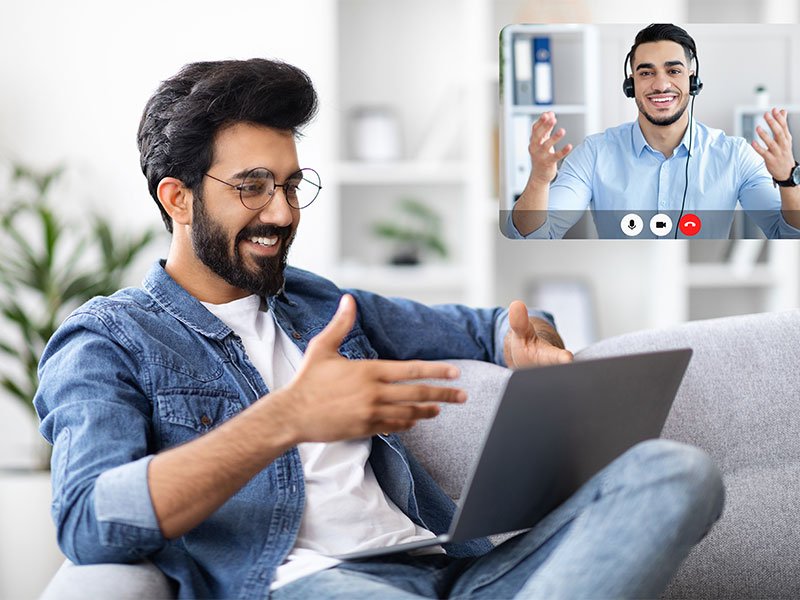
When remote work first exploded onto the scene, most professionals thought it was a dream. No commute. No office politics. No small talk by the coffee machine. Just you, your laptop, and the freedom to work in your pajamas. A few years in, a different reality has set in for many remote workers. Promotions are going to colleagues who are somehow more “visible.” Your ideas get overlooked in virtual meetings. You’ve started to feel like a name on a screen rather than a person with a career trajectory. And the longer you’ve been remote, the harder it feels to stand out—not because your work is poor, but because the skills that make people notice great work in a physical office simply don’t translate automatically to a digital environment.
This is the remote work paradox: the skills that built your career in-person—your presence, your warmth, your ability to read a room and connect naturally—don’t show up on a screen the same way. You have to rebuild them deliberately, intentionally, and in a format that works through a camera and a keyboard.
That’s exactly what personality development for remote professionals is designed to address. Not as a luxury add-on, but as a fundamental career survival skill in the age of distributed work. Let’s break down why it matters so much—and what it actually looks like in practice.
The Hidden Career Cost of Working Remotely
Remote professionals face a challenge that few openly discuss: the “out of sight, out of mind” effect.
In a physical office, personality is constantly on display. Your manager sees how you handle a stressful situation. Your colleagues observe how you welcome a new team member. Leadership notices when you’re the one calming a tense meeting down or rallying the team during a difficult project.
Remote work strips away these passive visibility moments. Nobody sees you staying late to help a colleague debug their presentation. Nobody observes your calm, composed response when a project derails. The water-cooler moments that naturally built your reputation over time simply don’t exist.
What replaces them? Your on-camera presence. Your written communication. Your ability to engage meaningfully in virtual settings. Your capacity to project warmth, credibility, and authority through a screen.
Research increasingly shows that remote professionals who aren’t deliberately developing these skills are being systematically undervalued—even when their technical output is equal to or better than their in-person counterparts. That’s not fair, but it is the reality. And knowing it is the first step to doing something about it.
What “Personality Development” Actually Means for Remote Professionals?
When most people hear “personality development,” they picture soft-skills workshops with trust falls and motivational posters. That’s not what we’re talking about.
For remote professionals, personality development is a highly practical, outcome-driven discipline. It covers:
- On-camera communication: How you present yourself visually and verbally during video calls
- Written communication mastery: How your emails, messages, and documentation create your professional identity
- Virtual executive presence: How you project authority, confidence, and gravitas without a physical room to command
- Emotional intelligence in digital spaces: How you read, respond to, and manage interpersonal dynamics without face-to-face cues
- Self-awareness and personal branding: How clearly you understand your unique value and how consistently you communicate it
Each of these is a learnable skill. None of them happens automatically just because you’re good at your job.
1. Communication Is Everything—and Remote Work Breaks It
In a physical office, communication is rich. You get tone of voice, facial expressions, body language, physical energy, and real-time feedback all at once. Misunderstandings are easier to catch and correct.
Remote communication is stripped down and easily misread. A quick Slack message that was intended as breezy and casual can read as curt or dismissive. An email without enough context can create confusion that spirals into a 30-email thread. A monotone video call delivery can make a brilliant idea sound tedious.
For remote professionals, communication is your primary tool for building relationships, establishing credibility, and advancing your career. And yet most people have never formally worked on it.
What personality development addresses here:
- Writing with clarity, warmth, and intentional tone
- Structuring complex ideas so they land clearly in written formats
- Using video calls strategically—knowing when to send an async video message vs. a call vs. an email
- Reading the emotional temperature of digital interactions and responding accordingly
Remote professionals who master communication don’t just get their ideas understood. They get remembered, trusted, and promoted.
2. Virtual Executive Presence: The Skill That Determines Who Gets Promoted
Executive presence is that quality that makes certain people command attention when they speak. In a physical office, it’s built over time through accumulated in-person impressions. In a remote environment, you have to build it in 45-minute increments on video calls.
This is where personality development for remote professionals becomes genuinely career-defining.
Virtual executive presence includes:
- How you appear on camera: Lighting, framing, eye contact, background, grooming
- How you open and close meetings: The first and last impression you create sets the frame for everything in between
- How you handle disagreement or challenge publicly: Composure, clarity, and respect under pressure
- How much you speak vs. listen: The most authoritative people in virtual meetings use silence strategically
- How you follow up after calls: A concise, action-oriented follow-up email signals leadership capability more than most meeting behaviors
Many remote professionals have exceptional ideas but present them with hedging language, poor framing, and visible uncertainty. Personality development directly targets these patterns—replacing them with habits that signal confidence and capability.

3. Emotional Intelligence Without Physical Cues
Reading people is hard enough in person. Remote work makes it significantly harder.
In digital environments, you lose 70–80% of the non-verbal information that physical presence provides. You can’t tell if someone is disengaged because they’re bored with your presentation or because they’re dealing with a personal crisis. You can’t gauge whether silence on a call is thoughtful consideration or passive disagreement.
Emotional intelligence (EQ) for remote professionals means developing compensatory skills that make up for missing non-verbal data:
- Asking more explicit check-in questions (“How are you feeling about this timeline?”)
- Reading tone in written communication (“This email feels clipped—is everything okay?”)
- Being more deliberate about expressing appreciation and recognition in digital spaces
- Knowing when to escalate a digital conversation to a video call to prevent misunderstanding
Remote professionals with high EQ build far stronger virtual relationships than those who treat digital communication as purely transactional. And strong relationships—even virtual ones—are what career growth is built on.
4. Self-Awareness: The Foundation of Remote Career Growth
The hardest part about remote work is that you have very little real-time feedback. In an office, you can see when someone’s eyes light up at your idea or when a manager looks unimpressed with your report. Remote work is largely feedback-dark.
This makes self-awareness—the ability to accurately assess how you’re coming across, what your strengths are, where your blind spots lie, and how others experience working with you—more important than ever.
Remote professionals who lack self-awareness make the same communication errors repeatedly without realizing it. They assume silence equals approval. They interpret a lack of feedback as confirmation that everything is fine. They build an increasingly inaccurate picture of their own professional reputation.
Regular self-reflection practices, combined with structured feedback mechanisms, are a core component of personality development for remote professionals. The discipline of asking “How did that call really go? What could I have done differently? What am I consistently getting right?”—and being genuinely honest in the answers—is what separates stagnant remote professionals from those who continue growing.
If you want a structured roadmap for this kind of growth, a comprehensive personality development course specifically designed for remote professionals provides exactly that. These programs systematically address the on-camera presence, written communication patterns, emotional intelligence, and self-awareness habits that determine how you’re perceived and valued in virtual environments. Rather than trying to piece it together yourself through trial and error, a well-designed course gives you a tested, progressive framework that produces visible results in the way you communicate, the confidence you project, and the professional reputation you build—all in the specific context of remote work.

5. Personal Branding in a Remote World
When you’re remote, your personal brand doesn’t build itself through daily in-person interactions. You have to actively construct and maintain it.
Your personal brand in a remote environment is built through:
- The quality and consistency of your written communication
- How you show up on video calls (prepared, engaged, visually professional)
- The content you contribute to team channels and public forums
- How reliably you follow through on commitments
- The reputation you build through your work and your interactions
Remote professionals who don’t consciously manage their personal brand often find that they have no brand at all in the eyes of leadership—they’re simply “doing their job,” invisible and interchangeable.
Those who develop their personalities deliberately become the people who get tagged for high-visibility projects, invited to leadership discussions, and considered for advancement—regardless of whether they’ve ever shaken their manager’s hand in person.
6. Navigating Isolation and Maintaining Authenticity
One of the most underreported challenges of remote work is the gradual erosion of authentic self-expression.
When you work alone most of the time, you lose the natural social feedback loops that help you stay calibrated—knowing when you’re coming across well, when your humor is landing, when you need to soften or strengthen your communication style.
Remote professionals who don’t actively work on this can develop what psychologists call “digital persona drift”—becoming increasingly formal, guarded, or performative in their professional communications, gradually losing the authentic warmth and personality that made them compelling colleagues.
Personality development actively counteracts this. It creates deliberate practices for staying genuine, emotionally present, and authentically yourself in digital interactions—ensuring that what comes through on screen is a real, relatable human being and not a carefully managed professional façade.
7. Building Influence Without Hierarchy
In a remote environment, formal authority matters less than informal influence. You can’t call an impromptu meeting, pull someone aside after a presentation, or build alliances over lunch. Influence has to be built through the quality of your ideas, the reliability of your follow-through, and the warmth of your interpersonal style—all communicated digitally.
For remote professionals aiming to grow into leadership roles, this is the central challenge. And it’s one that personality development addresses directly.
Learning to communicate in ways that inspire trust, motivate colleagues without formal authority, and champion ideas persuasively in digital formats is a skill set that separates remote professionals who get promoted from those who plateau.
For professionals who want to go deeper than general self-improvement and build highly specific skills for remote leadership and influence, personality development training programs offer intensive, scenario-based practice that simulates the exact challenges you face in your virtual workplace. Whether it’s handling conflict on a distributed team, presenting ideas to senior leadership over video, or building rapport with colleagues you’ve never met in person, specialized training gives you the reps and the feedback loop that remote work otherwise lacks. It’s the closest thing to having a personal coach in your corner for every virtual interaction that matters.

Practical Starting Points: Where to Begin
You don’t need to overhaul your entire professional life overnight. Start here:
This week:
- Record yourself on a video call (even a test call alone). Watch it back. What does your body language communicate? How is your audio and lighting?
This month:
- Audit your last 20 Slack messages or emails. What tone do they project? Are they warm and clear, or terse and ambiguous?
This quarter:
- Seek one piece of honest feedback from a trusted colleague about how you come across in virtual settings. Use it as a development target.
Ongoing:
- Invest in structured personality development that gives you a framework, not just random tips.
FAQ: Personality Development for Remote Professionals
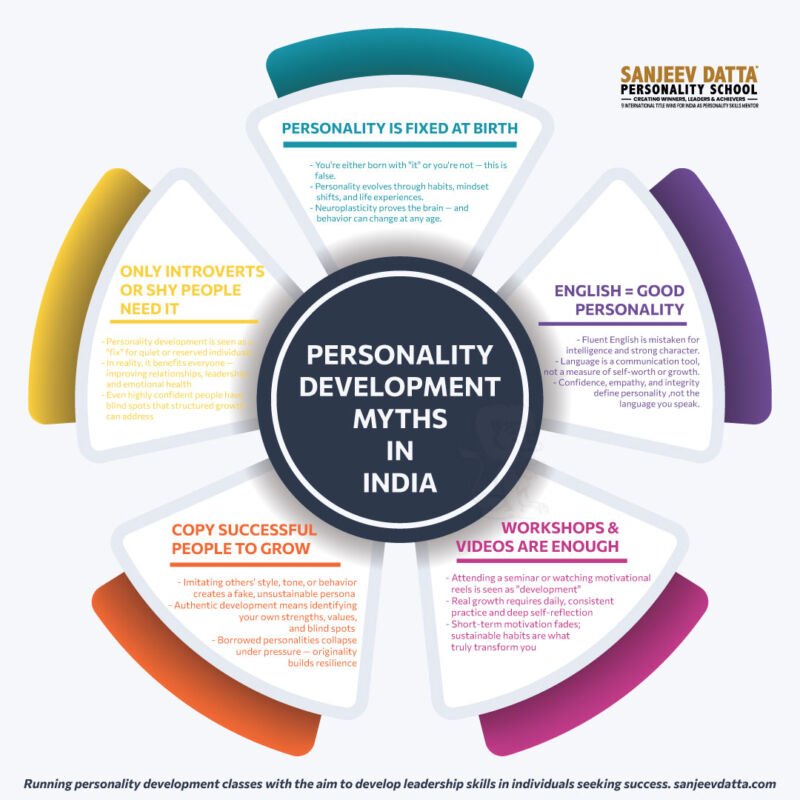
Q. Is personality development only useful for extroverts?
Not at all. In fact, many introverted remote professionals benefit most because digital communication often allows them to lead with their strengths—thoughtful writing, deep preparation, and deliberate communication—once they learn how to leverage them effectively.
Q. Can personality really be “developed” or is it fixed?
Modern psychology is very clear on this: personality is not fixed. While temperament has genetic components, the behaviors, communication patterns, and emotional habits that constitute your professional personality are entirely learnable and changeable at any age.
Q. I’ve been remote for three years and am doing fine. Why change now?
“Doing fine” and “maximizing your potential” are very different things. Many remote professionals are achieving their baseline expectations while leaving significant career growth on the table simply because their virtual presence doesn’t fully reflect their capability.
Q. How long does personality development take to show results?
Behavioral changes in communication and presence can produce visible results in 4–6 weeks of consistent practice. Deeper shifts in self-awareness and emotional intelligence typically take 3–6 months of deliberate development.
Q. Can personality development help with remote work loneliness?
Yes, significantly. Improving your communication skills and emotional intelligence in digital spaces directly improves the quality of your virtual relationships, which is the primary antidote to professional isolation.
Final Thoughts: Remote Work Rewards the Intentional
The remote professionals thriving in 2026 aren’t just technically excellent. They’re the ones who took deliberate ownership of how they show up in a digital world.
Personality development for remote professionals isn’t about performing a polished version of yourself for the camera. It’s about ensuring that the genuine, capable, intelligent professional you are in your work actually comes through clearly—in your communication, your presence, your relationships, and your leadership.
The camera is always on. Your digital footprint is permanent. Your professional reputation is being built whether you’re actively managing it or not.
The question is simply: are you building it intentionally?