

Let’s talk about something nobody teaches in business school, but everyone notices at work: personality. Not the “are you an introvert or extrovert” personality—we’re talking about that magnetic presence some professionals have that makes people listen when they speak, trust their judgment, and want them on their team. You’ve seen it. That colleague who gets promoted despite having less technical expertise than others. The manager people actually want to work for—the professional who walks into a room and somehow commands respect without demanding it. Here’s the secret: they’ve mastered specific skills to build strong personality that has nothing to do with how they were born and everything to do with what they’ve intentionally developed. And the better news? These skills are completely learnable.
Whether you’re early in your career, trying to establish yourself, or a seasoned professional looking to level up your impact, developing a strong personality transforms how people perceive you, how effectively you influence, and ultimately, how far you advance. Let’s break down the exact skills that make the difference.
1. Self-Awareness: The Foundation of Everything
Before you can develop a strong personality, you need to understand who you actually are. Self-awareness—knowing your strengths, weaknesses, values, triggers, and impact on others—is the foundation of all skills to build strong personality.
Why Self-Awareness Matters?
Professionals with high self-awareness:
- Recognize when their emotions are affecting their judgment
- Understand how they come across to others
- Know which situations bring out their best and worst
- Can articulate their values and make aligned decisions
- Receive feedback without becoming defensive
Without self-awareness, you’re essentially flying blind—making the same mistakes repeatedly, wondering why people react negatively to behaviors you don’t even realize you’re displaying.
Developing Self-Awareness
- Regular reflection: Spend 10-15 minutes daily reviewing interactions. What went well? What could improve? What emotions were you experiencing?
- Seek honest feedback: Ask trusted colleagues, “What’s one thing I do well, and one thing that holds me back?” Then actually listen without explaining or defending.
- Personality assessments: Tools like MBTI, DISC, or StrengthsFinder provide frameworks for understanding your natural tendencies.
- 360-degree feedback: Formal feedback from supervisors, peers, and direct reports reveals patterns in how others experience you.
- Journal your triggers: Notice what situations or people consistently trigger strong emotional reactions. Patterns reveal areas for growth.
Self-awareness isn’t a one-time achievement—it’s an ongoing practice of paying attention to yourself and your impact.
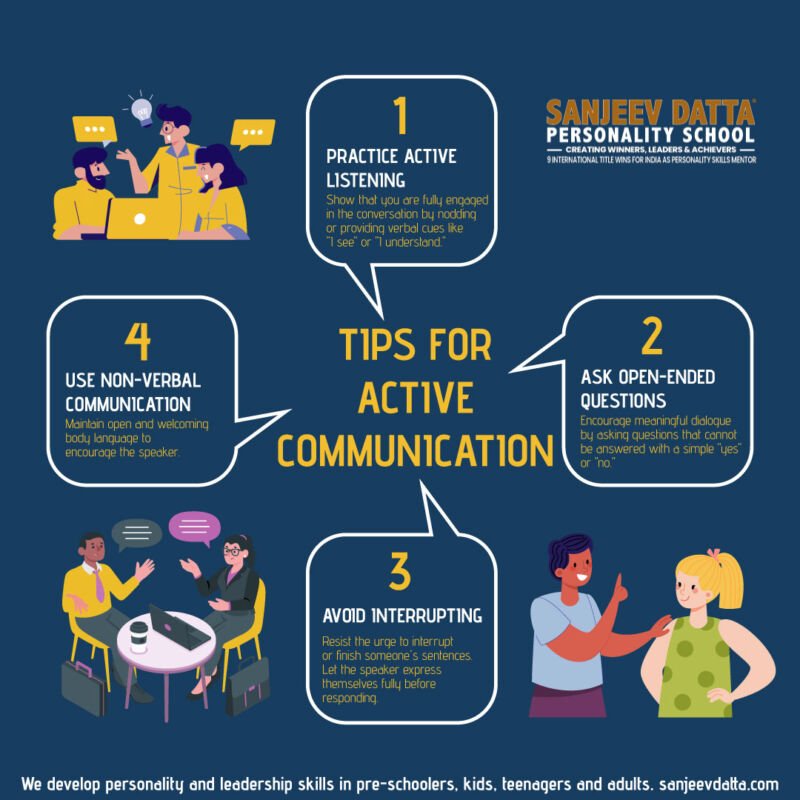
2. Confident Communication: Speaking with Authority
One of the most visible skills to build strong personality is the ability to communicate with confidence and clarity. How you speak determines whether people take you seriously, trust your judgment, and follow your lead.
Verbal Communication Elements
- Eliminate weak language: Cut “just,” “maybe,” “I think,” “sort of,” “kind of” from professional communication. “I think we should consider this approach” becomes “We should pursue this approach.”
- Speak declaratively: Make statements rather than asking permission. “This is the right direction” carries more weight than “Do you think this might work?”
- Control your pace: Nervous speakers rush. Confident professionals speak at a measured, deliberate pace that commands attention.
- Use strategic pauses: Silence is powerful. Pause before answering questions to appear thoughtful. Pause after important statements to let them land.
- Project your voice: Speak loudly enough that everyone hears clearly without straining. Soft speakers get talked over and ignored.
- Lower your pitch: Deeper voices convey authority. Work on speaking from your diaphragm rather than your throat.
Non-Verbal Communication Mastery
Your body language speaks louder than your words:
- Posture: Stand tall, shoulders back, head up. Slouching signals insecurity, while upright posture projects confidence.
- Eye contact: Maintain steady eye contact without staring. Look away briefly to avoid intensity, but never down—look to the side instead.
- Gestures: Use purposeful hand movements to emphasize points. Avoid nervous fidgeting, touching your face, or closed-off crossed arms.
- Facial expressions: Keep your face engaged and responsive. Nodding shows you’re listening. Slight smiles build rapport without appearing fake.
- Physical presence: Take up appropriate space. Don’t make yourself small, but also don’t invade others’ personal space.
- Handshake: Firm (not crushing), dry, with good eye contact. First impressions matter.
Mismatched verbal and non-verbal communication confuses people and undermines your message. Saying “I’m confident about this” while fidgeting and avoiding eye contact? Nobody believes you.
why body language for career growth
3. Emotional Intelligence: Reading and Managing Emotions
Emotional intelligence (EQ)—the ability to recognize, understand, and manage emotions in yourself and others—is essential among skills to build strong personality for professionals.
The Four Components of EQ
- Self-awareness: Understanding your emotional states (we covered this)
- Self-regulation: Managing emotions rather than being controlled by them
- Social awareness: Reading others’ emotions and understanding group dynamics
- Relationship management: Using emotional awareness to build connections and influence outcomes
Why EQ Matters Professionally?
High-EQ professionals:
- Stay composed under pressure instead of panicking or lashing out
- Build trust through empathy and genuine connection
- Navigate office politics without being manipulative
- Resolve conflicts constructively rather than avoiding or escalating them
- Motivate and inspire others through emotional connection
Research consistently shows EQ predicts job performance and leadership success better than IQ. You can be brilliant technically, but fail professionally if you can’t manage your emotions or read a room.
Developing Emotional Intelligence
- Label your emotions specifically: Instead of “I feel bad,” identify “I feel disappointed” or “I feel anxious.” Precision creates control.
- Pause before reacting: When triggered emotionally, take a breath before responding. Create space between stimulus and response.
- Practice perspective-taking: When someone frustrates you, ask, “What might they be dealing with that’s causing this behavior?”
- Observe group dynamics: In meetings, notice who has informal power, who’s frustrated but not speaking up, and what’s not being said.
- Validate before solving: When someone shares a problem, acknowledge their feelings before jumping to solutions.
- Manage your energy: Recognize that different situations drain or energize you. Schedule accordingly when possible.
Emotional intelligence develops through practice, not theory. Apply these techniques in real interactions, notice what works, and refine.
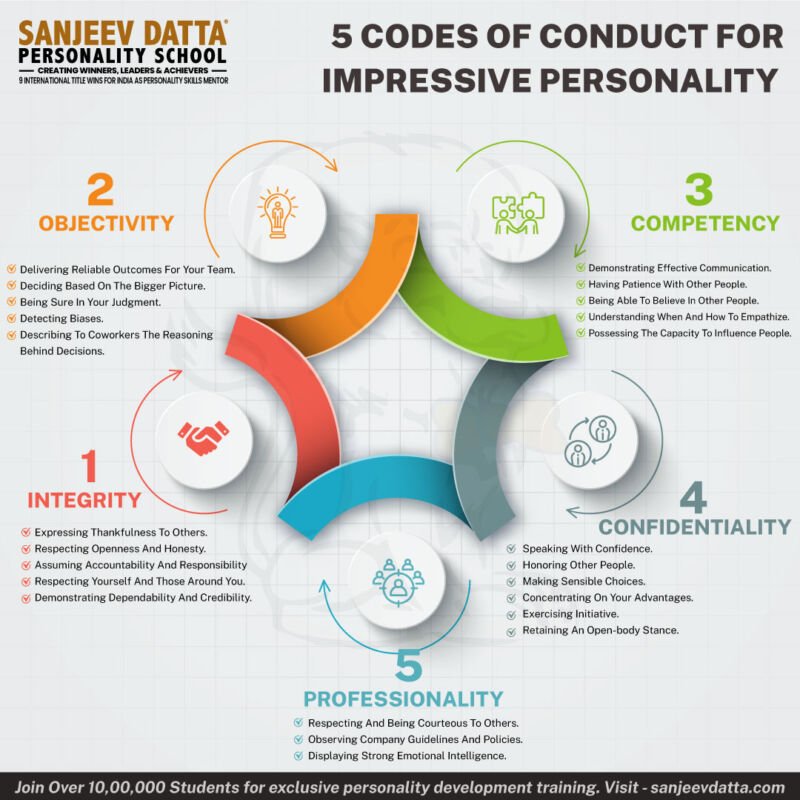
4. Assertiveness: Standing Your Ground Professionally
Assertiveness—expressing your needs, opinions, and boundaries clearly while respecting others—is critical among skills to build strong personality. It’s the balance between passive (letting others walk over you) and aggressive (bulldozing others).
The Components of Assertiveness
- Clear expression: Saying what you mean directly rather than hinting or expecting mind-reading
- Boundary setting: Saying no when appropriate without excessive explanation or guilt
- Opinion ownership: Sharing your perspective without needing everyone to agree
- Respectful disagreement: Challenging ideas without attacking people
- Request making: Asking for what you need clearly and without apology
Why Assertiveness Matters?
Non-assertive professionals:
- Take on too much work and burn out
- Let others take credit for their ideas
- Don’t speak up when they see problems
- Feel resentful and undervalued
- Get passed over for leadership roles
Assertive professionals:
- Get their needs met more often
- They are respected for their directness
- Prevent small issues from becoming big problems
- Build a reputation for being straightforward and reliable
- Advance faster because they advocate for themselves
Developing Assertiveness
- Use “I” statements: “I need this deadline extended” rather than “You’re giving me too much work.”
- State clearly without hedging: “I disagree with this approach,” not “I’m not sure, but maybe we could consider…”
- Say no simply: “I can’t take that on right now” needs no elaborate justification or apology.
- Repeat calmly: If someone ignores your boundary, repeat it calmly without elaboration. “As I said, I can’t commit to that.”
- Practice small assertions: Start with low-stakes situations (correcting a wrong order at lunch) before tackling bigger issues (disagreeing with your boss).
Assertiveness feels uncomfortable initially if you’re used to being passive. That discomfort is growth happening.
Mastering the comprehensive range of personality development skills that distinguish exceptional professionals from average ones requires more than casual effort—it demands structured learning, expert guidance, and deliberate practice in supportive environments. Enrolling in specialized programs focused on personality development skills provides frameworks for systematic growth across communication, emotional intelligence, leadership presence, and interpersonal effectiveness. These programs combine theoretical understanding with practical application through role-playing, feedback sessions, and real-world challenges that accelerate development. Professional instruction identifies blind spots you can’t see yourself and provides personalized strategies tailored to your specific industry, role, and growth areas.

5. Decision-Making and Problem-Solving: Taking Ownership
Strong personalities take ownership of decisions and solve problems rather than waiting for someone else to handle things. These initiatives and responsibilities are key skills to build strong personality.
Characteristics of Strong Decision-Makers
- Gather information efficiently: Know what data you need without endless analysis paralysis.
- Assess risks realistically: Consider consequences without catastrophizing.
- Make timely decisions: Understand that no decision is often the worst decision.
- Own outcomes: Take responsibility for results without blame-shifting
- Learn from mistakes: Extract lessons without dwelling on failures.
- Adjust course when needed: Change direction when new information warrants it.
Problem-Solving Framework
- Define clearly: What exactly is the problem? Be specific.
- Gather perspectives: What do different stakeholders see as the issue?
- Generate options: Brainstorm multiple approaches without judging yet.
- Evaluate systematically: Weigh pros, cons, risks, and resources for each option.
- Decide and act: Choose an approach and implement it decisively.
- Monitor and adjust: Track results and modify as needed.
Professionals who solve problems proactively rather than reactively build reputations as people who get things done—a cornerstone of a strong personality.
6. Active Listening: The Underrated Superpower
Most people hear words but don’t actually listen. Active listening—fully concentrating on, understanding, and responding to what someone is saying—is one of the most powerful skills to build strong personality.
Why Listening Matters?
Active listeners:
- Build trust faster because people feel heard and valued
- Avoid mistakes caused by misunderstanding
- Gather information others miss
- Influence more effectively because they understand what matters to others
- Resolve conflicts by truly understanding all perspectives
Elements of Active Listening
- Full attention: Put away your phone, close your laptop, and face the speaker
- No interrupting: Let people finish complete thoughts before responding
- Ask clarifying questions: “When you say X, do you mean Y?” ensures understanding.
- Paraphrase: “So what I’m hearing is…” confirms comprehension
- Notice non-verbals: Body language and tone often reveal more than words
- Suspend judgment: Listen to understand, not to formulate counterarguments.
- Remember details: Reference things people mentioned in previous conversations.
- The paradox: listening more makes you more influential because people feel understood and therefore open to your perspective.
Components of Personal Excellence
7. Adaptability: Thriving Through Change
Change is constant in modern workplaces. Adaptability—the ability to adjust to new conditions, learn quickly, and stay effective despite uncertainty—separates professionals with strong personalities from those who crumble under pressure.
Characteristics of Adaptable Professionals
- Embrace ambiguity: Comfortable taking action without perfect information.
- Learn continuously: Actively develop new skills as industries evolve.
- Remain resilient: Bounce back from setbacks without losing momentum.
- Stay open-minded: Willing to change opinions when presented with new information.
- Navigate transitions smoothly: Handle role changes, team restructures, or industry shifts effectively.
Building Adaptability
- Seek varied experiences: Volunteer for projects outside your comfort zone.
- Practice reframing: When change happens, ask “What’s the opportunity here?” not just “What’s the problem?”
- Build broad networks: Diverse connections expose you to different perspectives and approaches.s
- Stay curious: Read widely, learn continuously, ask questions.
- View failure as data: Mistakes provide information for next attempts.
Adaptability isn’t about lacking principles—it’s about staying effective as circumstances evolve.
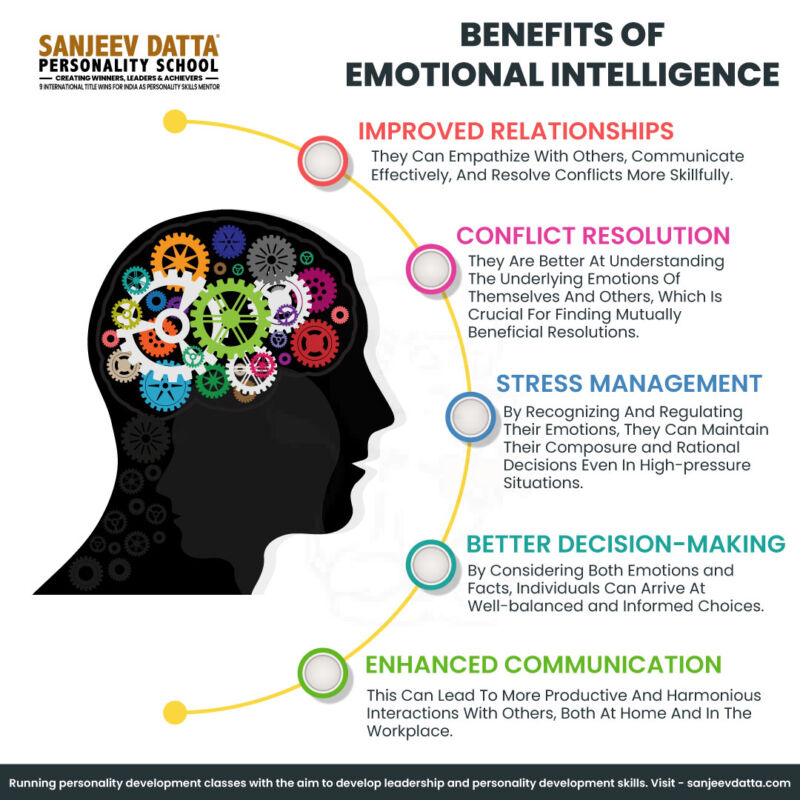
8. Professional Presence: The Complete Package
Professional presence—how you show up, carry yourself, and present to others—is the integration of all skills to build strong personality into a cohesive personal brand.
Components of Strong Professional Presence
- Consistent personal brand: People know what to expect from you—your values, communication style, work quality
- Polished appearance: Dress appropriately for your industry and role; well-groomed and put-together
- Energy management: Show up with appropriate energy for different situations—enthusiasm in brainstorms, calm in crises
- Reliability: Do what you say you’ll do, when you say you’ll do it
- Authenticity: Don’t try to be someone you’re not; bring your genuine self professionally
- Grace under pressure: Maintain composure when things get stressful or chaotic
Professional presence is what makes people think “That person has it together” even when they’ve just met you.
For professionals committed to comprehensive transformation beyond isolated skill development, personality grooming classes offer immersive experiences that polish every aspect of professional presence—from communication and body language to etiquette, networking, and personal branding. These specialized classes provide expert instruction in the subtle elements of professional success that distinguish leaders from followers: executive presence, social intelligence, diplomatic communication, and sophisticated self-presentation. Through personalized coaching, video analysis, and real-world practice scenarios, participants develop refined capabilities that open doors to senior positions and high-level opportunities where technical skills alone aren’t sufficient.

9. Conflict Resolution: Turning Tension into Solutions
Conflict is inevitable in professional settings. How you handle disagreements, tensions, and opposing viewpoints significantly impacts others’ perception of your personality strength.
Principles of Effective Conflict Resolution
- Address early: Don’t let small issues fester into major problems.
- Focus on issues, not personalities: “This approach has X problem,” not “You’re being difficult.”
- Listen to understand: Genuinely try to see the other perspective.
- Find common ground: What do both parties actually want?
- Generate win-win solutions: Look for options that address both sides’ core needs.
- Know when to escalate: Some conflicts need mediation or higher-level involvement.t
Conflict Resolution Process
- Initiate calmly: Request a private conversation without accusatory language.
- State your perspective with I-statements: “I’m frustrated because…” not “You always…”
- Invite their perspective: “Help me understand your view on this.”
- Acknowledge valid points: “I can see why you’d think that” builds bridges.
- Collaborate on solutions: “How can we move forward in a way that works for both of us?”
- Agree on next steps: Clear, specific actions prevent misunderstanding.
Professionals who resolve conflicts constructively rather than avoiding or escalating them demonstrate strong personalities that others trust in challenging situations.

10. Accountability and Integrity: Being Trustworthy
Trust is the currency of professional relationships. Accountability (owning your commitments and mistakes) and integrity (aligning actions with values) are foundational skills to build strong personality.
Demonstrating Accountability
- Keep commitments: If you say you’ll do something, do it.
- Meet deadlines: Deliver on time or communicate early if you can’t
- Own mistakes: When you mess up, admit it without excuses
- Provide updates: Keep stakeholders informed proactively.
- Follow through: Don’t just start projects—finish them.
- Ask for help when needed: Knowing your limits is responsible, not weak.
Living with Integrity
- Consistency: Behave according to your stated values even when inconvenient
- Honesty: Tell the truth even when it’s uncomfortable
- Ethical choices: Do the right thing even when nobody’s watching
- Treat all people respectfully: From the CEO to the janitor.
- Give credit generously: Acknowledge others’ contributions.
- Admit limitations: “I don’t know” shows more integrity than faking knowledge.
Professionals with strong accountability and integrity build reputations that precede them—people want to work with them because they’re reliable and trustworthy.
11. Networking and Relationship Building: Strategic Connections
Strong personalities don’t build themselves in isolation. The ability to build and maintain professional relationships expands opportunities and amplifies your impact.
Strategic Networking Principles
- Add value first: Focus on how you can help others, not just what you can get.
- Maintain relationships: Stay in touch periodically, not just when you need something.
- Be genuinely interested: Ask questions and actually care about the answers.
- Follow up: Send the article you mentioned, and make that introduction you offered
- Show up: Attend industry events, join professional associations, participate in communities.
- Diversify your network: Connect across industries, levels, functions, and demographics.
Relationship-Building Skills
- Remember details: Note birthdays, career milestones, and personal interests.
- Make introductions: Connect people who’d benefit from knowing each other.
- Offer help without keeping score: Do favors because it’s the right thing, not for quid pro quo.
- Be responsive: Reply to messages reasonably quickly.
- Show appreciation: Thank people for their time, advice, or help
Your network is your net worth in professional life. Strong personalities cultivate relationships that create opportunities and support.
12. Continuous Learning: The Growth Mindset
The most powerful skills to build a strong personality might actually be the commitment to keep building skills. Professionals with strong personalities never stop learning and growing.
Characteristics of Continuous Learners
- Curiosity: Always asking “why” and “how.”
- Humility: Acknowledging there’s always more to learn
- Initiative: Seeking learning opportunities proactively
- Application: Implementing what they learn, not just consuming information
- Reflection: Thinking about experiences to extract lessons
Strategies for Continuous Learning
- Read widely: Books, articles, research in your field and beyond
- Seek feedback regularly: Ask specific questions to get useful insights.
- Take courses: Online learning, workshops, certifications
- Find mentors: Learn from people ahead of you on the path
- Teach others: Explaining what you know deepens understanding.
- Try new things: Volunteer for stretch assignments.
- Reflect on failures: Every mistake teaches something.
The growth mindset—believing abilities can be developed through effort—transforms how you approach challenges and setbacks.
Putting It All Together: Your Development Plan
Understanding these skills to build strong personality is one thing. Actually developing them is another. Here’s how to approach your personality development systematically:
Assessment Phase (Weeks 1-2)
- Identify your current strengths across these skill areas
- Pinpoint your biggest development needs
- Gather feedback from trusted colleagues
- Choose 2-3 skills to focus on initially
Practice Phase (Months 1-3)
- Set specific, measurable goals for each skill
- Create daily or weekly practice opportunities
- Track your progress in a journal
- Seek feedback on your target areas
- Adjust approach based on what’s working
Integration Phase (Months 4-6)
- Continue practicing until behaviors feel natural
- Add new skills to your development focus
- Notice how improved skills compound and reinforce each other
- Expand practice to more challenging situations
- Help others develop these same skills
Maintenance Phase (Ongoing)
- Regular self-assessment and adjustment
- Continuous feedback seeking
- New learning and skill building
- Mentoring others in areas you’ve mastered
Personality development isn’t a destination—it’s a lifelong journey. The professionals with the strongest personalities are the ones who commit to continuous growth.
The Bottom Line
The skills to build strong personality aren’t mysterious or accessible only to naturally charismatic people. They’re specific, learnable capabilities that any professional can develop through awareness, practice, and commitment.
Self-awareness, confident communication, emotional intelligence, assertiveness, decision-making, active listening, adaptability, professional presence, conflict resolution, accountability, networking, and continuous learning—master these, and you transform how people experience you professionally.
You become someone people listen to, trust, follow, and want on their team. You open doors to opportunities that stay closed to technically skilled but personality-weak professionals. You accelerate your career trajectory not through politics or luck but through genuine capability.
Your personality isn’t fixed. It’s a set of skills you can intentionally develop. The question isn’t whether you can build a strong personality—it’s whether you’ll commit to doing the work.
Start today. Pick one skill. Practice it deliberately. Seek feedback. Adjust. Repeat. Watch how small, consistent improvements compound into transformation.
The strongest professional personalities aren’t born—they’re built, one intentional skill at a time.
Frequently Asked Questions (FAQs)
Q. What are the most important skills to build a strong personality in the workplace?
The most critical skills to build a strong personality for professionals include self-awareness (understanding your impact), confident communication (speaking with authority), emotional intelligence (reading and managing emotions), assertiveness (setting boundaries professionally), active listening (truly understanding others), adaptability (thriving through change), and accountability (owning outcomes). These skills work synergistically—developing one strengthens others, creating a comprehensive personality transformation that accelerates career advancement and professional influence.
Q. Can personality really be changed, or is it fixed?
Personality traits have genetic components, but the skills to build a strong personality are absolutely learnable and changeable. Research in neuroplasticity shows adults can develop new behavioral patterns through intentional practice. While you might naturally be introverted or extroverted, you can learn confident communication, emotional intelligence, and professional presence regardless of baseline temperament. The key is consistent, deliberate practice over months, not expecting an overnight transformation. Thousands of professionals have transformed their workplace presence through systematic skill development.
Q. How long does it take to develop a strong professional personality?
Noticeable improvements in specific skills to build a strong personality typically emerge within 2-3 months of focused practice. Comprehensive personality transformation—where new behaviors feel natural and automatic—generally requires 6-12 months of consistent effort. Timeline depends on the starting point, specific skills targeted, practice frequency, and feedback quality. Like physical fitness, personality development is ongoing rather than a one-time achievement. Significant capability in individual skills can develop relatively quickly, but integrating multiple skills into a cohesive professional presence takes sustained commitment.
Q. Is a strong personality the same as being extroverted or charismatic?
No—a strong personality doesn’t require being the loudest, most outgoing, or most charismatic person. Introverts can have extremely strong professional personalities through skills like active listening, thoughtful communication, and strategic relationship-building that leverage their natural strengths. Skills to build a strong personality focus on competence and authenticity, not forcing yourself into an extroverted mold. Many highly respected leaders are introverted but project a strong presence through confidence, emotional intelligence, and integrity rather than high energy or constant talking.
Q. What’s the difference between a strong personality and arrogance?
A strong personality combines confidence with humility, respect, and empathy, while arrogance involves superiority, dismissiveness, and self-centeredness. Professionals with strong personalities make others feel valued while demonstrating competence; arrogant people elevate themselves by diminishing others. Key differences: strong personalities listen actively and admit mistakes; arrogant people dominate conversations and deflect blame. Skills to build a strong personality include empathy and respect as core components—without these, confidence becomes off-putting arrogance that repels rather than attracts opportunities.
Q. Can I develop these skills without formal training or coaching?
Yes—many professionals develop skills to build a strong personality through self-directed learning, practice, and feedback from trusted colleagues. Resources include books, online courses, podcasts, and deliberate practice in real situations. However, formal training or coaching accelerates development significantly by providing expert guidance, identifying blind spots you can’t see yourself, offering structured practice environments, and delivering immediate feedback. Most professionals benefit from combining self-directed learning with periodic professional development through courses, workshops, or coaching.
Q. How do I practice these skills in low-stakes situations first?
Start practicing skills to build a strong personality in everyday situations before high-stakes professional moments: practice assertiveness by correcting wrong orders at restaurants, work on active listening during coffee chats with colleagues, try confident body language in team meetings before board presentations, and test decision-making frameworks on small personal choices before major work decisions. Family dinners, volunteer activities, professional association meetings, and networking events all provide practice opportunities with lower career risk than crucial client meetings or promotion discussions.
Q. What if my workplace culture doesn’t value these personality traits?
Some toxic workplace cultures punish rather than reward strong personalities, especially for women or minorities. If authentic expression of confidence, assertiveness, or boundary-setting results in negative consequences despite professional execution, the issue is workplace culture, not your skills. Skills to build a strong personality remain valuable—they help you navigate the current situation effectively and make you more marketable elsewhere. A strong personality includes knowing when an environment can’t accommodate your growth and making strategic career decisions accordingly.
Q. How do I balance developing a strong personality with staying authentic?
Developing skills to build a strong personality isn’t about becoming someone you’re not—it’s about expressing your authentic self more effectively. The goal is to remove barriers (insecurity, poor communication, weak boundaries) that prevent your genuine capabilities from showing. Think of it as polishing your authentic self, not creating a fake persona. Choose development approaches aligned with your values and natural strengths. Introverts don’t need to become extroverts; they need to leverage their listening and depth while developing confidence to speak up when it matters.
Q. Can personality development help me get promoted faster?
Absolutely—research consistently shows strong personality traits predict promotion speed and leadership advancement more reliably than technical skills alone. Skills to build a strong personality directly impact how others perceive your leadership potential, how effectively you influence decisions, and whether executives see you as ready for greater responsibility. Many technically brilliant professionals plateau because they lack executive presence, communication skills, or emotional intelligence. Developing these capabilities removes the invisible ceiling preventing advancement and accelerates career progression dramatically.