

Here’s a truth bomb for you: your teenager’s SAT scores and GPA matter far less for their long-term success than the personality traits they’re developing right now. I know that sounds controversial—especially when everyone’s obsessing over college admissions and academic achievements. But research consistently shows that personality traits every teen must develop predict life satisfaction, career success, relationship quality, and overall happiness far better than academic performance alone.
Think about the adults you know who are genuinely successful—not just financially, but in relationships, happiness, and life fulfillment. They’re not necessarily the ones who got straight A’s. They’re the ones who can communicate effectively, handle setbacks gracefully, build genuine connections, and adapt to whatever life throws at them.
These aren’t innate qualities your teen either has or doesn’t have. They’re developable traits that, when cultivated during the teenage years, create foundations for thriving adult lives. The question isn’t whether your teen will develop personality traits—they will, one way or another.
The question is whether they’ll develop the ones that actually serve them. Let’s break down exactly which traits matter most and how you can help your teen build them during these crucial formative years.
1. Resilience: Bouncing Back from Setbacks
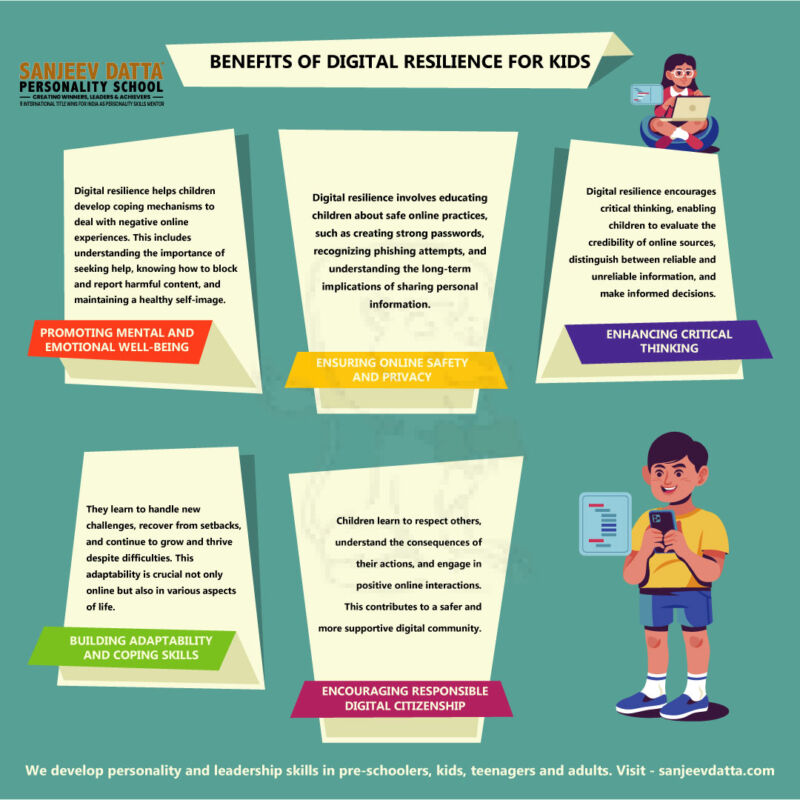
If there’s one trait that separates adults who thrive from those who merely survive, it’s resilience—the ability to recover from disappointment, failure, and adversity.
Why Resilience Matters
Life guarantees setbacks. College rejections, job losses, relationship breakups, failed projects, unexpected challenges—your teen will face all of these and more. Resilient people don’t avoid these experiences; they bounce back from them stronger.
Without resilience, your teen will crumble at the first real obstacle. With it, they’ll view challenges as temporary and solvable rather than permanent and overwhelming.
What Resilience Looks Like in Teens
- Getting a bad grade and creating a plan to improve rather than giving up
- Losing a sports game and analyzing what to do differently
- Facing social rejection without spiraling into self-doubt
- Handling disappointment without blaming others or making excuses
- Trying again after failure instead of quitting
How to Build Resilience?
- Let them fail safely: Don’t rescue them from every disappointment. Let them experience manageable failures while they have your support to process and learn.
- Reframe failure: Help them see setbacks as learning experiences. “What did you learn from this?” becomes more valuable than “There, there.”
- Model resilience yourself: Share your own struggles and comebacks. Let them see that everyone faces difficulties, and the key is how you respond.
- Celebrate effort over outcomes: Praise their persistence and strategy, not just success. “I’m proud of how you kept trying different approaches” matters more than “Great job winning.”
- Teach problem-solving: When they face challenges, resist solving them for them. Guide them through identifying solutions and taking action.
Resilience isn’t about never feeling bad—it’s about not staying down when you do.
2. Emotional Intelligence: Understanding and Managing Feelings
Emotional intelligence—the ability to recognize, understand, and manage emotions in yourself and others—is among the most critical personality traits every teen must develop for adult success.
The Four Components of EQ
- Self-awareness: Recognizing what you’re feeling and why
- Self-regulation: Managing emotions rather than being controlled by them
- Social awareness: Reading others’ emotions and responding appropriately
- Relationship management: Using emotional understanding to build connections
Why EQ Matters More Than IQ
Research shows that emotional intelligence predicts career success, relationship satisfaction, and mental health more accurately than cognitive intelligence. Your brilliant teen who can’t manage emotions or read social situations will struggle professionally and personally.
Adults with high EQ:
- Navigate workplace conflicts successfully
- Build strong professional and personal relationships
- Make better decisions by considering emotional factors
- Lead teams effectively
- Maintain mental health through stressful periods
Building Emotional Intelligence
- Emotion labeling: Help your teen build emotional vocabulary beyond “good” and “bad.” Frustrated, disappointed, overwhelmed, anxious, excited—precision creates control.
- Validate feelings: “You have every right to feel disappointed” teaches that emotions are valid while still maintaining boundaries on behavior.
- Discuss emotions openly: Make feelings a regular conversation topic. “How did that make you feel?” should be as common as “How was your day?”
- Teach emotional regulation: Breathing techniques, physical activity, journaling, talking it out—give them tools for managing big feelings.
- Model EQ: Show them healthy emotional expression. Don’t hide all negative emotions, but demonstrate managing them constructively.
Explore others’ perspectives: “Why do you think she reacted that way?” builds empathy and social awareness.
Emotional intelligence isn’t about being “soft”—it’s about being sophisticated in understanding human behavior, starting with your own.
why emotional intelligence training
3. Effective Communication: Expressing Yourself Clearly
The ability to articulate thoughts, listen actively, and adapt communication to different situations is foundational among personality traits every teen must develop.
Why Communication Matters?
Nearly every adult challenge involves communication—job interviews, workplace collaboration, romantic relationships, friendships, conflict resolution, networking, and leadership. Your teen’s ability to express themselves clearly and listen genuinely determines success in virtually every life domain.
What Strong Communication Includes?
- Verbal clarity: Organizing thoughts and expressing them understandably
- Active listening: Actually hearing what others say, not just waiting to talk
- Non-verbal awareness: Understanding body language, tone, and facial expressions
- Adaptability: Adjusting style for different audiences (peers vs. adults, text vs. in-person)
- Assertiveness: Expressing needs and boundaries clearly without aggression
- Written communication: Emails, texts, professional correspondence—all matter
Developing Communication Skills
- Practice articulation: At dinner, ask them to explain something complex. Push them to elaborate and clarify.
- Teach active listening: Model it first. Make eye contact, ask follow-up questions, and paraphrase what they said.
- Expose them to diverse communication contexts: Encourage activities requiring public speaking, interviewing adults, or presenting to groups.
- Correct diplomatically: When they communicate unclearly, gently push for clarity. “Can you explain that differently? I’m not quite following.”
- Discuss digital communication: Texting has different rules than in-person conversation. Teach appropriate communication across contexts.
- Role-play challenging conversations: Practice difficult discussions—asking for raises, addressing conflicts, or advocating for themselves.
Strong communicators aren’t necessarily the most talkative—they’re the most effective at conveying meaning and understanding others.
For parents seeking comprehensive development of these crucial capabilities, structured personality development classes provide expert-guided environments where teens systematically build emotional intelligence, communication skills, resilience, and social competence through interactive activities and peer learning. Professional instructors trained in adolescent psychology create safe spaces where teenagers practice difficult conversations, receive immediate feedback on their interpersonal skills, and develop self-awareness that’s nearly impossible to achieve through family conversations alone. These programs accelerate personality development by addressing multiple interconnected traits simultaneously, creating lasting behavioral changes that serve teens throughout their lives.

4. Self-Discipline: Delaying Gratification
Self-discipline—the ability to control impulses, delay gratification, and persist toward long-term goals despite short-term temptations—is perhaps the most predictive of all personality traits every teen must develop.
The Marshmallow Test Grows Up
You’ve probably heard of the famous marshmallow experiment: kids who could resist eating one marshmallow to get two later showed better life outcomes decades later. That ability to delay gratification predicts academic achievement, career success, health, and even relationship satisfaction.
What Self-Discipline Enables
- Studying instead of scrolling social media
- Saving money instead of impulse buying
- Maintaining healthy habits despite immediate temptation
- Working toward long-term goals consistently
- Resisting peer pressure for immediate acceptance
Building Self-Discipline
- Start small: Don’t expect perfect discipline immediately. Begin with manageable challenges like 25 minutes of homework before phone time.
- Make goals concrete: “Be healthier” is vague. “Exercise three times weekly” is actionable.
- Create systems: Willpower is finite. Build environments supporting discipline—phone in another room during homework, meal prep on Sundays, morning routines.
- Connect present actions to future outcomes: Help them see how today’s choices create tomorrow’s results. “Studying now = options later.”
- Celebrate progress: Notice and acknowledge when they demonstrate self-discipline. Reinforcement strengthens the behavior.
- Let consequences teach: When lack of discipline creates problems, resist rescuing. Natural consequences are powerful teachers.
Self-discipline isn’t about deprivation—it’s about prioritizing long-term satisfaction over short-term pleasure.
5. Adaptability: Thriving Through Change
The world your teen will enter as an adult bears little resemblance to today’s world. Jobs that don’t exist yet will be common. Technology will reshape everything. Adaptability—flexibility and openness to change—is essential.
Why Adaptability Matters?
Rigid people break when life changes. Adaptable people bend, adjust, and find new paths. With rapid technological change, career shifts, and unpredictable global events, your teen’s ability to adapt determines whether they struggle or thrive.
What Adaptability Looks Like?
- Handling unexpected schedule changes without melting down
- Trying new approaches when current methods aren’t working
- Learning new skills as needs evolve
- Staying positive during transitions
- Finding opportunities in disruption
Fostering Adaptability
- Expose them to variety: New experiences, different people, varied activities—all build comfort with unfamiliarity.
- Encourage calculated risks: Trying new things teaches that change isn’t always bad, and they can handle uncertainty.
- Discuss change positively: Frame transitions as adventures rather than threats. “This will be different and interesting” beats “This is going to be hard.”
- Model flexibility: Show them how you adapt to unexpected changes. Narrate your thought process.
- Avoid over-scheduling: Room for spontaneity and pivot builds adaptability. Over-structured lives don’t allow practice with uncertainty.
- Teach growth mindset: Abilities aren’t fixed—they develop through effort. This core belief makes adapting to new challenges feel possible.
Adaptability doesn’t mean lacking principles—it means staying effective as circumstances change.
6. Integrity: Doing Right When No One’s Watching
Integrity—alignment between values and actions, even when it’s difficult or unobserved—forms the foundation of trust and self-respect, making it crucial among personality traits every teen must develop.
Why Integrity Matters?
Short-term gains from cutting corners seem appealing, but integrity builds the reputation and self-respect that create long-term success.
Adults with integrity:
- Are trusted with responsibility and opportunity
- Maintain self-respect regardless of circumstances
- Build genuine relationships based on authenticity
- Sleep well at night
- Navigate ethical dilemmas confidently
What Integrity Includes?
- Honesty, even when lying, is easier
- Following through on commitments
- Admitting mistakes rather than covering them up
- Treating people consistently regardless of status
- Standing by principles even when inconvenient
Building Integrity
- Define values explicitly: What does your family stand for? Discuss values regularly so they become conscious guides.
- Acknowledge hard choices: Integrity often costs something. Recognize when they choose right over easy.
- Address inconsistencies: When their actions contradict stated values, point them out non-judgmentally. “You said honesty matters, but…”
- Model integrity: They watch whether you do what you say, return extra change, keep promises, or admit mistakes.
- Create accountability: Don’t overlook dishonesty or broken commitments. Natural consequences teach that integrity matters.
- Discuss ethical dilemmas: Real and hypothetical scenarios build their framework for navigating gray areas.
Integrity isn’t perfection—it’s consistently striving to align actions with values and making it right when you fall short.
personality development vs character building
7. Critical Thinking: Questioning and Analyzing
In an age of misinformation, manipulation, and easy answers, critical thinking—analyzing information objectively, questioning assumptions, and forming reasoned conclusions—is vital.
What Critical Thinking Prevents?
Without it, your teen will:
- Fall for scams and manipulation
- Make poor decisions based on faulty reasoning
- Accept information uncritically
- Follow influencers blindly
- Struggle with complex adult problems
Components of Critical Thinking
- Evaluating source credibility
- Identifying logical fallacies
- Distinguishing fact from opinion
- Considering multiple perspectives
- Questioning assumptions (including their own)
- Making evidence-based conclusions
Developing Critical Thinking
- Ask “why?” constantly: Push them to explain reasoning. “Why do you think that?” “What led you to that conclusion?”
- Play devil’s advocate: Respectfully challenge their positions. This isn’t arguing—it’s teaching them to defend ideas with logic.
- Discuss current events: Analyze news together. “What’s the source? What might they be leaving out? Who benefits from this narrative?”
- Expose them to diverse viewpoints: Understanding multiple perspectives builds nuanced thinking.
- Teach media literacy: How to identify bias, check sources, verify claims, and recognize manipulation tactics.
- Encourage healthy skepticism: Not cynicism, but questioning rather than accepting everything at face value.
Critical thinking isn’t about being contrarian—it’s about being thoughtful and analytical rather than reactive.
For teenagers requiring more intensive development across communication, critical thinking, and professional presence, specialized personality grooming classes offer focused training in executive presence, sophisticated interpersonal skills, and polished self-presentation that distinguish leaders from followers. These advanced programs combine etiquette training, public speaking mastery, professional networking skills, and strategic thinking development through experiential learning and expert coaching. The refined capabilities developed through grooming classes—confident public speaking, diplomatic communication, strategic networking—create competitive advantages in college admissions, scholarship interviews, and early career positioning that serve ambitious teens throughout their lives.

8. Empathy: Understanding Others’ Perspectives
Empathy—genuinely understanding and sharing others’ feelings—creates the connection foundation for all healthy relationships, making it essential among personality traits every teen must develop.
Why Empathy Matters?
Empathetic adults:
- Build deep, meaningful relationships
- Navigate conflicts successfully
- Lead teams effectively
- Collaborate productively
- Experience fulfilling connections
Without empathy, your teen will struggle to maintain relationships, work in teams, or understand social dynamics—severely limiting life and career opportunities.
What Real Empathy Involves?
Not just feeling bad for someone, but:
- Perspective-taking: “If I were in their situation…”
- Emotional recognition: Noticing how others feel
- Compassionate response: Responding to others’ needs appropriately
- Active concern: Genuinely caring about others’ well-being
Building Empathy
- Discuss feelings regularly: “How do you think that made them feel?” becomes a natural conversation.
- Expose them to diverse experiences: Volunteering, community service, and interacting with people from different backgrounds build understanding.
- Read fiction together: Stories create vicarious experiences that build empathy for different perspectives.
- Model empathy: Show compassion for others, even difficult people. “They’re probably struggling with…”
- Address cruelty immediately: When they’re unkind, address it seriously. “How would you feel if someone did that to you?”
- Validate without enabling: “I understand why you’re upset,” while still maintaining boundaries, teaches empathy paired with strength.
Empathy doesn’t mean weakness—it means understanding people deeply enough to connect, influence, and build genuine relationships.

9. Responsibility: Owning Your Life
Taking responsibility—accepting accountability for choices, outcomes, and their impact—is fundamental to adult functioning and among the most important personality traits every teen must develop.
What Responsibility Looks Like?
- Completing commitments without reminders
- Accepting consequences of choices
- Not blaming others for personal failures
- Following through reliably
- Admitting mistakes and making them right
The Cost of Avoiding Responsibility
Adults who never learned responsibility:
- Blame others for their problems
- Can’t be trusted with important tasks
- Cycle through jobs and relationships
- Feel like victims of circumstance
- Never achieve their potential
Teaching Responsibility
- Give age-appropriate responsibilities: Household chores, part-time jobs, caring for pets—all build accountability.
- Let consequences teach: Don’t rescue them from every mistake. Forgot lunch? Be hungry. Didn’t study? Get the bad grade.
- Avoid blame-shifting: When they blame others, gently redirect. “What part of this was your choice?”
- Acknowledge responsibility: When they make mistakes, recognize the maturity that requires it.
- Connect privilege to responsibility: More freedom comes with more accountability. Want a later curfew? Prove reliability first.
- Model responsibility: Admit your mistakes, follow through on commitments, and take accountability for household management.
Responsibility isn’t a burden—it’s the power to control your life rather than feeling controlled by circumstances.
career planning for high school students
The Long View: Personality Development as Parental Investment
Understanding which personality traits every teen must develop is one thing. Actually helping them build these traits requires sustained commitment, not quick fixes.
These traits develop through:
- Daily modeling from parents
- Consistent reinforcement of values
- Opportunities to practice in safe environments
- Natural consequences teaching lessons
- Explicit discussion and reflection
- Supportive challenge pushing growth
Your teen won’t develop all these traits perfectly, and that’s okay. The goal isn’t perfection—it’s progress. Each trait strengthened creates compound benefits throughout their life.
The teenagers who enter adulthood with these capabilities don’t just survive—they thrive. They build careers they love, relationships that fulfill them, and lives they’re proud of. They navigate challenges with grace, connect with others genuinely, and create positive impact wherever they go.
Your investment in your teen’s personality development pays dividends for decades. Long after they’ve forgotten their chemistry formulas, these traits will still be serving them every single day.
Frequently Asked Questions (FAQs)
Q. What are the most important personality traits every teen must develop?
The most critical personality traits every teen must develop include resilience (bouncing back from setbacks), emotional intelligence (understanding and managing emotions), effective communication (expressing thoughts clearly and listening actively), self-discipline (delaying gratification for long-term goals), adaptability (thriving through change), integrity (aligning actions with values), critical thinking (analyzing information objectively), empathy (understanding others’ perspectives), and responsibility (owning choices and outcomes). Research shows these traits predict adult success far better than academic achievement alone.
Q. Can personality traits really be developed, or are they innate?
Personality traits are absolutely developable, though some temperamental tendencies are genetic. The teenage years represent a critical window when neural pathways are still forming, and habits are being established. Through intentional practice, modeling, and supportive challenge, teens can develop personality traits every teen must develop, regardless of natural inclinations. While introverts may always recharge alone, they can still develop strong communication skills. Impulsive teens can learn self-discipline. Development requires consistent effort over months and years, not an overnight transformation.
Q. How do I help my teen develop these traits without being overbearing?
Balance guidance with independence by: modeling traits yourself (most powerful teacher), creating practice opportunities rather than lecturing, allowing natural consequences to teach lessons, discussing traits explicitly during calm moments, acknowledging growth when you see it, asking guiding questions rather than solving problems, and gradually increasing independence as they demonstrate capability. Personality traits every teen must develop emerge through experience more than instruction. Your role is creating environments where practice happens, not controlling every moment.
Q. At what age should personality development focus begin?
While personality development begins in early childhood, the teenage years (12-18) represent critical windows for developing personality traits that every teen must develop for adult success. Adolescent brain development, identity formation, and increasing independence create optimal conditions for trait development. However, it’s never too late—adults can develop these traits too, though it requires more conscious effort. If your teen is 16 or 17, don’t panic thinking you’ve missed the window. Start now and focus on high-impact areas.
Q. What if my teen shows no interest in developing these traits?
Resistance is normal—few teens respond to “let’s work on your personality development.” Instead of confrontation, create natural opportunities: sports and activities build resilience and discipline, part-time jobs develop responsibility and communication, volunteer work builds empathy, and family discussions develop critical thinking. Let consequences teach when possible. Focus on one trait at a time through natural experiences rather than formal lessons. Personality traits every teen must develop emerge through living life thoughtfully, not through lectures about personality development.
Q. How long does it take to develop these personality traits?
Noticeable improvement in specific traits typically emerges within 3-6 months of focused practice and consistent reinforcement. However, deep, automatic integration of personality traits every teen must develop requires 1-2 years of sustained development. This isn’t failure—it’s realistic. Habits form slowly, neural pathways take time to establish, and backsliding is normal during stress. Celebrate incremental progress rather than expecting sudden transformation. The goal is establishing foundations during the teen years that strengthen throughout their twenties and beyond.
Q. Should I hire professional help for personality development?
Professional personality development programs accelerate growth beyond what family conversations alone achieve, especially for specific challenges or when parent-teen dynamics complicate teaching. Consider professional help if: your teen resists all development efforts, specific trait deficits cause significant problems, you lack time or expertise for systematic development, peer learning would benefit your teen, or family conflicts prevent productive discussions. Personality traits every teen must develop can emerge through various paths—professional programs offer structured, expert-guided approaches when family efforts need supplementation.
Q. How do these traits relate to academic success?
Personality traits every teen must develop support rather than replace academic achievement. Self-discipline enables consistent studying, resilience helps handle academic setbacks, communication improves classroom participation and teacher relationships, responsibility ensures assignment completion, and critical thinking deepens learning. However, these traits matter more for long-term life success than grades alone. The most academically successful students who lack these traits often struggle in careers requiring teamwork, adaptability, or emotional intelligence. Ideally, teens develop both academic competence and personality strengths.
Q. What if my teen has already developed some negative traits?
First, recognize that negative patterns developed over years require time to change—expect months of consistent effort, not instant transformation. Second, address underlying causes: Is anxiety driving avoidance? Insecurity causing arrogance? Understanding root causes enables targeted intervention. Third, focus on building positive traits rather than just eliminating negative ones—developing responsibility crowds out irresponsibility. Finally, consider whether professional support (therapy, coaching, structured programs) would help. Personality traits every teen must develop can replace negative patterns, but they require sustained, strategic effort and often professional guidance.
Q. How do I know if my teen is making progress?
Track progress in personality traits every teen must develop through concrete indicators: they bounce back from disappointments faster (resilience), express feelings articulately and manage them appropriately (emotional intelligence), communicate needs clearly (assertiveness), follow through on commitments without reminders (responsibility), try new approaches when stuck (adaptability), admit mistakes readily (integrity), question information rather than accepting blindly (critical thinking), show concern for others genuinely (empathy), and work toward goals despite distractions (self-discipline). Progress isn’t linear—expect good weeks and regression during stress. Overall trajectory over 3-6 months reveals true development.