

You’ve perfected your resume, researched the company thoroughly, and rehearsed answers to common interview questions. But have you considered what your body is saying while your mouth is speaking? Research consistently shows that up to 55% of communication is nonverbal, and body language for interviews can make or break your chances of landing the position, regardless of how qualified you are on paper. Within the first seven seconds of meeting you, interviewers form impressions that significantly influence their final hiring decision. Your posture, eye contact, handshake, and facial expressions communicate confidence, competence, and cultural fit—or they betray nervousness, dishonesty, and lack of preparation. This comprehensive guide provides actionable strategies to master interview body language, transforming your nonverbal communication from a potential liability into your strongest asset in the competitive job market.
Understanding Why Body Language Matters in Interview Success
Before diving into specific techniques for improving body language for interviews, it’s essential to understand the psychological mechanisms that make nonverbal communication so powerful in hiring decisions.
Interviewers are making rapid assessments about your trustworthiness, competence, likability, and fit within their organizational culture. While they consciously evaluate your verbal responses, their brains are simultaneously processing hundreds of nonverbal cues that inform gut-level reactions to you as a candidate. These impressions often form before you’ve answered a single question substantively.
Neuroscience research reveals that humans are hardwired to read body language as survival mechanisms developed over millennia. When your verbal and nonverbal messages align, you appear authentic and trustworthy. When they conflict—such as saying you’re confident while slouching and avoiding eye contact—interviewers instinctively distrust you, even if they can’t articulate why.
Strong body language doesn’t compensate for lack of qualifications, but it ensures your qualifications are perceived accurately. Conversely, poor body language can cause interviewers to undervalue genuinely strong candidates. Your nonverbal communication either amplifies or undermines everything you say.
1. The Power of First Impressions: Entry and Greeting
Your interview begins the moment you enter the building, not when you sit down for formal questions. Every interaction with receptionists, other employees, and especially your interviewer during those critical first moments shapes perceptions that persist throughout the evaluation.
The Professional Entrance
Walk into the interview space with purpose and energy. Your gait should be confident but not aggressive—moderate pace, upright posture, and relaxed shoulders. Shuffling, rushing, or hesitating at the doorway all communicate uncertainty.
As you enter the room, make immediate eye contact with your interviewer and smile genuinely. This simple act conveys confidence and warmth simultaneously. Wait for the interviewer to initiate the greeting rather than immediately rushing forward, demonstrating social awareness and respect for their space.
Mastering the Handshake
The handshake remains one of the most significant nonverbal exchanges in professional contexts. A weak, limp handshake suggests low confidence or disinterest, while an overly aggressive, bone-crushing grip appears domineering and socially unaware.
The ideal handshake involves firm (but not crushing) pressure, full palm-to-palm contact, two to three pumps, and maintained eye contact throughout. Your hand should be vertical, not turned to put your palm downward (dominant) or upward (submissive). Match the interviewer’s pressure and duration rather than imposing your own standards.
If you tend toward sweaty palms under stress, discreetly wipe your hand before entering the interview room. Keep a tissue or handkerchief accessible for this purpose. The tactile sensation of a handshake significantly impacts first impressions.
Positioning and Seating
Wait to be invited to sit rather than immediately claiming a chair. When you do sit, choose your position thoughtfully if multiple seating options exist. Sitting directly across a desk creates a more formal, potentially adversarial dynamic, while sitting at an angle (such as at a conference table) feels more collaborative.
As you sit, do so smoothly and deliberately. Avoid flopping down or perching tentatively on the edge. Settle into the chair with your back against the backrest, demonstrating that you’re comfortable and belong in this space.
2. Posture: The Foundation of Confident Body Language
Posture serves as the foundation for all other aspects of body language for interviews. Your physical alignment communicates your mental and emotional state more directly than almost any other nonverbal signal.
Sitting Posture That Projects Confidence
Sit with your spine straight but not rigid. Your back should contact the chair’s backrest, providing support while maintaining natural spinal curves. Both feet should rest flat on the floor, hip-width apart. This grounded stance conveys stability and confidence.
Avoid crossing your legs, which can appear too casual in formal interviews and may cause you to lean or become unbalanced. If you must cross them, do so at the ankles only. Never cross your arms, as this universally signals defensiveness or closed-mindedness, regardless of your comfort level.
Lean slightly forward—approximately 10-15 degrees from vertical—when the interviewer speaks and during particularly important moments. This subtle movement demonstrates engagement and interest. Leaning back excessively suggests disengagement, arrogance, or boredom.
Managing Nervous Fidgeting
Nervous energy manifests through countless small movements: bouncing legs, tapping fingers, playing with hair, adjusting clothing, or clicking pens. These behaviors distract interviewers and broadcast anxiety.
Identify your personal fidgeting patterns before interviews through practice sessions or feedback from friends. Once aware, you can consciously redirect this energy. Place your hands calmly in your lap or rest them on the table with fingers loosely interlaced. This controlled positioning prevents unconscious fidgeting while appearing natural.
If you feel overwhelming nervous energy building, use controlled breathing to dissipate it. Take slow, deep breaths that expand your diaphragm rather than your chest. This technique physiologically reduces stress responses while being virtually invisible to observers.
Posture Adjustments for Virtual Interviews
Video interviews introduce unique posture challenges. Position your camera at eye level to avoid looking down at the lens, which creates an unflattering angle and suggests submissiveness. Sit far enough from the camera that your head, shoulders, and upper torso are visible—too close appears aggressive and awkward.
Maintain the same upright, forward-leaning posture you would use in person. The tendency in virtual settings is to slouch because you’re “just at home,” but your posture is completely visible and equally important on screen.
For comprehensive mastery of interview presence that extends beyond individual techniques, our personality development course offers structured modules on body language, communication confidence, professional presentation, and stress management. Expert instructors provide personalized feedback through recorded practice interviews, helping you identify and correct unconscious habits that may be undermining your candidacy while building the authentic, confident presence that makes hiring managers eager to extend offers.

3. Eye Contact: Balancing Confidence and Comfort
Eye contact stands among the most powerful yet challenging aspects of body language for interviews. Cultural norms, personal comfort levels, and interview formats all influence appropriate eye contact strategies.
The Art of Natural Eye Contact
Maintain eye contact for 3-5 seconds at a time, then briefly glance away before returning. This pattern feels natural and engaged without becoming an uncomfortable stare. When you break eye contact, look to the side or down slightly, never upward, which can appear dismissive or condescending.
During moments when you’re answering questions, it’s natural to occasionally look away as you gather thoughts. Brief glances elsewhere while formulating responses appear thoughtful rather than evasive. However, deliver your key points while making direct eye contact to emphasize sincerity and conviction.
If maintaining eye contact feels deeply uncomfortable, try looking at the bridge of the interviewer’s nose or their eyebrows rather than directly into their eyes. From a conversational distance, this appears virtually identical to direct eye contact while reducing personal intensity.
Managing Panel Interviews
Panel interviews with multiple interviewers present eye contact challenges. When answering a question, begin by making eye contact with the person who asked it, then systematically include other panel members through your response. This inclusive approach ensures all interviewers feel addressed and valued.
Spend more time proportionally making eye contact with the person who appears to be the hiring decision-maker, but don’t completely ignore others. Even if someone seems peripheral to the decision, they may have significant input or serve as a tie-breaker between candidates.
Virtual Interview Eye Contact
Looking at the camera lens rather than the screen creates the impression of eye contact in video interviews. This requires practice because it feels unnatural—you’re looking at a camera rather than the person’s face visible on your screen.
Place notes or reference materials directly below your camera so that glancing down briefly appears natural while keeping you facing forward. Avoid the temptation to constantly look at yourself in the video preview, which breaks eye contact and appears self-focused.
introvert personality development
4. Facial Expressions: Authenticity and Engagement
Your face provides your most expressive communication tool. Genuine, appropriate facial expressions enhance connection and memorability, while forced or incongruent expressions undermine trust.
The Power of a Genuine Smile
Smile naturally and frequently throughout the interview, particularly during greetings, when establishing rapport, and when discussing topics you’re genuinely enthusiastic about. Authentic smiles engage not just your mouth but your entire face, especially the muscles around your eyes (called Duchenne smiles).
Forced, artificial smiles immediately register as inauthentic because they involve only the mouth. Practice genuine smiling by thinking of something that truly brings you joy before and during the interview. This internal emotional state produces authentic external expressions.
However, maintain situational awareness. Smiling while discussing serious challenges or sensitive topics appears inappropriate and tone-deaf. Match your expressions to conversational content while maintaining overall warmth and approachability.
Showing Active Engagement
Use facial expressions to demonstrate active listening and engagement with the interviewer’s comments. Nod occasionally to show understanding and agreement. Raise your eyebrows slightly when presented with interesting information. Allow your face to naturally reflect thoughtful consideration when processing complex questions.
These micro-expressions signal that you’re mentally present and emotionally invested in the conversation. Maintaining a blank, neutral expression throughout makes you appear disengaged, regardless of how attentively you’re actually listening.
Managing Nervous Expressions
Anxiety often manifests in facial tics, excessive blinking, tight jaw clenching, or forced expressions. Record yourself answering practice interview questions to identify your stress-related facial patterns. Once aware, you can consciously relax facial muscles through focused attention and breathing exercises.
Before entering the interview, perform facial relaxation exercises: gently massage your jaw, make exaggerated facial expressions to release tension, and consciously relax your forehead and eyebrows. These preparations reduce stress-related facial tension.
5. Hand Gestures: Emphasis Without Distraction
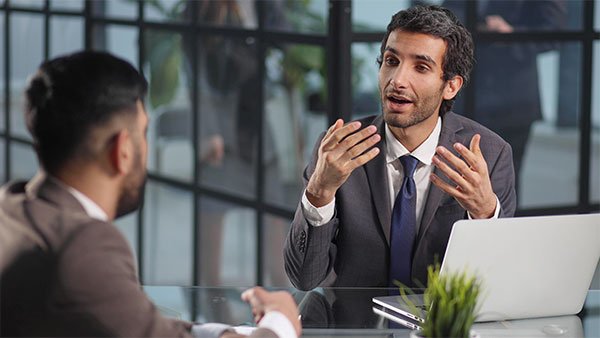
Hand gestures add dynamism and emphasis to verbal communication when used appropriately but become distracting liabilities when excessive or poorly controlled.
Natural, Purposeful Gesturing
Use hand gestures to emphasize key points, indicate relationships between concepts, or enumerate items. Keep gestures within a natural “gesture box” roughly defined by your shoulders and waist. Gestures extending far beyond this zone appear exaggerated and unprofessional.
Open-palm gestures convey honesty and transparency, while pointed fingers often appear aggressive or accusatory. When gesturing toward yourself, use an open hand rather than pointing at your chest.
Allow natural pauses where your hands rest calmly in your lap or on the table between gestures. Constant motion becomes distracting white noise that diminishes rather than enhances your message.
Cultural Considerations
Research suggests that gesture frequency and style carry cultural variations. Some cultures value animated gesturing as signs of passion and engagement, while others prefer reserved, minimal hand movements. Research the cultural norms of your interviewing organization, particularly for international companies or positions involving cross-cultural interaction.
When uncertain, err on the side of moderation. Controlled, purposeful gestures translate well across most professional contexts.
Resting Hand Position
When not actively gesturing, rest your hands loosely in your lap with fingers gently interlaced or place them calmly on the table. Avoid gripping your hands tightly, which signals anxiety, or allowing them to flutter nervously.
Never hide your hands completely—such as sitting on them or keeping them under the table throughout the interview. Visible hands contribute to perceptions of openness and honesty, while hidden hands unconsciously register as concealing or dishonest.
dressing right for every occasion
6. Controlling Nervous Habits and Self-Touching
Self-soothing behaviors increase under stress but seriously undermine professional presence and credibility. Identifying and eliminating these habits significantly improves interview body language for interviews.
Common Nervous Behaviors to Eliminate
Touching your face, particularly your nose, mouth, or ears, registers unconsciously as signs of deception or discomfort. Playing with hair, adjusting jewelry, or repeatedly touching your neck all communicate nervousness and distract from your message.
Nail biting, lip biting, or excessive lip licking reveal anxiety. Repeatedly adjusting clothing, checking your watch, or glancing at your phone (which should never be visible during interviews) demonstrates disengagement.
Redirection Strategies
The most effective approach to controlling nervous habits involves awareness followed by physical redirection. Film yourself during practice interviews to identify your specific patterns. Once aware, you can catch yourself beginning these behaviors and consciously redirect your hands to neutral positions.
Some candidates find that holding a pen (without clicking or fidgeting with it) provides an acceptable outlet for nervous energy. Others benefit from consciously pressing their feet firmly into the floor, grounding physical energy in a non-visible way.
For individuals struggling with persistent nervous habits that undermine interview performance despite self-awareness, our personality grooming classes provide targeted interventions through video analysis, biofeedback techniques, and systematic desensitization exercises. Professional coaches work one-on-one to identify unconscious patterns, develop personalized coping strategies, and build the authentic confidence that eliminates rather than merely suppresses nervous behaviors.
7. Spatial Awareness and Proxemics
Physical space and positioning communicate respect, confidence, and social awareness. Understanding proxemics—the study of personal space—prevents uncomfortable violations while establishing appropriate professional distance.
Respecting Personal Space
Maintain approximately 3-4 feet of distance during standing conversations with interviewers. This falls within “social distance” norms for professional interactions in most Western business contexts. Moving closer invades personal space and creates discomfort, while standing too far appears standoffish.
When seated, the distance is largely determined by furniture placement, but avoid leaning excessively forward into the interviewer’s space. Maintain your established position without physically encroaching.
Room Positioning
If given options about where to sit, choose positions that allow comfortable eye contact without awkward angles. Avoid sitting with your back to the door, which unconsciously creates discomfort. If the sun creates glare or positions you in shadow, politely request a different seat.
In waiting areas, choose seating that positions you facing the door where interviewers will enter. This allows you to notice their approach and prepare your greeting rather than being startled or needing to scramble to your feet awkwardly.
Virtual Space Considerations
In video interviews, position yourself centered in the frame with appropriate space above your head and below your shoulders. Too much empty space above makes you appear small and uncertain, while too little (head cut off) appears cramped and unprofessional.
Ensure your background is clean, uncluttered, and professional. Busy backgrounds distract from you, while overly bare spaces can feel cold. A simple, organized setting keeps focus on you while suggesting competence and attention to detail.
8. Mirroring and Rapport Building
Subtle mirroring of the interviewer’s body language builds unconscious rapport and connection. This powerful technique requires finesse to avoid appearing obvious or mocking.
The Science of Mirroring
Humans naturally mirror people they like and trust—it’s called limbic synchrony. Consciously employing this technique leverages this psychological tendency. When the interviewer leans forward, you subtly lean forward. When they adopt an open posture, you reflect openness.
The key is subtlety and delay. Mirror positions after a 2-3 second delay and never mirror exact gestures immediately. The mirroring should feel natural and unconscious, not like mimicry.
What to Mirror and What to Avoid
Mirror positive, open body language—leaning forward, open gestures, engaged expressions. Never mirror negative body language such as crossed arms, leaning back, or distracted behaviors. Your goal is building rapport, not reinforcing disconnection.
Match the interviewer’s energy level and speaking pace. If they’re more reserved and methodical, dial down high energy. If they’re animated and quick-paced, increase your energy appropriately. This adaptation demonstrates social awareness and compatibility.
Cultural and Individual Considerations
Mirroring techniques vary in effectiveness across cultures. Some cultures value distinct hierarchical differences that make mirroring appear presumptuous, while others appreciate the implicit equality mirroring suggests. Read the situation carefully and adjust accordingly.
Some individuals respond positively to mirroring while others find it off-putting. Monitor reactions and adjust. If an interviewer seems increasingly comfortable and engaged, your mirroring is working. If they seem uncomfortable or withdrawn, reduce mirroring intensity.
9. Managing Stress Responses and Staying Composed
Even with perfect technical knowledge of body language for interviews, stress can trigger physiological responses that undermine your practiced composure. Developing strategies to manage these responses is essential.
Understanding Fight-or-Flight Responses
High-stakes interviews trigger stress responses: increased heart rate, shallow breathing, muscle tension, sweating, and mental fog. These physiological reactions produce the exact body language you want to avoid—tense posture, fidgeting, and rigid expressions.
Recognize that these responses are normal and universal. Acceptance reduces additional stress caused by judging yourself for being nervous. The goal isn’t eliminating nervousness but managing its physical manifestations.
Pre-Interview Preparation Techniques
Arrive 10-15 minutes early to allow time for physical and mental preparation. Use this time for deep breathing exercises: inhale for four counts, hold for four, exhale for six. This pattern activates your parasympathetic nervous system, directly countering stress responses.
Perform subtle physical exercises in private: roll your shoulders, stretch your neck, clench and release your fists. These movements release muscle tension that contributes to stiff, uncomfortable body language.
Adopt a “power pose” for two minutes before the interview—standing with feet wide, hands on hips or raised above your head in a victory position. Research suggests this posture increases confidence-related hormones while decreasing stress hormones.
During-Interview Recovery Techniques
If you feel anxiety escalating mid-interview, employ discrete grounding techniques. Press your feet firmly into the floor, feeling the pressure and stability. This physical grounding has psychological calming effects.
Take deliberate, slightly longer pauses before answering questions. Use these moments for a discrete calming breath. Interviewers perceive these pauses as thoughtful consideration rather than anxiety management.
If you make a body language mistake—awkward gesture, poor eye contact moment, nervous laugh—simply continue smoothly without dwelling on it. Calling attention to mistakes or apologizing for nervousness amplifies rather than diminishes their impact.
Adapting Body Language to Different Interview Formats
Different interview types—phone screens, video calls, panel interviews, informal meetings, or presentation-based interviews—require adapted body language strategies.
Phone Interviews
While interviewers can’t see you during phone screens, your body language still affects your vocal quality and energy. Stand or sit with excellent posture, smile while speaking (it alters your vocal tone positively), and gesture naturally even though no one sees them. These physical behaviors improve your verbal communication quality.
Avoid the temptation to multitask or relax too much during phone interviews. Maintain professional body language as if the interviewer could see you, which keeps your voice engaged and energetic.
Video Interviews
Video interviews combine in-person and phone elements. Your upper body, facial expressions, and eye contact (via camera) are visible, but lower body is hidden. Maintain full professional posture despite the reduced visibility—your upper body positioning affects your overall presence.
Minimize gestures since they can appear exaggerated on camera or move out of frame. Keep hand gestures low and controlled within the visible frame area.
Panel and Group Interviews
Panel interviews require distributed attention across multiple interviewers. Position yourself to have sight lines to all panel members. Make eye contact with everyone, but focus more time on the person asking questions and the apparent decision-maker.
Address your answers to the questioner but include others through eye contact and occasional body orientation shifts. This inclusive approach prevents anyone from feeling ignored while maintaining primary focus appropriately.
Presentation-Based Interviews
Interviews involving presentations or demonstrations require different body language entirely. Move purposefully around the space rather than standing frozen, but avoid pacing nervously. Use larger, more visible gestures appropriate for a presentation context.
Practice your presentation movements beforehand, ensuring smooth transitions between positions and natural gesture integration. Awkward, choppy movements during presentations distract from content and suggest poor preparation.
Reading Interviewer Body Language
Effective body language for interviews isn’t only about your own nonverbal communication—it also involves reading interviewer signals and adapting accordingly.
Positive Engagement Signals
Interviewers who lean forward, maintain steady eye contact, nod in agreement, and smile are demonstrating engagement and positive reception. These signals suggest your approach is working well—maintain your current body language strategy.
Taking notes typically indicates interest and serious consideration. Open body posture (uncrossed arms and legs, facing directly toward you) suggests receptiveness to your candidacy.
Disengagement or Negative Signals
Leaning back, crossed arms, looking away frequently, or engaging in distracted behaviors (checking phone, shuffling papers) signal disconnection or lack of interest. These may relate to your content, your body language, or factors unrelated to you.
When you detect disengagement, subtly increase your energy and engagement. Lean forward slightly more, increase eye contact, vary your vocal energy, and ensure your enthusiasm shows. Sometimes you can re-capture wandering attention through heightened presence.
Neutral Professional Demeanor
Some interviewers maintain intentionally neutral expressions and body language to avoid influencing candidates or to test composure under ambiguous conditions. Don’t interpret professional neutrality as disinterest or rejection.
Maintain your strong body language regardless of the feedback you receive. Your professionalism in the face of uncertainty demonstrates confidence and emotional stability.
Post-Interview Body Language
Your body language matters through the final moments of your interview interaction, including the closing and departure.
The Professional Close
As the interview concludes, maintain your confident posture and engaged expression. Stand when the interviewer stands, initiate or receive the closing handshake with the same firm confidence as your opening handshake.
Express genuine appreciation through both verbal thanks and warm facial expressions. Make final eye contact and smile as you thank them for their time and consideration.
The Departure
Exit with the same confident posture and purposeful stride you used entering. Turn to provide a final smile and wave if the interviewer is still visible. Your last impression matters nearly as much as your first.
Maintain professional composure until you’ve completely left the building. Interviewers sometimes observe candidates in parking lots or lobby areas, and dramatic shifts from professional to casual behavior can undermine your carefully crafted impression.
Practicing and Perfecting Your Interview Body Language
Knowledge alone doesn’t translate to improved body language for interviews—deliberate practice is essential for internalizing these techniques until they become natural and automatic.
Recording and Reviewing
Video record yourself answering common interview questions. Review footage specifically analyzing your body language, not your verbal answers. Watch with the sound off to focus entirely on nonverbal communication.
Identify specific behaviors to improve: fidgeting patterns, eye contact lapses, poor posture moments, or distracting gestures. Focus on correcting one or two habits at a time rather than attempting complete transformation simultaneously.
Mock Interview Practice
Conduct mock interviews with friends, mentors, or career counselors who can provide honest body language feedback. Ask them to specifically observe and comment on your nonverbal communication.
Practice in conditions as similar as possible to actual interviews: professional attire, formal seating arrangements, and realistic question difficulty. This simulation helps your body language improvements transfer to actual high-stakes situations.
Building Authentic Confidence
Ultimately, the best body language for interviews flows from genuine confidence rather than memorized techniques. While learning specific strategies helps, building authentic self-assurance produces naturally powerful nonverbal communication.
Prepare thoroughly for interviews—research companies, practice answers, and prepare thoughtful questions. Nothing builds confidence like genuine readiness. Physical exercise, adequate sleep, and stress management practices also contribute to the inner confidence that radiates through body language.
secret elements of persuasive communication
Conclusion
Mastering body language for interviews represents an investment in your professional future that pays dividends throughout your career. The nonverbal communication skills you develop for interviews translate directly to workplace interactions, presentations, negotiations, and leadership contexts. Every interview provides an opportunity to practice and refine these essential professional competencies.
Remember that perfect body language isn’t about rigidly following rules or suppressing your authentic personality. It’s about presenting your genuine confidence, competence, and enthusiasm in ways that interviewers can clearly perceive and appreciate. The most effective interview body language combines learned techniques with authentic self-assurance, creating a powerful presence that makes hiring managers eager to bring you onto their teams.
Start practicing these strategies today. Record yourself, seek feedback, conduct mock interviews, and continuously refine your nonverbal communication. With consistent effort, powerful interview body language becomes second nature, allowing you to focus your conscious attention on substantive conversations while your body naturally communicates confidence, competence, and professional excellence. Your next interview success may depend not on what you say, but on how you say it through the powerful language of your body.
Frequently Asked Questions
Q. What should I do with my hands during an interview?
Rest your hands loosely in your lap or place them calmly on the table when not gesturing. Use natural hand gestures to emphasize points, keeping movements within a comfortable zone between your shoulders and waist. Avoid fidgeting, hiding your hands, or crossing your arms. If holding a pen helps ground your nervous energy, that’s acceptable—just don’t click or fidget with it.
Q. How much eye contact is too much in an interview?
Maintain eye contact for 3-5 seconds at a time, then briefly glance away before returning. This creates a natural, engaged rhythm without becoming an uncomfortable stare. When answering questions, it’s normal to occasionally look away while gathering thoughts, but deliver key points while making direct eye contact to emphasize sincerity.
Q. Is it okay to cross my legs during an interview?
It’s generally better to keep both feet flat on the floor, which conveys stability and confidence. If you must cross your legs due to comfort or the chair height, cross them at the ankles only. Avoid crossing at the knee, which can appear too casual and may cause you to lean or become unbalanced during the interview.
Q. How do I stop nervous fidgeting during interviews?
First, identify your specific fidgeting patterns through practice interviews or feedback. Common habits include leg bouncing, hair touching, or pen clicking. Once aware, place your hands in a controlled resting position—loosely interlaced in your lap or calmly on the table. Use deep breathing to dissipate nervous energy, and practice grounding techniques like pressing your feet firmly into the floor.
Q. Should I mirror the interviewer’s body language?
Subtle mirroring can build rapport, but it must be done carefully. After a 2-3 second delay, loosely reflect the interviewer’s posture or energy level—if they lean forward, you might lean forward slightly. Never mirror negative body language like crossed arms, and avoid obvious mimicry of specific gestures. The technique should feel natural, not forced or obvious.
Q. What’s the best posture for video interviews?
Sit with your spine straight and back against the chair, just as you would in person. Position your camera at eye level and sit far enough back that your head, shoulders, and upper torso are visible. Lean slightly forward to show engagement. Maintain the same professional posture you would use face-to-face—the tendency to slouch “because you’re at home” will be completely visible on camera.
Q. How can I appear confident when I’m really nervous?
Use the “fake it till you make it” approach: adopt confident body language even when you don’t feel confident internally. Stand or sit with excellent posture, maintain appropriate eye contact, use a firm handshake, and smile genuinely. Interestingly, research shows that confident body language actually reduces anxiety and increases genuine confidence through physiological feedback loops. Combine this with deep breathing and thorough preparation.
Q. What body language mistakes kill interview chances?
The biggest mistakes include: weak or overly aggressive handshakes, slouching or hunched posture, avoiding eye contact or staring intensely, crossed arms (appears defensive), excessive fidgeting, touching your face (suggests dishonesty), checking your phone, and failing to smile. Any of these signals can unconsciously trigger negative impressions that undermine even strong qualifications.