

Nobody hands ambitious women a roadmap. You figure it out through trial, error, missed opportunities, and the occasional mentor who finally says something useful at exactly the right moment. But here’s what that informal, accidental approach costs: years. Years spent in roles that underutilize you, salaries that undervalue you, and opportunities you didn’t pursue because nobody told you that you were ready—even when you were. Career development strategies for women aren’t about working harder than you already are. Most women reading this are already working harder than their male counterparts for comparable recognition. These strategies are about working with more intentionality—building the specific skills, visibility, relationships, and internal confidence that turn quiet competence into accelerating career growth.
This guide covers what actually moves the needle. No filler. No generic advice. Just the strategies that work.
Understand the Landscape You’re Actually Operating In
Before any strategy can work, it requires an honest understanding of context.
Women in professional environments—across most industries—navigate a set of structural dynamics that their male counterparts largely don’t:
- The visibility gap: Women’s contributions are more frequently attributed to team effort; men’s are more frequently attributed to individual capability—even when the quality of work is identical.
- The likeability-competence tradeoff: Research from Harvard Business School shows that as women become more assertive and ambitious, they’re often perceived as less likable—a penalty men don’t face for the same behaviors.
- The prove-it-again bias: Women typically need to demonstrate competence multiple times before receiving the same credibility that male colleagues earn after a single demonstration.
- The broken rung: McKinsey’s Women in the Workplace report consistently identifies the first promotion to manager as the most significant barrier for women—not the leap to senior leadership, but the very first management step.
Understanding these dynamics isn’t pessimism. It’s strategic intelligence. Every career development strategy becomes more effective when you know the specific terrain you’re navigating.
personality development for remote professionals
Strategy 1: Build Visible Competence, Not Just Quiet Excellence
This is the strategy most high-performing women need to hear first, because it runs directly counter to how many were raised professionally.
The implicit belief: if I do excellent work consistently, recognition and advancement will follow naturally.
The reality: excellent work that isn’t visible to decision-makers is professionally invisible. And in most organizations, the people deciding who gets promoted are watching for signals of competence—not just evidence of it buried in project files.
What building visible competence looks like:
- Volunteering to present team results—even if the work was collaborative—so your name becomes associated with the outcome
- Contributing ideas in meetings rather than saving them for one-on-one conversations where they won’t be attributed to you
- Sending brief written summaries after key projects: “Here’s what we achieved, what I learned, and what I’d do differently”—creating a paper trail of your thinking and impact
- Raising your hand for high-visibility cross-functional projects even when they add to your workload
None of this is self-promotion in the uncomfortable sense. It’s ensuring that the exceptional work you’re already doing receives the organizational visibility it deserves.
Strategy 2: Negotiate—Every Single Time
Women are less likely to negotiate salary at the point of hire than men, and significantly less likely to negotiate raises during tenure. The cumulative cost of this over a career lifetime is staggering—conservative estimates put it at $1 million or more in lost earnings over a 40-year career.
The negotiation gap isn’t primarily about confidence or capability. It’s about conditioning: women are more frequently penalized socially for negotiating assertively than men are, which creates a rational—but ultimately costly—disincentive.
Practical negotiation strategies that work:
- Research before every conversation: Know the market rate for your role in your geography and industry before any compensation discussion.
- Anchor high on first offers: The first number you name sets the reference point for everything that follows. Start higher than your target.
- Use collaborative framing: “I’m really excited about this opportunity—here’s what I was thinking in terms of compensation based on my research and what I bring to this role” is assertive without triggering the social penalty of being perceived as aggressive.
- Negotiate beyond salary: Title, remote flexibility, professional development budget, performance review timing—these are all negotiable and often easier wins than base salary.
- Practice out loud: Negotiation is a skill that degrades under pressure if not rehearsed. Practice your opening line, your response to pushback, and your walk-away position with someone you trust before the actual conversation.
Strategy 3: Build a Strategic Network—Not Just a Friendly One
Networking gets misrepresented constantly as a personality-dependent activity that extroverts do naturally, and introverts suffer through. It’s neither.
Strategic networking is simply the deliberate cultivation of professional relationships that create mutual value over time. And research is unambiguous: access to strong networks is one of the most significant predictors of career advancement—and women’s networks, while often strong in peer relationships, are frequently weaker in the specific types of relationships that drive career acceleration.
The three relationship types every woman’s network needs:
- Sponsors (not just mentors): A mentor gives advice. A sponsor uses their own political capital to advocate for you when you’re not in the room. Sponsorship is the relationship type most correlated with advancement, and women are significantly more likely to have mentors than sponsors.
- Peer allies: Colleagues at a similar level who share information, support each other’s visibility, and create informal solidarity across teams and departments.
- Cross-industry connections: People outside your immediate industry who expose you to different ways of thinking, different career paths, and opportunities that wouldn’t surface within your existing professional circle.
Building the network without the transactional awkwardness:
The most effective networking doesn’t feel like networking. It happens through genuine curiosity—asking someone whose work you find interesting to share their experience, contributing meaningfully to professional communities, and showing up consistently rather than only when you need something.
Strategy 4: Develop Executive Presence Deliberately
Executive presence is one of those phrases that gets used constantly and defined rarely. In practical terms, it’s the combination of qualities that make people trust your judgment, listen when you speak, and believe you’re capable of operating at a higher level than your current role.
Research by Sylvia Ann Hewlett identifies three core components: gravitas (projecting confidence and calm authority), communication (speaking clearly and compellingly), and appearance (professional presentation that signals belonging at the level you’re targeting).
Women who develop executive presence don’t wait until they’re at the leadership level to start acting like leaders. They:
- Speak with assertion rather than hedging in every communication
- Demonstrate composure under pressure—responding thoughtfully rather than reacting emotionally
- Own physical space confidently in meetings and presentations
- Communicate in terms of business outcomes, not just task completion
- Develop a point of view on their industry and share it
Executive presence is not about becoming someone you’re not. It’s about ensuring that how you present yourself externally matches the capability you already have internally.
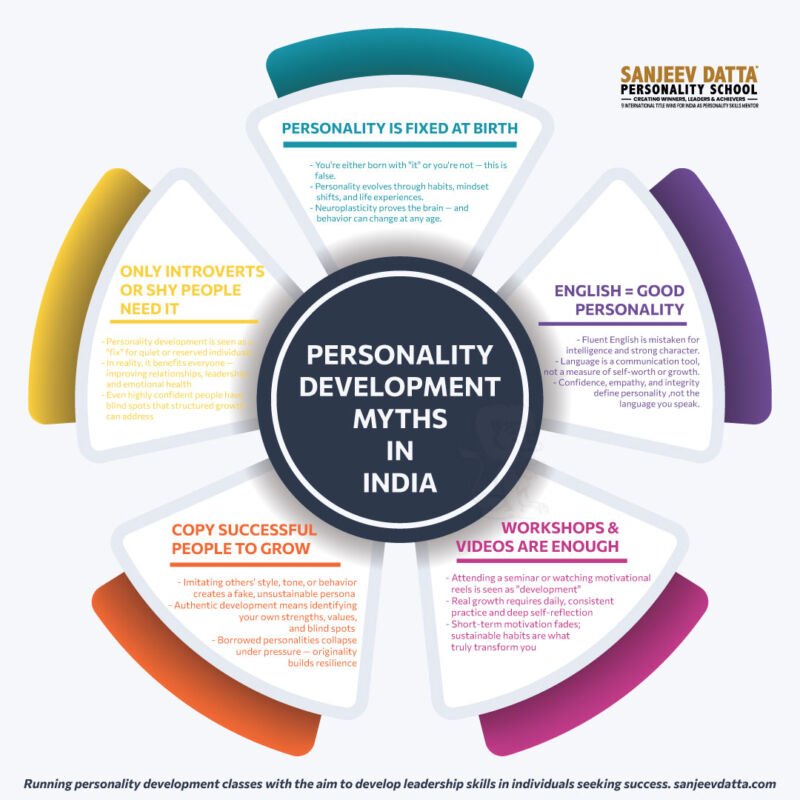
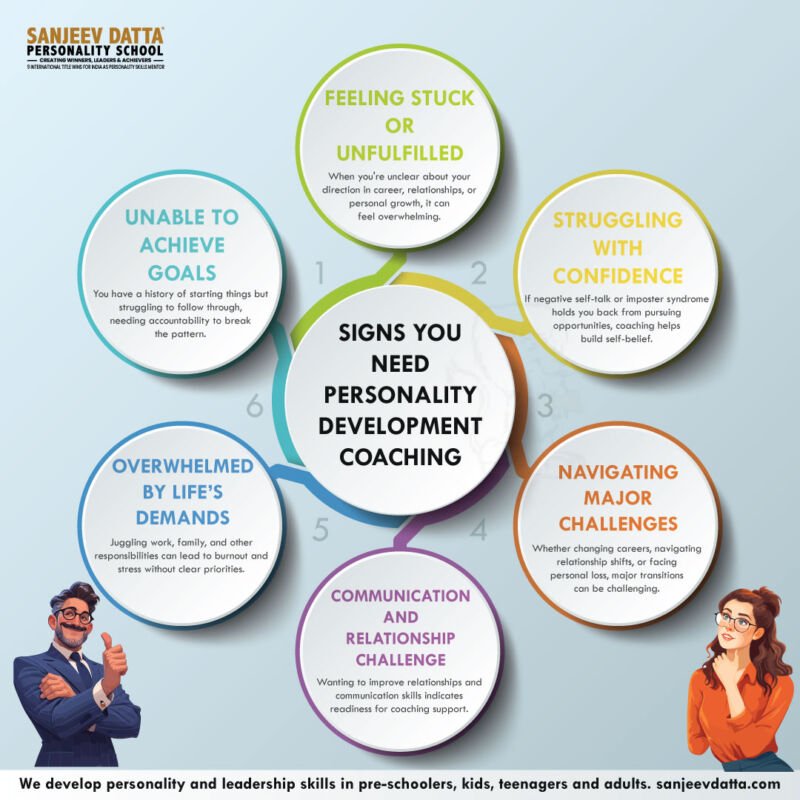
This is precisely the dimension where a structured personality development course delivers some of its highest value for professional women. A well-designed program builds executive presence layer by layer—working on vocal delivery, confident self-presentation, persuasive communication, professional etiquette, and the kind of personal brand clarity that makes decision-makers take notice. These courses don’t just tell you what executive presence looks like; they give you the guided practice, professional feedback, and peer environment to actually develop it as a lived skill. For women who feel their external presentation isn’t yet matching their internal capability, this investment is one of the most direct accelerants available.

Strategy 5: Seek Out Stretch Assignments Before You Feel Ready
One of the most consistently documented differences in how men and women approach career advancement is the “readiness gap.”
Studies show that men typically apply for roles or raise their hands for opportunities when they meet 60% of the stated requirements. Women typically wait until they meet 100%. The result is that women self-select out of significant career opportunities while male peers—less qualified on paper—take them and grow into them.
The antidote is deliberate: pursue stretch assignments and roles that scare you slightly before you feel fully ready.
Why this works:
Capability follows responsibility. You don’t develop the skills for a bigger role by waiting in a smaller one until you feel ready. You develop them by taking on the bigger role and growing in real time. The discomfort you feel is not evidence that you’re not ready—it’s evidence that you’re about to grow.
How to implement:
- Tell your manager explicitly: “I want to grow into [specific area]. What assignment can I take on in the next quarter that would give me that experience?”
- Volunteer for the project that nobody else wants—the complex, messy, cross-functional one with ambiguous scope. These are where careers are made.
- Say yes first, figure out the how second.
how to improve body language for interviews
Strategy 6: Master Personal Branding as a Career Asset
Personal branding sounds like something only influencers and motivational speakers need. In reality, every professional has a personal brand—the question is whether it’s being shaped intentionally or left to chance.
Your personal brand is what colleagues, managers, and industry contacts think and say about you when you’re not in the room. It’s the two or three qualities most strongly associated with your professional identity. And it’s an active career development asset.
Building your professional personal brand:
- Define your expertise clearly: What do you know better than most people in your organization? What problem do you solve particularly well?
- Create content around that expertise: LinkedIn articles, industry forum contributions, internal thought leadership pieces, speaking at professional events
- Be consistent: Your brand is built through repetition—the same themes, values, and areas of expertise appearing across your communications over time
- Seek external validation: Industry awards, speaking invitations, professional certifications—all of these third-party signals strengthen your brand
A strong personal brand doesn’t just attract career opportunities—it creates them. When you’re known as the person who understands a specific area deeply, opportunities in that area find you.
Strategy 7: Invest in Your Communication Skills as a Leadership Asset
Communication is the single skill with the highest correlation to career advancement across every industry, level, and professional context. And it’s also the skill most women underinvest in explicitly—despite often being naturally strong communicators in informal settings.
Formal communication development means going beyond being a good conversationalist. It means:
- Public speaking: Presenting to large groups, senior stakeholders, external audiences—with the kind of prepared confidence that gets you remembered
- Written communication: Executive-level emails, proposals, and reports that communicate clearly, concisely, and with strategic awareness of the reader
- Difficult conversations: The ability to give direct feedback, address conflict, and advocate for yourself in high-stakes conversations without either avoiding the discomfort or letting emotion run the interaction
- Storytelling for influence: The skill of framing data, ideas, and recommendations as compelling narratives rather than information dumps
Women who invest deliberately in these communication skills don’t just become better communicators—they become more promotable, more influential, and more effective leaders at every stage of their career.
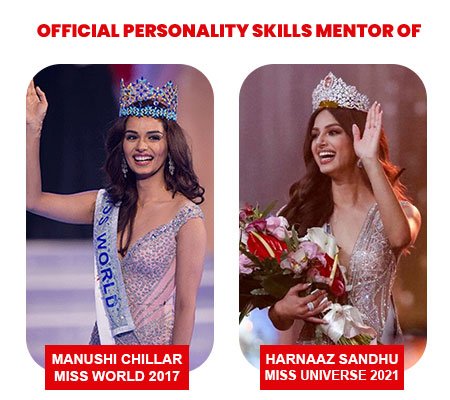
For women who want their communication skills, professional presentation, and personal brand to be developed with the kind of expert polish that accelerates career advancement, personality grooming classes offer a targeted, comprehensive solution. These programs address the full spectrum of professional presence—from how you carry yourself in high-stakes meetings to how you dress for the career level you’re targeting, from voice projection and body language to confident networking and powerful first impressions. For women who already have the capability but want to ensure their external professional presentation fully communicates that capability to the people who make career-changing decisions, this kind of structured grooming and presence training is one of the highest-return investments in their career development toolkit.

Strategy 8: Build Financial Literacy as a Career Strategy
This one surprises people—but financial literacy and career development are more directly connected than most women realize.
Women who understand how their organization makes money, how their role contributes to that, and how their compensation relates to market value make better strategic career decisions. They negotiate more effectively. They evaluate opportunities more accurately. They build the kind of business acumen that’s essential for senior leadership roles.
Practical financial literacy for career development:
- Understand your company’s P&L at a basic level—where does revenue come from, where do costs accumulate, where is your team’s contribution visible?
- Know your exact market value and track how it changes with experience and skills
- Understand equity compensation if relevant to your industry
- Read your industry’s financial press—not to become an analyst, but to speak the language of business strategy fluently
Women who talk about their work in terms of business impact—revenue generated, costs reduced, efficiency improved, risk mitigated—advance faster than equally capable peers who communicate only in terms of tasks completed.
Strategy 9: Create Boundaries That Protect Your Long-Term Performance
Burnout is the silent career killer for ambitious women—and it’s disproportionately common among high-performing professional women who have been conditioned to accommodate, overdeliver, and say yes to everything.
Sustainable career development requires sustainable performance. And sustainable performance requires boundaries.
Practical boundary strategies:
- Define your non-negotiables: the hours, the tasks, the communication expectations that you will and won’t accommodate—and communicate them clearly
- Stop over-apologizing for normal professional boundaries: “I’m not available for calls after 7 PM” doesn’t require an apology or extensive justification
- Delegate without guilt: High-performing women frequently retain tasks they could delegate because they feel responsible for everything being done well
- Protect your recovery time as seriously as your productive time: The research on peak performance is unambiguous—rest is not the opposite of productivity, it is the precondition for it
The women with the longest, most successful careers aren’t the ones who burned brightest for five years. They’re the ones who built sustainable, bounded professional lives that let them perform at high levels for decades.
Strategy 10: Find Mentors, Build Sponsors, Be Both
The final strategy is relational—and it operates in both directions.
Seek mentors who will tell you the truth about your blind spots, introduce you to people you wouldn’t otherwise meet, and share the unwritten rules of your industry and organization. Be specific in what you ask for—”Can you help me think through how to position myself for the next step?” is more useful than a vague mentorship request.
Actively cultivate sponsors—senior leaders who know your work well enough to advocate for you in rooms you’re not in. The way you earn sponsorship is by delivering exceptional work for people with organizational influence, making their priorities your priorities, and making it easy for them to champion you by keeping them informed of your contributions and ambitions.
And as you advance, be both for others. Mentor the junior woman who reminds you of your earlier self. Sponsor the colleague who’s ready for more than her current role reflects. The women who build others up as they advance don’t diminish their own trajectory. They multiply it.
FAQ: Career Development Strategies for Women
Q. How do I advance my career when my manager doesn’t advocate for me?
Don’t wait for a single manager to be your only advocate. Build relationships with other senior leaders, take on cross-functional visibility, and document your impact carefully. If your manager consistently undervalues your contributions after a direct conversation about your growth goals, that’s important information about whether you’re in the right environment for advancement.
Q. How do I handle being talked over or having my ideas stolen in meetings?
Name it calmly and immediately: “I’d like to finish my point” when interrupted. When your idea is restated by someone else, you say, “Yes, that’s the direction I was proposing—glad it resonates.” Doing this consistently, without heat or accusation, trains the room over time.
Q. Is it worth changing industries to advance faster?
Sometimes yes. If your current industry has structural barriers to women’s advancement that are cultural rather than incidental, a different sector may offer faster progression. Research the gender representation at senior levels in industries you’re considering—the data is often publicly available and revealing.
Q. How important is a formal educational qualification for career advancement?
Increasingly, demonstrated skills, portfolio, and professional reputation matter more than formal credentials in most industries. That said, in certain fields—law, medicine, academia, finance—specific qualifications remain gatekeeping requirements. Know your industry’s actual requirements rather than assumptions about them.
Q. What’s the single highest-impact change a woman can make for her career right now?
Start negotiating. For your current salary, for your next opportunity, for the resources you need to do your best work. The cumulative financial and career impact of consistent negotiation outperforms almost every other single career development action.
Final Thoughts: Strategy Turns Ambition into Momentum
Ambition without strategy is just restlessness. Strategy without ambition is just planning. The combination—clear goals, intentional development, visible competence, and the courage to advocate for yourself—is what career development strategies for women are ultimately about.
The professional landscape for women is improving. Not fast enough, not everywhere, and not without continued effort—but improving. The women accelerating their careers right now aren’t waiting for the landscape to become perfectly fair before they move. They’re building the skills, relationships, and visibility that create momentum within the current reality while that reality continues to shift.
Your career is too important to leave to chance, to a single manager’s goodwill, or to the hope that quiet excellence will eventually be noticed.
Make it visible. Make it strategic. Make it yours.