

Technical skills get you hired. Soft skills determine how far you go. That’s not a motivational slogan—it’s a pattern that plays out in organizations across every industry, every year. The professional who gets overlooked for promotion despite strong technical performance. The team member who stalls at mid-level while a less technically skilled colleague moves into leadership. The expert who can’t seem to influence decisions even when they’re clearly right. In almost every case, the gap isn’t knowledge. It’s the cluster of capabilities that determines how effectively a person operates within the human dynamics of a professional environment—how they communicate, adapt, collaborate, handle pressure, and navigate uncertainty. Mastering adaptability and soft skills is no longer optional career advice for people who struggle professionally. It’s the defining competitive advantage for anyone serious about long-term career growth in a workplace that changes faster every year.
Why Adaptability Has Become the Most Valued Workplace Competency?
The modern workplace has changed structurally—not just in terms of technology and tools, but in the fundamental nature of how work gets done and what it demands from the people doing it.
Job roles now evolve faster than job descriptions can keep up with. Teams are more cross-functional, more globally distributed, and more demographically diverse than at any previous point. The problems organizations face are more ambiguous, more interconnected, and less amenable to fixed-playbook solutions.
In this environment, the professional who can only perform well under stable, familiar conditions is increasingly vulnerable. The one who thrives under change, ambiguity, and novelty has a structural advantage that compounds with every disruption the organization faces.
A World Economic Forum Future of Jobs Report identified adaptability and cognitive flexibility among the top skills employers will prioritize through 2030—ranking them above most technical competencies. LinkedIn’s annual Workplace Learning Report has consistently ranked soft skills—communication, adaptability, and emotional intelligence—among the hardest to find and most valuable when found.
The market has already delivered its verdict on what it values. The question is whether your development strategy reflects that.
Understanding What Soft Skills Actually Are
The term “soft skills” does these capabilities a disservice. It implies they’re vague, unmeasurable, and somehow less rigorous than hard technical skills. None of that is true.
Soft skills are specific, observable, and developable behavioral competencies. They include:
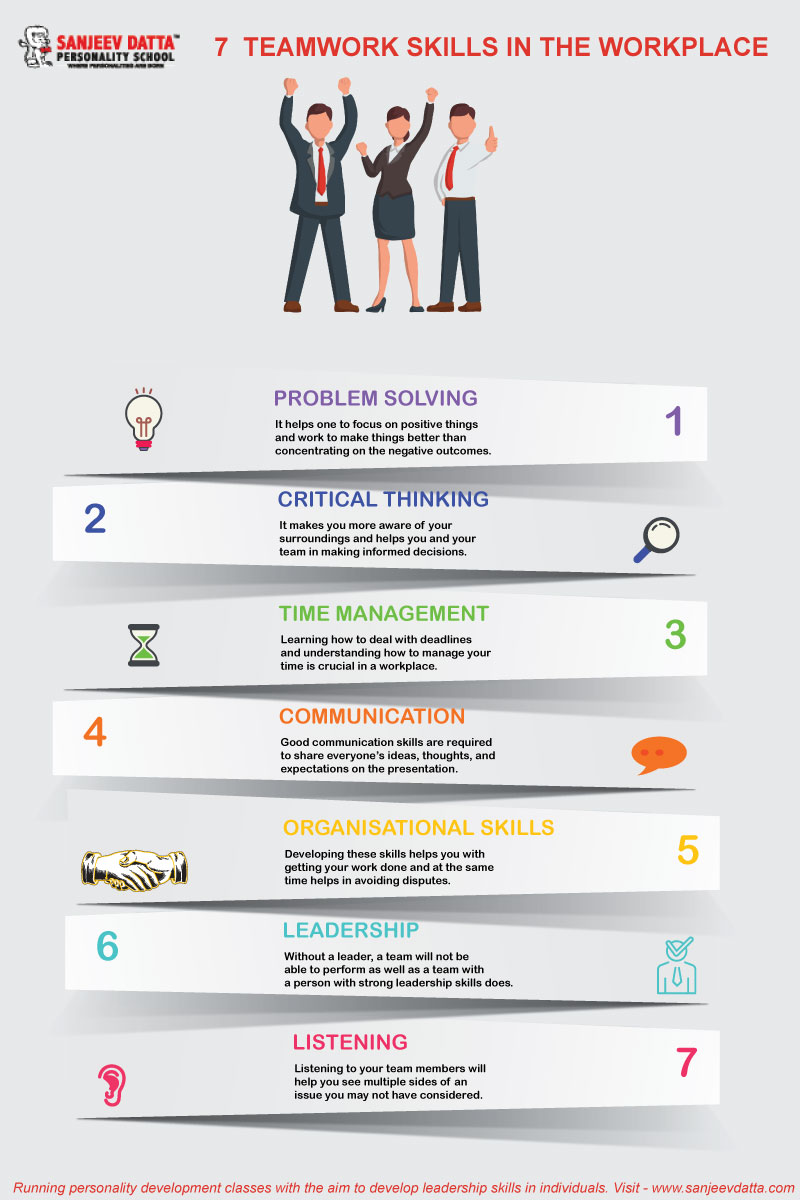
- Communication: Verbal clarity, active listening, written precision, presentation effectiveness, and the ability to adapt communication style to different audiences
- Emotional intelligence: Self-awareness, emotional regulation, empathy, and social skills in navigating interpersonal dynamics
- Adaptability: Cognitive flexibility, comfort with ambiguity, resilience under change, and the ability to shift approach when circumstances demand it
- Collaboration: Team effectiveness, conflict navigation, contribution to shared goals, and the ability to work productively with people who think and work differently
- Critical thinking: Problem analysis, logical reasoning, creative solution-generation, and the judgment to make sound decisions under uncertainty
- Leadership influence: The ability to motivate, persuade, and guide others regardless of formal authority
- Time and priority management: Self-direction, focus management, and the ability to deliver results consistently without external micromanagement
Each of these is measurable in behavior. Each is trainable through deliberate practice. And each has a direct, demonstrable connection to career outcomes.
The Adaptability Skill Set: Breaking It Down
Adaptability is the meta-skill—the one that amplifies the value of all other competencies by ensuring they remain functional under changing conditions.
But adaptability isn’t a single behavior. It’s a cluster of specific capabilities that can be developed individually:
- Cognitive Flexibility
Cognitive flexibility is the ability to shift your thinking framework when the situation changes—to let go of an approach that worked before when evidence suggests a different approach is needed now.
Professionals with low cognitive flexibility get described as “rigid,” “set in their ways,” or “resistant to change.” These aren’t personality judgments—they’re observations about a specific cognitive skill that can be developed through deliberate practice.
Building cognitive flexibility:
- Deliberately seek out perspectives that challenge your existing views—not to abandon your position, but to stress-test it against genuine alternatives
- Practice the discipline of separating “this approach worked before” from “this approach is right for this situation.”
- When facing decisions, explicitly generate three alternative approaches before committing to the first one that seems obvious
- Study fields adjacent to your own—the cross-pollination of frameworks from different domains is one of the most powerful cognitive flexibility builders available
2. Tolerance for Ambiguity
High-performing modern professionals are comfortable operating without complete information, clear direction, or guaranteed outcomes. Low tolerance for ambiguity produces either decision paralysis (waiting for certainty that never fully arrives) or premature closure (committing to a course of action too early to reduce the discomfort of uncertainty).
Building ambiguity tolerance:
- Practice making decisions with explicitly incomplete information—and tracking the outcomes. This builds empirical confidence that uncertainty is manageable
- Reframe ambiguity as possibility rather than threat: an undefined situation is one where your judgment, creativity, and initiative can create value
- Develop a personal decision framework for low-information situations—what minimum information do you need before acting? What’s your criterion for “good enough” evidence?
3. Resilience Under Change
Resilience isn’t the absence of difficulty or distress when things change. It’s the speed and effectiveness with which you recover your functional capacity after disruption.
Resilient professionals don’t avoid negative emotions when change is hard. They process them faster, draw learning from them more efficiently, and return to effective functioning more quickly than less resilient peers.
Building professional resilience:
- Develop a consistent reflection practice—the ability to extract learning from difficult experiences is the core mechanism of resilience
- Build your change history: actively recall past situations where change felt threatening but produced positive outcomes. This creates evidence that your brain can draw on when a new change feels destabilizing
- Invest in relationships—professional resilience is significantly stronger in people with solid peer networks that provide perspective, support, and practical help during disruption
career development strategies for women
4. Communication: The Soft Skill With the Highest Career ROI
If there’s one soft skill that delivers more career return per unit of development investment than any other, it’s communication.
Not because it’s the most important intrinsically—emotional intelligence arguably deserves that title—but because it’s the most visible. Everything about how you’re perceived professionally is communicated. Your competence, your judgment, your leadership potential, your reliability—all of it reaches the world through your communication.
The communication dimensions most worth developing:
- Clarity Under Pressure
Many professionals communicate well in relaxed, familiar settings and poorly under pressure—in difficult conversations, high-stakes presentations, or unexpected challenges to their position. Developing communication clarity that holds under pressure requires deliberately practicing communication in challenging conditions, not just comfortable ones.
- Influence Without Authority
Modern organizations require professionals to influence peers, cross-functional stakeholders, and senior leaders without positional authority to mandate compliance. This requires specific communication skills: understanding what the other person values, framing proposals in terms of their interests, acknowledging counterarguments before they’re raised, and using narrative to make abstract arguments emotionally concrete.
- Listening as Communication
Active listening—processing what someone is saying with genuine attention rather than planning your response—is the most underinvested communication skill in most professionals’ development portfolios. It’s also the one that most immediately transforms how others experience you: as someone who makes them feel genuinely heard, understood, and valued.
- Written Precision
In increasingly asynchronous, distributed work environments, written communication carries more of the professional relationship than ever before. The email that takes three readings to understand, the message that creates ambiguity about what’s being asked, the report that buries its conclusion in paragraph seven—these are not minor inefficiencies. They create friction, erode credibility, and slow decisions.
5. Emotional Intelligence: The Competency That Scales With Seniority
Emotional intelligence (EQ) has a unique property among soft skills: its relative importance increases as you advance in your career.
At the early career stage, technical competence carries most of the weight. At mid-career, EQ and technical skills contribute roughly equally. At senior leadership levels, EQ becomes the primary differentiator—because the technical work is mostly being done by others, and the leader’s job is almost entirely about navigating human dynamics effectively.
The four EQ components and how to develop them:
- Self-awareness—Knowing your emotional state, your triggers, your patterns, and the gap between your intended impact and actual impact on others.
- Development practice: Regular journaling with a specific focus on emotional reactions and patterns. 360-degree feedback from trusted colleagues. Working with a coach who can reflect on blind spots.
- elf-regulation—Managing emotional reactions so they serve your professional objectives rather than undermine them.
- Development practice: Developing a pause ritual for high-trigger situations. Building the habit of responding rather than reacting. Physical practices—exercise, sleep, breathing—that maintain the physiological baseline that makes regulation possible.
- Empathy—Genuinely understanding others’ emotional experiences and perspectives.
- Development practice: Perspective-taking exercises. Making a habit of asking “How is this landing for them?” before and after significant communications. Reading literary fiction—which research shows measurably increases empathetic accuracy.
- Social skill—Navigating interpersonal dynamics effectively—building relationships, managing conflict, influencing others, leading teams.
- Development practice: Deliberate reflection after significant interpersonal interactions. Seeking feedback on specific social situations. Structured practice in challenging interpersonal scenarios.
6. Collaboration in Cross-Functional, Diverse Teams
The nature of collaboration has changed fundamentally. Most meaningful work now happens across functional boundaries, across cultural backgrounds, across generational differences, and increasingly across geographic and time-zone differences.
Effective collaboration in this environment requires more than being friendly and cooperative. It requires:
- Psychological safety contribution: Actively creating conditions where team members feel safe to raise problems, share ideas, and admit mistakes—not just benefiting from safety when others create it
- Conflict navigation: The ability to address disagreement productively rather than avoiding it (which allows problems to compound) or escalating it (which damages relationships and team function)
- Cultural and cognitive diversity appreciation: Genuinely valuing different thinking styles, communication preferences, and problem-solving approaches rather than experiencing them as friction
- Distributed accountability: In self-directed teams, the ability to take ownership of commitments without external enforcement—and to hold others accountable respectfully without managerial authority
Teams with strong collaborative soft skills consistently outperform technically superior teams with poor collaboration—a finding so robust in organizational research that it has become one of the foundational insights of modern team management.

Building a Personal Development Plan for Soft Skills
Knowing which soft skills matter is not the same as developing them. The gap between understanding and capability requires a deliberate development plan.
Step 1: Honest Self-Assessment
Identify your two or three most significant soft skill gaps—not the ones you wish you had, but the ones that are actually limiting your current and future professional effectiveness. Ask trusted colleagues for honest input. Review performance feedback for patterns.
Step 2: Prioritize by Career Impact
Which gap, if closed, would have the most immediate positive impact on your career trajectory? Start there. Trying to develop every soft skill simultaneously produces diffuse, shallow progress. Focused development on one or two areas produces visible, meaningful change.
Step 3: Design Practice, Not Just Learning
Soft skills develop through practiced behavior, not absorbed information. Design your development around behavioral practice—specific situations where you’ll deliberately apply the skill, with reflection afterward on what worked and what didn’t.
Step 4: Seek Feedback Loops
Development without feedback is slow and unreliable. Identify people in your professional environment who will give you honest, specific feedback on the skills you’re developing. Create regular opportunities for that feedback.
Step 5: Track Behavioral Change, Not Intentions
The measure of soft skills development is behavioral change—do you actually communicate differently? Do you actually adapt more effectively? Track specific behaviors, not vague intentions.
This is precisely where investing in structured personality development training produces results that self-directed development rarely matches. A well-designed training program provides what individual development efforts rarely have: expert observation of your specific behavioral patterns, structured progression from foundational to advanced skill levels, a peer environment where interpersonal skills can be practiced in real social contexts, and the accountability of a formal curriculum that keeps development consistent rather than sporadic. For professionals who are serious about accelerating their soft skills development—not just understanding it intellectually but building it as a reliable, deployable capability—structured personality development training is the most efficient path from awareness to genuine behavioral change.
Adaptability and Soft Skills in Career Transitions
Soft skills and adaptability are never more valuable than during career transitions—whether moving to a new role, a new industry, a new organization, or a new level of seniority.
In transitions, your technical credentials from your previous context may not transfer perfectly. Your network is thinner. Your knowledge of the new environment’s unwritten rules is incomplete. The primary currency you carry into any transition is your human skills—how quickly you can build relationships, how effectively you communicate in an unfamiliar environment, how gracefully you adapt your approach when your previous methods don’t work the same way.
Professionals with strong soft skills navigate transitions faster, integrate into new teams more effectively, and establish credibility in new environments more quickly than equally technically qualified peers whose soft skills are underdeveloped.
This is particularly relevant for professionals targeting significant upward moves—into management, into senior leadership, into C-suite roles. At each of these transition points, the nature of the role shifts substantially toward human dynamics and away from technical execution. Soft skills don’t just help you succeed in the new role. They determine whether you get the opportunity in the first place.

Why Soft Skills Development Requires More Than Willpower?
One of the most persistent misconceptions about soft skills development is that it’s primarily a matter of intention—that if you just decide to be a better communicator, more adaptable, more emotionally intelligent, the change will follow naturally from the decision.
It doesn’t work that way.
Soft skills are behavioral habits—deeply ingrained patterns of response that have been reinforced over years or decades. Changing them requires more than intellectual resolve. It requires the same structured, progressive, feedback-rich practice that developing any complex skill requires.
This is why professionals who genuinely want to develop their soft skills and career adaptability benefit enormously from investing in comprehensive personality development skills programs. These programs don’t teach soft skills as concepts—they build them as practiced capabilities through progressive behavioral exercises, real-time expert feedback, structured peer interaction, and curriculum design that mirrors how behavioral change actually happens neurologically. The professionals who complete serious personality development skills training don’t just know more about communication and adaptability—they communicate differently, adapt more effectively, and show up in their professional environments in ways that are visibly, measurably changed. For career-focused individuals who want soft skills development that actually produces behavioral change rather than just self-awareness, this level of structured investment is what makes the difference.

FAQ: Mastering Adaptability and Soft Skills
Q. Can soft skills genuinely be developed at any career stage, or are they mostly formed early?
Soft skills are developable at every career stage. While early formation matters, the brain retains neuroplasticity throughout adulthood—meaning behavioral patterns can be genuinely changed through deliberate practice at any age. The research on adult soft skills development is consistently positive about the capacity for meaningful change.
Q. How do I demonstrate soft skills development during job interviews or performance reviews?
Use specific behavioral examples—the STAR format (Situation, Task, Action, Result) applied to interpersonal and adaptive situations. “Here’s a situation where I had to significantly adapt my approach, here’s what I did, and here’s the measurable outcome” is far more compelling than generic claims about being a good communicator or adaptable professional.
Q. Which soft skill has the highest return on investment for early-career professionals specifically?
Communication—and specifically, the ability to communicate ideas clearly and confidently in group settings. It’s the most visible soft skill, the most directly connected to early career advancement, and the one where development produces the most immediate change in how you’re perceived professionally.
Q. How do I develop adaptability in a role that is relatively stable and routine?
Deliberately seek novelty within your current role: volunteer for projects outside your comfort zone, rotate responsibilities with colleagues, and engage with the parts of your organization’s work you don’t currently understand. Adaptability is a cognitive muscle—it develops through exposure to novel challenges, not just exposure to change forced on you externally.
Q. Is emotional intelligence more important than IQ for career success?
Research by psychologist Daniel Goleman suggests that EQ accounts for approximately 67% of the competencies required for superior leadership performance—significantly more than technical intelligence in most senior professional contexts. For career advancement beyond individual contributor roles, EQ development is arguably the highest-return investment available.
personality development for remote professionals
Final Thoughts: The Professionals Who Thrive Are the Ones Who Adapt
The half-life of specific technical skills is shrinking. The tools, platforms, and methodologies that define professional excellence today will be partially obsolete within five years. The professionals who build careers on technical skills alone are building on a foundation that erodes with every wave of technological change.
The professionals who invest in mastering adaptability and soft skills are building on a foundation that appreciates with every wave of change—because every disruption that makes technical skills obsolete simultaneously increases the value of the human capabilities that AI and automation cannot replicate: genuine communication, emotional intelligence, adaptive judgment, and the ability to navigate human complexity with skill and grace.
These are not soft advantages. They are durable, compounding, career-defining capabilities.
Build them deliberately. Build them now. And build them with the seriousness they deserve—because the professionals who do are the ones the future of work is being designed to reward.